
For any property manager or HOA board, the daily headaches of a traditional lock-and-key system are all too familiar. Every time a resident loses a key, it’s not just a minor hassle—it's a security risk for the entire community. You get stuck in a frustrating cycle of expensive locksmith calls, time-consuming rekeying, and that nagging worry about who might have a copied key floating around.
These old-school methods aren't just inconvenient; they're a genuine liability. A single misplaced master key could put dozens of apartments at risk. And trying to manage access for vendors, cleaning crews, or maintenance staff? It turns into a logistical nightmare. All this churn burns through time and money that you could be using to actually improve your residents' experience.
Moving Beyond Traditional Keys and Locks
This is where a modern apartment building access control system completely changes the game. By swapping out physical keys for electronic credentials—think key fobs, mobile apps on a smartphone, or secure PIN codes—you gain the power to grant or revoke access instantly from one central dashboard.
Imagine a tenant moves out. Instead of the whole key-collection-and-rekeying dance, you just deactivate their credential with a single click. The risk is neutralized, and your property remains secure.
The Strategic Shift to Modern Access Control
Making this shift pays off almost immediately in several tangible ways:
- No More Rekeying Costs: You can save hundreds, if not thousands, of dollars every year by cutting out locksmith services for tenant turnover and lost keys.
- Streamlined Operations: Need to let a plumber in for a few hours? Grant them temporary, time-restricted access without ever handing over a physical key they could lose or copy.
- Enhanced Resident Security: Today's electronic credentials are far more difficult to duplicate than a metal key, giving your residents genuine peace of mind.
- Higher Property Value: A secure, convenient access system is a significant amenity that helps attract and retain high-quality tenants. To get ahead of outdated systems, you can even explore options like QR Code Check-In Systems.
At Overton Security, we’ve spent over 26 years helping properties make this transition. We focus on quality over quantity, with a low manager-to-client ratio that allows our hands-on leadership to truly understand your needs. A well-designed access control system transforms a building, turning security from a reactive problem into a proactive, value-adding asset.
Ultimately, this upgrade is about more than just new technology. It’s about taking decisive control over your property’s security, making your operations more efficient, and delivering a modern living experience that makes your building the place people want to live.
Understanding Your Access Control Options
Choosing the right apartment access control system can feel overwhelming. You're presented with terms like RFID, biometrics, and cloud-based management, and it's easy for even seasoned property managers and HOA board members to feel unsure of the best path forward.
The key is to first identify the problems you're trying to solve. Are you constantly re-keying locks after resident turnover? Is package theft a growing concern? Do you want to offer a modern, tech-forward amenity that attracts new tenants?
Your goal is to strike the perfect balance between security, convenience, and your budget. Let's break down the most common options in clear terms, so you can find the best fit for your community.
Key Card and Key Fob Systems
Think of key card and key fob systems as the trusted workhorses of access control. They operate on Radio Frequency Identification (RFID) technology, which means residents simply wave their card or fob near a reader to unlock a door. It’s the same simple, reliable tech behind tap-to-pay credit cards.
These systems are a massive upgrade from traditional metal keys. When a resident moves out or loses their fob, there's no need to call a locksmith. You simply log into your management software, deactivate the old credential, and issue a new one. Just like that, the security risk is gone.
This chart helps visualize the decision-making process when you're ready to move on from traditional keys.
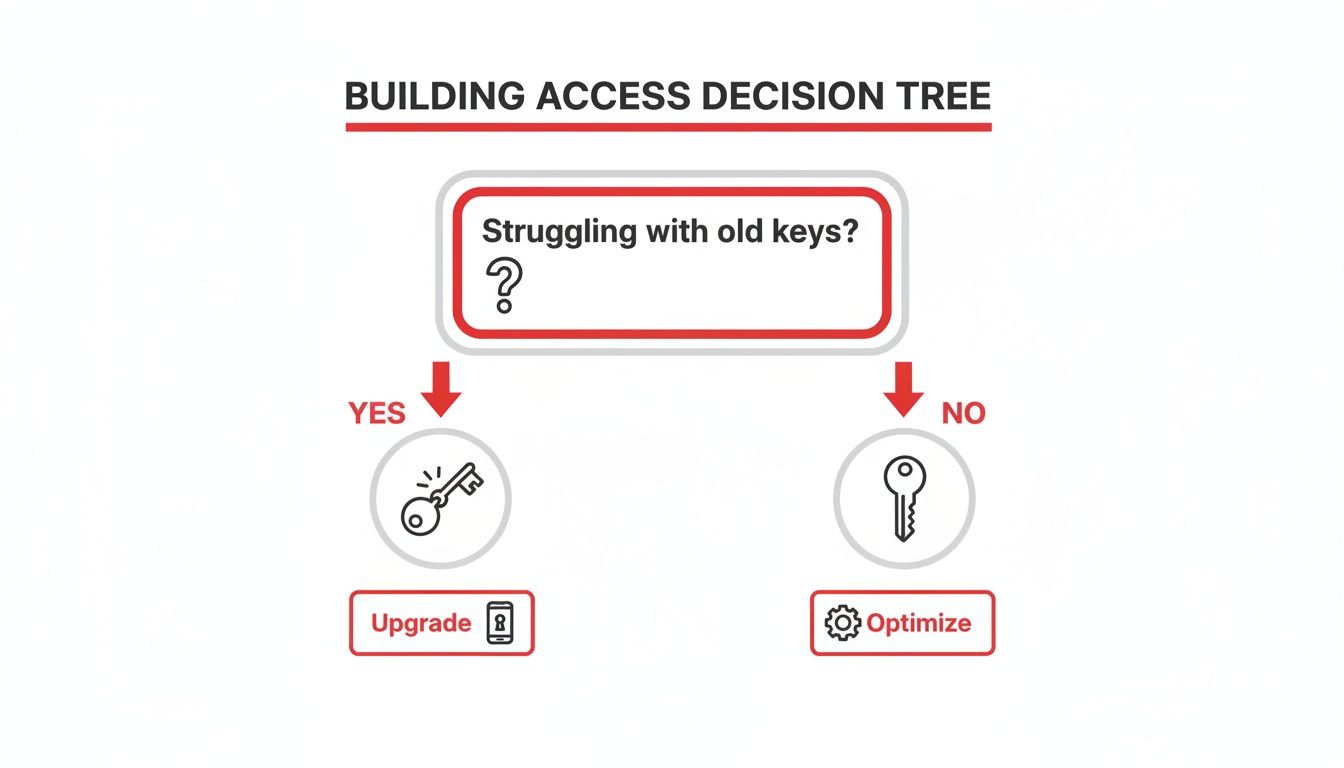
As you can see, whether you're dealing with the hassle of lost keys or just want to optimize your current setup, there's a clear path toward a smarter, more secure solution.
Mobile and Smartphone-Based Access
Mobile access control turns a resident's smartphone into their key. Residents use a simple app to unlock doors with a tap, typically using secure connections like Bluetooth or NFC.
The convenience here is a major benefit. Let's be honest, people are far more likely to forget their keys than their phone. This approach eliminates the cost and headache of issuing and replacing physical fobs.
Modern mobile access systems also empower residents to securely manage their own guests. They can issue temporary "digital keys" to visitors, dog walkers, or cleaners that only work for a specific time. This gives them control without ever compromising building security.
This kind of convenience isn't just a perk; it's a powerful amenity that helps attract and keep tenants who expect a modern living experience.
To help you weigh the options, here is a quick comparison of the most popular access control technologies.
Comparing Apartment Access Control Technologies
| System Type | Best For | Initial Cost | Ongoing Maintenance | Tenant Convenience |
|---|---|---|---|---|
| Key Fob / Card | Properties needing a reliable, cost-effective upgrade from metal keys. | $$ | Low (replacing lost fobs). | High. Simple to use but can be lost. |
| Mobile Access | Tech-forward communities wanting to offer a premium, convenient amenity. | $$$ | Very low (no physical credentials). | Very High. No keys to carry or lose. |
| Video Intercom | Buildings with high visitor/delivery traffic that need visual verification. | $$$ | Moderate (software updates, camera care). | High. Remote entry & guest management. |
| Biometric | High-security areas within a property, like server rooms or offices. | $$$$ | Moderate (sensor cleaning, software). | Highest security, but privacy concerns exist. |
Each system has its sweet spot. The key is matching the technology to your property's daily operational needs and your residents' expectations.
Intercom and Video Entry Systems
For any building that deals with frequent guests and a steady stream of deliveries, a video intercom system is no longer a luxury—it's an operational necessity. It allows residents to see and speak with anyone at the front door right from their smartphone before granting access. That visual confirmation provides a significant layer of security and peace of mind.
Today's systems log every single entry, usually with a time-stamped photo or video clip. This audit trail is a valuable tool for property managers, giving you a clear, factual record of who entered the building and when. It’s an incredibly practical tool for resolving disputes or investigating incidents. For more tips on putting these systems to work, check out our guide on access control best practices.
Biometric Access Control
Biometric systems use unique biological traits—most commonly a fingerprint or facial scan—to confirm someone's identity. These are among the most secure options available because you can't lose, steal, or share a fingerprint.
While incredibly effective, biometric readers often come with a higher price tag and can bring up privacy questions for some residents. For these reasons, you'll typically see them used for high-security zones within a property, like a management office or IT closet, rather than the main entrance for all residents.
Ultimately, the best apartment building access control system is the one that fits your property's specific demands. By understanding how each technology performs in a real-world residential setting, you can make an informed decision that boosts security, simplifies your operations, and improves the resident experience.
The Real-World Benefits for Managers and Residents
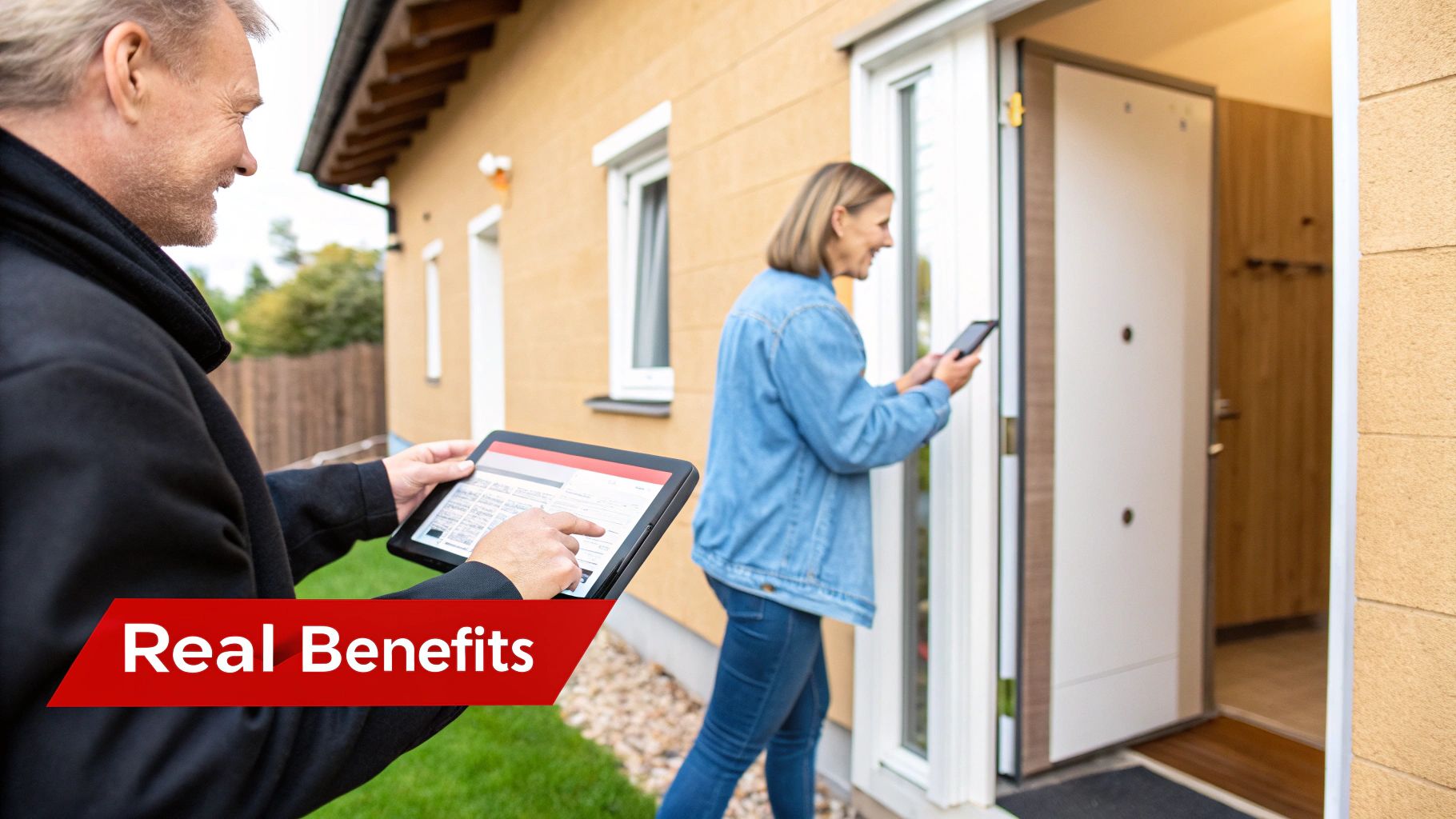
An advanced access control system is much more than a modern way to lock a door. It's a powerful tool that delivers real, day-to-day value for both you and the residents you serve. It shifts building security from a reactive chore into a proactive asset, creating a safer, more convenient, and ultimately more desirable place to live.
This isn't just a trend; it's a direct response to a global demand for smarter, more secure properties. The market for building access control systems hit $10,244.2 million in 2021 and is expected to climb to $13,289 million by 2025. What's driving this? A massive shift in multifamily properties moving away from clunky traditional keys. You can learn more about this growth in Cognitive Market Research's detailed building access control system market report.
Operational Wins for Property Managers
For property managers and HOA boards, the benefits are immediate and clear. A modern system solves some of the most persistent security headaches and makes daily tasks significantly easier.
- Eliminate Rekeying Costs: The minute a resident moves out, their electronic credential can be deactivated with a single click. This completely erases the recurring cost and security headache of changing locks and chasing down old keys.
- Simplify Vendor and Maintenance Access: Forget coordinating key handoffs. You can now issue temporary, time-restricted credentials for vendors or maintenance staff that simply expire after the job is done.
- Gain Actionable Security Insights: Every time someone enters, it's logged in a detailed audit trail. If an incident occurs, you have a clear, time-stamped record of who went where and when. That's invaluable data for any investigation.
A thoughtfully implemented apartment building access control system pays for itself by reducing operational friction. It frees up your team’s time to focus on resident satisfaction rather than chasing down keys and managing manual access schedules.
An Elevated Experience for Residents
For residents, the upgrades directly boost their sense of security and daily convenience, making your property a much more attractive place to call home.
- Unmatched Peace of Mind: Knowing that access is tightly controlled and monitored brings a genuine sense of safety. Residents can rest easier knowing that if a fob or phone is lost, its access can be instantly revoked, neutralizing any threat.
- The Convenience of Keyless Entry: No more fumbling for keys while juggling groceries or walking the dog. Using a smartphone app or a simple tap of a fob makes coming and going feel effortless and modern.
- Seamless Visitor Management: Modern systems put residents in control, allowing them to grant temporary access to guests, dog walkers, or family members right from their phones. They get more control over their own space without ever compromising the building's overall security.
At the end of the day, a well-managed access control system is a premium amenity. It's one of those features that helps attract and retain great tenants, which is the foundation of a stable and thriving community.
Pairing Smart Technology with Human Expertise
An advanced apartment building access control system is a fantastic tool, but technology alone is only half the solution. A system that just provides data—like access logs and real-time alerts—is only as good as the response it triggers. Real security comes from blending that smart tech with dedicated human expertise. This is how you transform a passive system into an active, intelligent shield for your property.
This integrated approach means every piece of data has a purpose. An alert isn't just a notification; it's a signal for a trained professional to take immediate, appropriate action.

This is where having a true security partner like Overton Security makes all the difference. With 26 years of experience, we’ve learned that technology doesn't replace people—it empowers them to deliver a much higher level of protection. We are committed to supporting our professional officers, which helps us avoid the high turnover common in the industry.
Turning Data into Proactive Responses
Imagine your access control system flags a parking garage door that’s been propped open for more than two minutes. In a standard setup, that might just send an email that a property manager sees hours later. With an integrated strategy, that alert goes straight to our onsite security officer and our 24/7 Security Operations Center (SOC).
A trained officer can then head over immediately, secure the door, and log the event in a digital report. That simple, proactive response just neutralized a major vulnerability before anyone could exploit it.
Here are a few more real-world examples:
- Failed Access Attempts: A string of failed swipes at a side entrance after hours could indicate a resident lost their fob, or it could be something more concerning. Our officers are trained to spot these patterns, check the area, and ensure the building perimeter is secure.
- Vendor Access Verification: When a new contractor shows up, our SOC can use integrated cameras to visually confirm their identity against the work order before granting them temporary access. It’s a straightforward but crucial layer of verification.
- Emergency Situations: If an emergency unfolds, our SOC can remotely manage access points, locking down certain areas or opening others to help first responders get where they need to go, fast.
The Security Operations Center as Your Digital Guardian
Think of our 24/7 Security Operations Center (SOC) as the central nervous system for your entire security plan. It’s an essential layer of oversight that ensures your system is always online and critical alerts never go unanswered, day or night. It provides a level of support that individual properties just can't replicate on their own.
The real power of an integrated system lies in its ability to connect a digital event to a human response in seconds. It’s the difference between merely recording an incident and actively preventing one.
This constant oversight ensures continuity and reliability. Whether it's a minor technical glitch that needs troubleshooting or a serious security event requiring immediate dispatch, our SOC team provides constant, professional supervision. This blend of access control data and human oversight gets even stronger when you add visual verification. Our expertise in remote video monitoring services lets our SOC team see exactly what’s happening in real-time, giving them critical context for any access control alert.
A Blended Approach is the Strongest Defense
The most secure apartment communities don't rely on just hardware or just personnel. They create a powerful synergy between the two. The access control system acts as the eyes and ears, gathering vital information around the clock. Our highly trained security officers and SOC specialists are the brain and the hands, interpreting that information and responding with intelligence and precision.
This blended model makes sure your investment in an apartment building access control system delivers its maximum value. It shifts your security posture from reactive to proactive, creating the kind of safe, reassuring environment that attracts and keeps great residents. When you’re ready to take the next step, integrating smart surveillance like Homeboy security camera systems can create an even more complete security picture.
Your Blueprint for a Successful System Upgrade
Deciding to upgrade your apartment building access control system is a significant step towards modernizing your property and enhancing resident satisfaction. A successful rollout is about more than just picking new hardware. It requires a solid plan that fits your building's unique layout, respects your budget, and allows for future growth. Let's walk through the steps to turn this complex project into a smooth, manageable process.
First, you need to conduct a thorough property assessment. Walk your building and try to see it through different eyes—as a resident coming home late, a delivery driver, and even a potential intruder. Pinpoint every single access point, including not just the front door, but also parking garages, side entrances, amenities like the gym or pool, and maintenance closets. This audit is your map, showing you exactly where you need to tighten control.
Planning Your Implementation Roadmap
Once you have a clear picture of your property's vulnerabilities and high-traffic zones, you can start building your roadmap. This is a step-by-step game plan to ensure a seamless transition that causes minimal disruption for your residents.
Your roadmap should include a few key components:
- Phased Rollout Strategy: Will you upgrade the whole building at once, or does it make more sense to tackle it in phases, starting with the most critical entrances? A phased approach can be much easier on your budget and your schedule.
- Hardware and Software Selection: Based on your assessment, pick the right combination of readers (key fob, mobile, video intercom), locks, and management software. Always lean towards durable hardware that can grow with your property.
- Resident Communication Plan: Determine exactly how and when you’ll inform residents about the upgrade. Plan for training sessions and a clear process for distributing new key fobs or mobile credentials. Good communication is the key to getting everyone on board without friction.
Budgeting and Calculating Your Return on Investment
A new access control system is an investment, not just an expense. To get approval from owners or stakeholders, you need a detailed budget and a clear path to a return on investment (ROI). Your budget needs to cover everything—hardware, installation, software fees, and a contingency for unexpected needs.
Calculating your ROI is about more than just the upfront cost. Look at the long-term savings and added value:
- Elimination of Rekeying Costs: How much do you spend on locksmiths every year when a resident moves out or loses a key? That number is often surprisingly high, and a new system can make it disappear entirely.
- Reduced Administrative Labor: Think about the hours your staff spends managing physical keys, letting in vendors, or manually tracking who comes and goes. Automating these tasks frees them up for more important work.
- Increased Tenant Retention: A secure building with modern, convenient amenities is a huge selling point. Even a small increase in tenant retention can save thousands in turnover costs, from lost rent to marketing and unit prep.
The goal is to frame the upgrade not as a cost center, but as a strategic investment in operational efficiency, enhanced security, and resident satisfaction—all of which directly impact your bottom line.
Ensuring Seamless Integration and Compliance
A truly smart access control system doesn't work in isolation. For maximum effectiveness, it should sync with your other building systems to create one unified security ecosystem. Consider linking it with your security cameras for visual confirmation of who’s entering, or connecting it to elevator controls to restrict access to certain floors.
Compliance is also non-negotiable. Your new system must meet all relevant codes, from the Americans with Disabilities Act (ADA) for accessibility to local fire codes for emergency exits. Partnering with an experienced security expert like Overton ensures your installation is not only powerful but also fully compliant, protecting you from potential liabilities down the road.
The residential market is booming, and this need for professional guidance is more critical than ever. By 2025, residential properties are expected to make up 44.2% of the massive $16.3 billion access control market. We're talking millions of smart locks being installed in apartment complexes. To get a better handle on this shift, you can explore insights on multifamily access control systems.
How to Choose the Right Security Partner
Installing a new apartment building access control system is just the first step. The long-term success of that system—and the safety of your residents—depends entirely on the partner you choose to manage and support it. This is a critical decision that protects your investment for years to come.
Your security partner should be more than just an installer. They should be a dedicated expert who truly understands the unique rhythm and challenges of a multifamily property. You're looking for a company with a proven track record not just in technology, but in building smart security strategies that blend advanced systems with responsive, professional oversight.
Key Questions to Ask Potential Providers
Before signing a contract, it's essential to vet any potential partner. How they answer these questions will reveal their commitment to quality, service, and long-term support.
- Experience in Multifamily Properties: Ask for specific examples of apartment communities they currently service. Do they grasp the complexities of resident, guest, and vendor traffic flow?
- Technical Support and Maintenance: What does their support process look like? If a key card reader goes offline on a Friday night, what’s their guaranteed response time?
- Officer Training and Integration: If they provide onsite guards, how are those officers trained to use your specific access control system? Do they know how to interpret alerts and respond before a minor issue becomes a major incident?
- Company Structure and Client Load: Ask about their manager-to-client ratio. An account manager stretched thin across too many properties simply can't provide the focused, hands-on attention your community deserves.
These questions move the conversation beyond a simple price comparison. For a more detailed checklist, take a look at our guide on the top 5 considerations when choosing a security outsourcing partner.
The Overton Security Difference
With over 26 years of experience, we have built our reputation by prioritizing quality over quantity. We make a conscious choice to maintain a low manager-to-client ratio. This ensures every property we partner with receives the hands-on leadership and direct attention it needs to be truly secure.
We believe that a security partner should be a long-term asset, not just a vendor. Our approach is rooted in building trust through consistent, reliable service and transparent communication, ensuring your property is secure and your investment is protected.
Our commitment extends to our people. We invest heavily in retaining professional, highly-trained officers who become familiar faces at your property, learning its unique patterns and residents. This stability, combined with our 24/7 SOC oversight and real-time accountability systems, transforms your access control system from a standalone product into an actively managed shield. Choosing Overton means selecting a partner dedicated to being there for the long haul, protecting your property with expertise you can count on.
Got Questions About Apartment Access Control?
Deciding on the right security for your property is a significant decision, and it's natural to have questions. Here are some straightforward answers to what we hear most often from property managers and HOA board members weighing their options for an apartment building access control system.
What Happens If the Power or Internet Goes Out?
This is a valid and important concern for any responsible property manager. The good news is that any reputable system is designed with these scenarios in mind.
Most modern access control systems come standard with:
- Battery Backups: These engage automatically, keeping readers and electronic locks operational during a temporary power outage.
- Offline Functionality: While managed in the cloud, credential data is also stored locally on the readers. This means residents' fobs, cards, or mobile passes will still work even if your building's internet connection drops.
We only install systems that have robust backup and offline features. You need to be confident that your building is secure and accessible, no matter what's happening with the grid.
Are These Systems a Hassle for Residents to Learn?
Not at all. The best systems are designed to be incredibly intuitive. Using a key fob is just like tapping a credit card to pay for coffee—a motion that is already familiar. The mobile apps are designed with that same simplicity in mind, making them easy for just about anyone to navigate.
The entire point is to make life more secure and convenient, not to add another layer of complexity. A smooth, well-communicated rollout is a key part of a successful upgrade.
That’s why we always include hands-on training and easy-to-read instructions with every installation. We want to make sure every resident, from the most tech-savvy to the least, feels completely comfortable with the new system right from day one.
How Do We Handle Access for Guests, Deliveries, and Contractors?
This is where modern systems truly excel, offering a blend of convenience and tight security that traditional keys can't match. You can easily grant temporary, trackable access without ever handing over a physical key.
For instance, residents can send digital "guest passes" right from a mobile app that automatically expires after a few hours or a specific date. For deliveries, an integrated video intercom lets you see who's at the door and buzz them in remotely.
As the manager, you can create credentials for contractors or maintenance crews that only work during specific business hours and deactivate the second the job is done. This gives you a complete audit trail of who came and went, and when—eliminating all the guesswork.