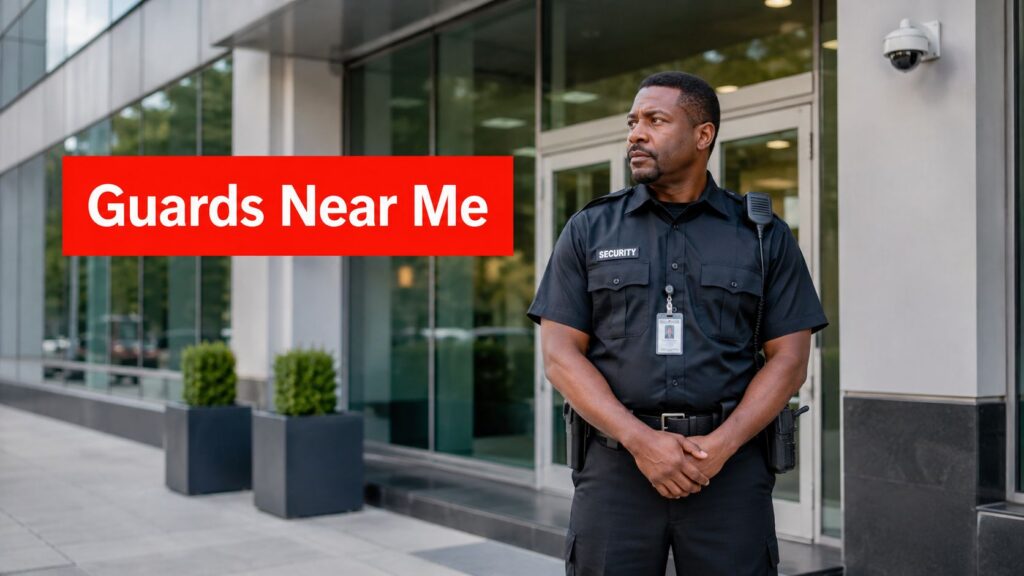
You're probably looking at a site with a nagging problem, not a theoretical one. The overnight report is thin, the guard on duty is new again, and when something happened after hours, nobody could say with confidence whether patrols happened or whether the log was filled in later.
That's why the search for commercial security guards near me should start with service quality, not proximity. A nearby vendor is useless if the officers churn, the supervisor barely visits, and the reporting is sloppy. A reliable program is built on retention, accountability, and a clear operating model, and that's what separates a real security partner from a warm body in a uniform.
The private security sector is a large, structured global labor market, not a side business. In 2019, the International Labour Organization estimated more than 4.8 million private security workers across 86 countries, with employment growing at a 12% compound annual growth rate over the period studied (ILO profile). That scale matters because the best local providers tend to behave like professional operators, not ad hoc staffing shops.
Why Finding Commercial Security Guards Near Me Goes Beyond Location
A property manager calls on Monday because the weekend incident report does not match the camera footage. The officer named in the report is unfamiliar, patrol times are vague, and nobody can say whether the overnight checks happened or were filled out later. That is the point where most buyers realize “near me” was the wrong filter.
Pick the provider that keeps people on the account, documents work in real time, and supports the site when something goes wrong. Proximity helps response time, but it does not fix turnover, weak supervision, or sloppy reporting. Those problems decide whether a guard post is protecting the property or just occupying it.
Practical rule: if the vendor cannot explain who supervises the account, how often they visit, and how patrols are verified, keep shopping.
As noted in the ILO profile linked above, the private security sector has grown into a professionalized industry with standardized staffing and reporting expectations. Treat it that way. Ask for process, not improvisation.
This guide focuses on the questions that matter most: what the different service models do, how to judge provider quality, how pricing works, what post orders and KPIs should look like, and what California compliance changes the conversation. If you manage an office, retail center, residential property, construction site, or mixed-use building in California, that is the checklist that will save time and prevent bad contracts.
What Commercial Security Guards Do on Your Property

A good commercial guard program starts with matching coverage to the site. An office tower does not need the same posture as a construction yard, and a retail center does not need the same daily routine as a high-rise lobby. If the assignment is vague, you pay for presence and still miss the actual risk.
Onsite guards
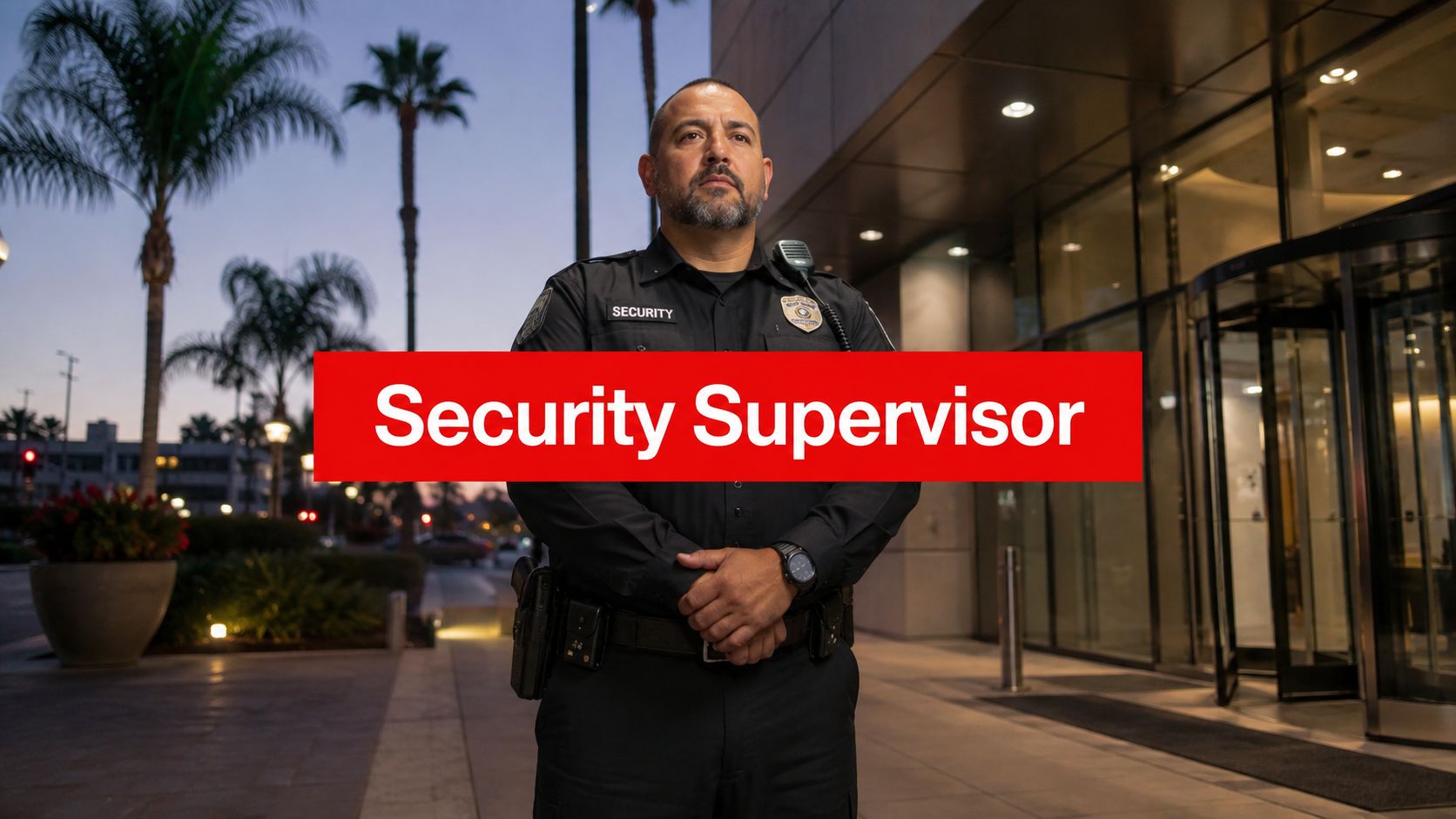
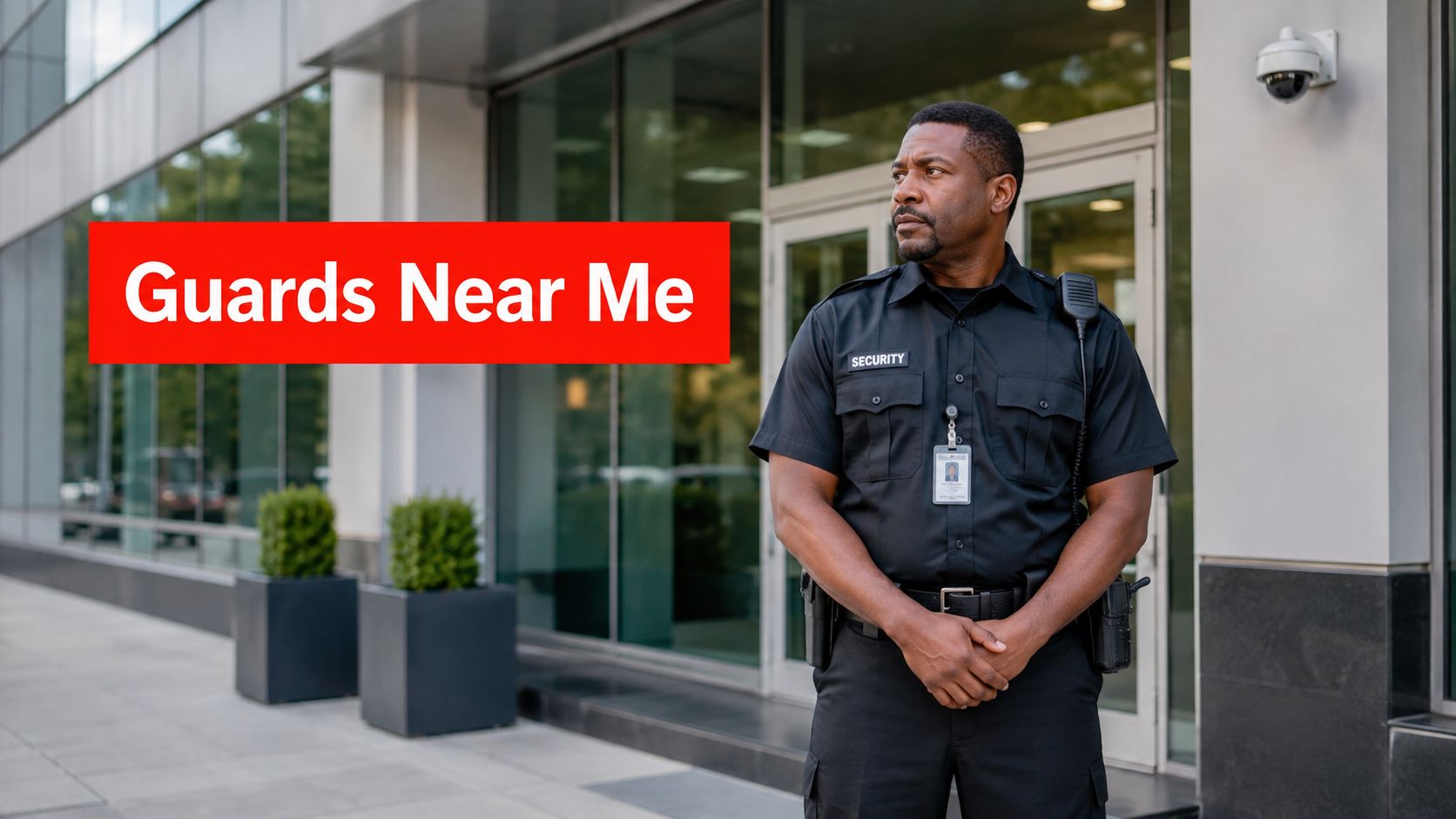
Onsite armed or unarmed guards fit office buildings, retail centers, industrial properties, healthcare sites, and residential communities that need access control, incident response, and visible deterrence. The officer's day usually includes badge checks, visitor screening, escorting vendors, watching for trespass or loitering, and documenting issues before they become disputes. For many properties, this is the core of commercial property security.
Mobile and vehicle patrols
Vehicle patrols fit properties that need visible coverage without a full-time post. They work well for parking lots, multi-building campuses, shopping centers, and shared patrol programs across several nearby properties. The officer checks doors, gates, and perimeter conditions, then records what changed since the last visit.
Concierge and lobby security
Concierge security makes sense in Class A lobbies and residential high-rises where hospitality matters as much as control. These officers greet tenants, manage visitors, monitor lobby activity, and handle escalations without making the entrance feel hostile. That blend of service and vigilance helps when the building wants a polished tenant experience.
Fire watch, construction, and event coverage
Fire watch is different. It is a compliance assignment, not just a presence assignment. Construction sites need security officers who can protect tools, materials, and access points, while event and temporary coverage needs fast staffing for short windows and changing conditions.
A lot of properties blend two or three of these models. A retail center might use an onsite officer during business hours, a vehicle patrol overnight, and fire watch when systems are impaired.
If you want a plain-language breakdown of security guard duties, that overview maps tasks to real site conditions instead of treating every post like the same job.
The key is to stop thinking in one-dimensional terms. If a vendor only offers a generic “guard,” they are asking you to do the hard part of the planning for them. Good firms start by matching the assignment to the property, then they define the officer's actual work.
How to Evaluate a Commercial Security Guard Company

A uniform and a radio tell you almost nothing. On a real property, the question is whether the company can keep the account stable, follow your post orders, and prove the work happened. For that reason, I start with retention before I talk about anything else.
That matters because the security industry loses people fast. Analysts at the UC Berkeley Labor Center and a separate turnover brief found security turnover far above the broader private sector, which is exactly why one vendor feels consistent and another feels like a revolving door (turnover brief).
Ask about retention, supervision, and coverage
Ask the vendor a direct question, How long do officers stay on this account, and how often does a supervisor visit? If the answer is vague, treat that as a problem. A vendor with a low manager-to-client ratio and regular field checks usually protects site knowledge better, because officers are more likely to learn the property instead of starting over every month.
Ask about technology and reporting
Ask, Do your officers use GPS-verified patrols and digital daily reports with time stamps and photos? If the answer is paper logs by email, keep pushing. A provider that cannot show where officers were and what they documented cannot manage performance well.
Reporting should show activity, not just attendance. If a company hides behind generic summaries, you will end up guessing whether post orders were followed.
Ask about onboarding and compliance
Ask, What does onboarding look like for a new property, and what licensing or training documents do you collect? If the company treats onboarding like a same-day placement, it is not tailoring service to the site. You want a vendor that learns the property first, then assigns the officer.
For a broader facilities example of how vendor checks should be organized around verification, not assumptions, the Pestless Inc. rodent guide is a useful reference.
Red flag: if the company keeps talking about price before it talks about supervision, reporting, and post orders, it is selling staffing, not accountability.
Use a short checklist when you compare vendors:
- Retention and turnover: Ask how long officers typically remain on the account.
- Supervision: Ask how often a field supervisor visits and how issues get escalated.
- Reporting tech: Ask whether patrols are GPS-verified and reports are time-stamped.
- Onboarding: Ask how they learn the site before the first shift starts.
- Documentation: Ask for references, sample reports, and proof of training and licensing.
Overton and the vendor picture
Some firms package these controls into a standard operating model. Overton Security is one example in California, with onsite guards, vehicle patrols, concierge security, fire watch, and digital reporting in its service mix, along with a 24/7 SOC and site-specific post orders. Use that as a reference point, not a shortcut. The right vendor is the one that can support your site requirements.
Understanding Commercial Guard Pricing and Staffing Models
Guard pricing makes more sense when you stop thinking in hourly labor and start thinking in coverage hours. A 24-hour post is not one officer in practical terms. Shift rotation, breaks, relief coverage, statutory leave, and supervision all add headcount, and that's why a quote that looks cheap on paper often gets expensive in reality (staffing model reference).
That's the biggest mistake property managers make. They compare an hourly rate and ignore the staffing math behind it. If a provider can't explain the relief factor or the skill level behind the quote, it's not a real proposal.
Read the proposal line by line
Look for posts, shifts, relief coverage, and required certifications. Those four items tell you whether the provider understands your site or is just tossing out a flat rate. If the proposal says “one guard, 24/7,” it's not credible.
A better proposal breaks the job into the actual components that drive cost.
| Common Commercial Security Coverage Models Compared | |||
|---|---|---|---|
| Coverage Model | Best For | How It Works | Cost Drivers |
| Onsite dedicated post | Office buildings, retail centers, lobbies, access control points | One officer stays on site during assigned hours | Coverage hours, shift coverage, supervision, certifications |
| Shared vehicle patrol | Several nearby properties, parking lots, lower-risk sites | One patrol officer checks multiple locations on a schedule | Route density, visit frequency, report detail |
| Dedicated vehicle patrol | Higher-risk campuses, large industrial sites, properties needing recurring checks | One vehicle unit serves one client or one site cluster | Patrol cadence, travel time, special instructions |
| Fire watch | Impaired fire systems, construction, maintenance shutdowns | Officer documents patrols and safety conditions on a fixed cadence | Patrol frequency, documentation burden, compliance requirements |
Ask for a transparent quote structure
Ask the vendor to show the line items that matter, not just the final number. If they won't separate the post, the supervision, the certifications, and the reporting requirements, your budget will get surprised later. That's where contract friction starts.
If you need a practical breakdown of how providers build a bill rate, the internal guide at how security guard services get to a bill rate is worth keeping nearby during the bidding process.
Simple rule: the cheapest quote is often the one that forgot to price the work you actually need.
Tight proposals matter. You're not buying a body on a chair, you're buying coverage, supervision, and proof that the coverage happened.
Post Orders, Reporting Tools, and KPIs That Keep Vendors Accountable
A good guard company should hand you a site-specific instruction set before the first shift starts. That's the post order, and it should cover layout, patrol routes, risk points, escalation contacts, and emergency procedures. If the provider can't show customized post orders, it's guessing at your property.
The best post orders are short enough to use and specific enough to matter. They tell the officer where to stand, when to check, who to call, and what to document. That's the difference between routine presence and actual site control.
What a usable post order looks like
A sample excerpt might read like this:
Lobby desk post. Verify visitor sign-in before badge issuance. Escort contractors to the service elevator. If a trespasser refuses to leave, notify the site manager and call the supervisor before any removal attempt.
That's the standard you want. Not a generic handbook, not a paragraph copied from another account, and not instructions so vague that every officer improvises.
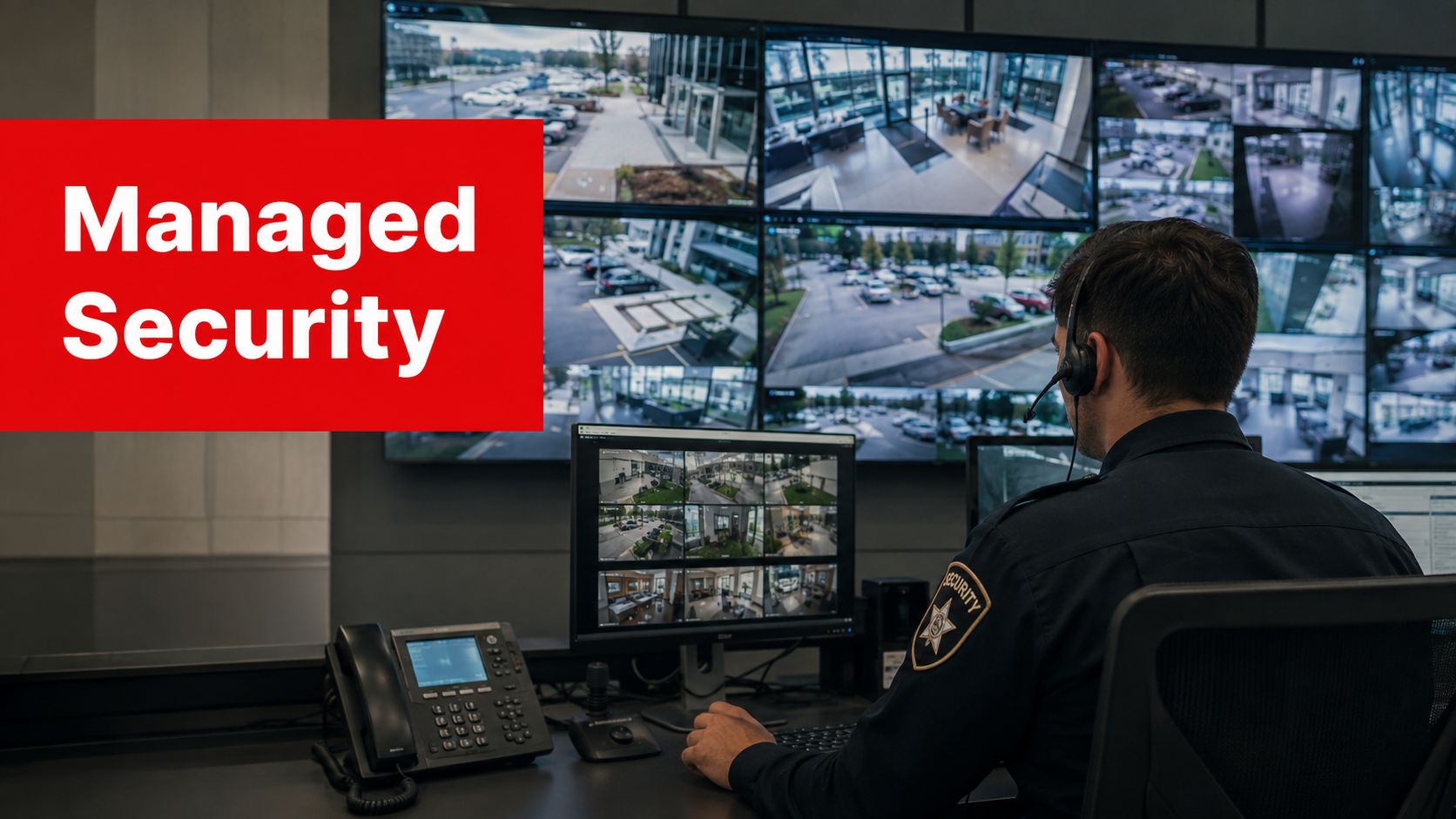
The reporting layer should back up the post order. GPS-enabled guard tour systems, NFC checkpoint scans, digital daily activity reports, and time-stamped photos make it possible for the client to review work without guessing. Benchmark research built from 300+ responses across North America and Europe shows the sector is increasingly managing performance with standardized metrics, which is why buyers should care about deployment speed, report quality, and patrol compliance instead of raw incident counts alone (benchmark research).
Monthly review checklist
Use this in your vendor meeting:
- Turnover on the account: Are the same officers staying assigned?
- Deployment speed: Did the provider fill shifts on time?
- Report completion quality: Are reports complete, timely, and readable?
- Patrol compliance: Did the tours happen as scheduled?
- Escalation follow-up: Were issues handed off cleanly to management?
For a provider that packages those controls into its operating model, Overton Security is one California example with GPS-enabled patrol verification, digital DARs, and 24/7 SOC oversight. What matters is not the label, but whether the system lets you verify the work.
California Compliance, Insurance, and Fire Watch Requirements
California buyers need to verify more than presence and price. They need to know the provider can legally staff the site, maintain training and vetting, and document work in a way that stands up to inspection. The California security guard licensing guide is a useful reference point, but the core issue is whether the company has a controlled hiring process, not a loose pile of applicants.
Recruitment and retention in the guarding sector are constrained by licensing, training, and vetting requirements, according to the UK government's sector profile on the topic (UK sector profile). That aligns with what good California providers already know, which is that compliance has to be built into staffing, not added later.
Fire watch is a compliance assignment, not just a patrol
When a building's fire protection system is impaired, California fire-code guidance requires fire watch personnel to immediately communicate with fire dispatch, identify unsafe conditions, and document the time and findings of each patrol on a log kept on the premises and available for inspection by the authority having jurisdiction (fire watch guidance). Sacramento Metropolitan Fire District guidance also says approved fire watch is conducted by a licensed security company retained solely for fire watch, patrols occur no less than once per hour, and the log should be emailed each morning by 8:00 a.m. (fire watch log requirements).
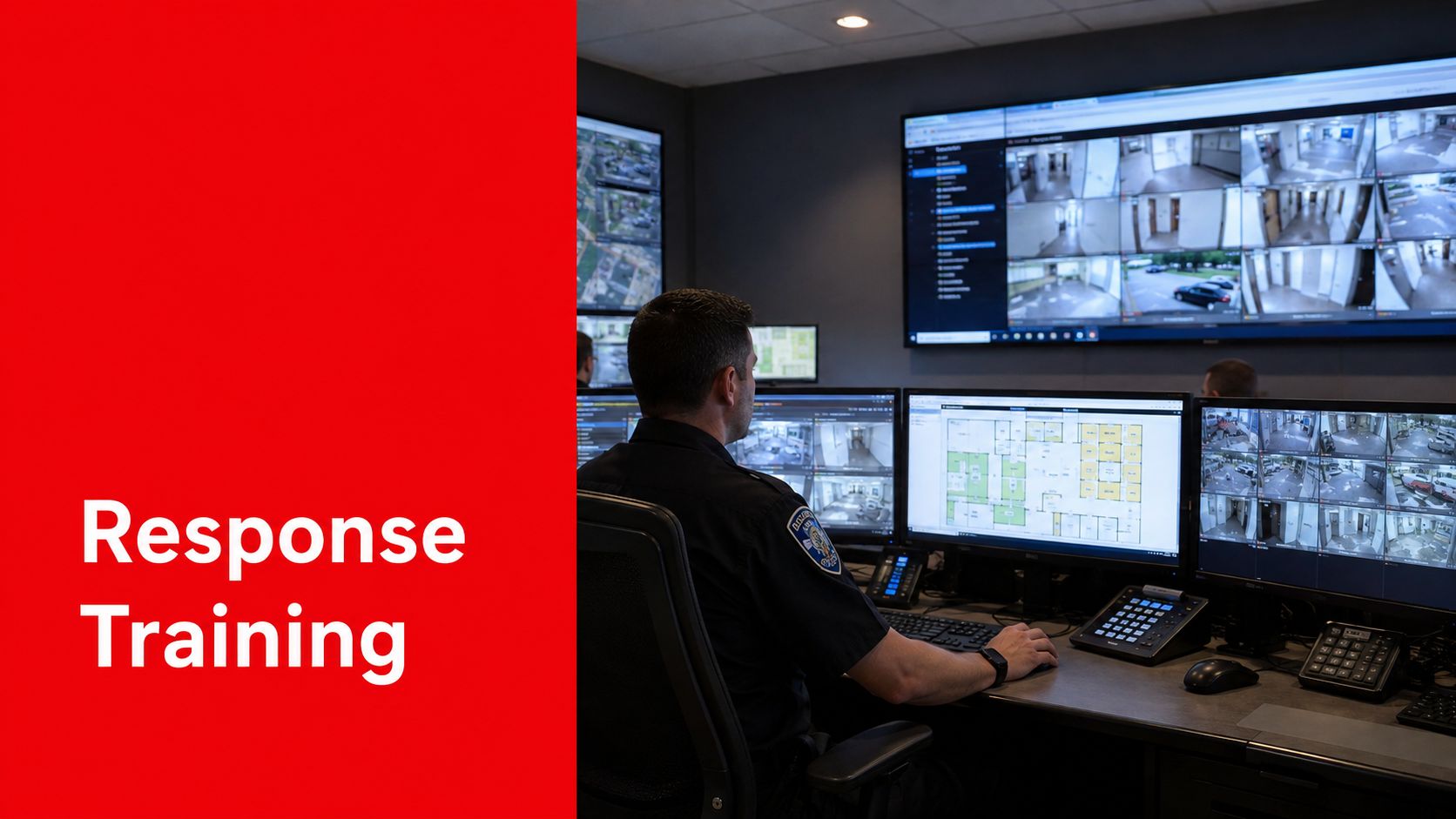
That means fire watch needs two things at once, response capability and auditable documentation. A person standing in a hallway isn't enough if they can't call dispatch, identify a hazard, or produce a usable log.
If the fire watch log isn't on site and current, the patrol didn't really exist for compliance purposes.
What to collect before you sign
Ask for insurance certificates, proof of licensing, and written confirmation that the officers assigned to the site are cleared for the work. If the project involves impaired systems, confirm that the company understands fire watch cadence, reporting, and escalation. For a broader facilities checklist on documentation and inspections, the property inspection services guide is a solid reminder that evidence and recordkeeping matter long after the event ends.
California properties with special conditions, especially construction and maintenance shutdowns, need this level of control. It's not drama, it's risk management.
Client Questions and Next Steps for Property Managers
Coverage can usually start quickly if the site is simple and the provider already has trained staff nearby, but speed should never replace a site walk and written post orders. If a vendor wants to post an officer before learning the property, that's a rushed assignment, not a ready one.
You can also combine coverage models as conditions change. A shared patrol can handle lighter overnight oversight while an onsite officer covers peak traffic, tenant access, or high-risk periods. Good providers should be able to scale up or down without rewriting the whole program.
What onboarding should include
A proper onboarding process should include a site walk, review of access points, escalation contacts, emergency procedures, reporting expectations, and supervisor introductions. If the company skips any of that, the first week will be reactive instead of controlled. That's how service gaps begin.
If you already have a provider and suspect gaps, start with the evidence. Pull the reports, compare them with camera footage or access logs, and ask the company to explain missed patrols or vague writeups. If they can't answer clearly, you already know the problem isn't just staffing, it's management.
What to ask before you renew
- Can you show me the post orders for this site?
- Who supervises the account and how often do they visit?
- How do you verify patrols and report completion?
- What happens when an officer calls out?
- How do you measure account performance month to month?
The most useful next step is a walk-through with a provider who will inspect the property, identify the risks, and draft site-specific instructions before the contract is signed. That's the standard I'd expect for any commercial property in California, whether it's an office, retail center, HOA, medical building, or construction site.
If you want a more disciplined security plan for your property, start with a site assessment and a written post-order review, not a quote that only talks about hourly rates. Overton Security builds commercial guard programs around site-specific coverage, reporting, and supervision, and you can visit Overton Security to request a consultation and compare your current coverage against a more accountable model.