
Securing a construction site in Long Beach isn’t just another line item on a budget—it's a critical investment in your project's success. Think of it as the shield that protects your schedule, budget, and valuable assets. The right approach blends physical deterrence, smart technology, and a professional human presence to counter the real risks of theft and vandalism in a constantly growing city.
Why Overlooking Site Security in Long Beach is a Costly Mistake
Long Beach is buzzing with development, which is great for the city. But all that activity makes active job sites a tempting target for criminals. An unsecured site is an open invitation, packed with thousands of dollars in equipment, high-demand materials like copper and lumber, and expensive tools.
A single break-in can trigger a domino effect across your entire project. It's never just about replacing a stolen generator. The real pain comes from the project delays, the spike in your insurance premiums, and the operational headaches that follow. Getting a handle on security is a core part of mastering construction project risk management.
The High Stakes of Inadequate Protection
Leaving your site unprotected is a gamble, and the consequences are always expensive. The true cost goes far beyond what was stolen. Project managers have to brace for the full impact:
- Project Delays: When essential materials or equipment vanish, work grinds to a halt. Waiting for replacements can sideline your crew for days or even weeks, throwing your entire schedule off track.
- Increased Costs: The financial bleeding doesn't stop at replacement costs. You're now on the hook for emergency equipment rentals, potential overtime pay to catch up, and the inevitable hike in your insurance premiums.
- Liability Risks: An open site is a danger zone. If a trespasser gets hurt on your property, you could be facing a serious lawsuit and significant financial liability.
- Reputational Damage: Word gets around. A project plagued by theft and security breaches can quickly tarnish your company's reputation with clients, investors, and even your best subcontractors.
Before we dive deeper, let's look at the specific threats you're likely up against.
Top Security Risks for Long Beach Construction Sites
Understanding the landscape is the first step. Here’s a breakdown of the most common risks construction superintendents face in the Long Beach area and what they can mean for your project.
| Risk Category | Specific Threats | Impact on Project |
|---|---|---|
| Material & Equipment Theft | Copper wire, lumber and plywood, heavy machinery (skid steers, generators), power tools. | Immediate financial loss, project delays waiting for replacements, increased insurance costs. |
| Vandalism & Property Damage | Graffiti, broken windows, damaged machinery, arson. | Cleanup costs, repair expenses, potential for structural damage, schedule disruptions. |
| Trespassing & Liability | Unauthorized individuals entering the site, squatters, curious neighbors, individuals seeking shelter. | Risk of injury leading to lawsuits, potential for theft or vandalism, safety hazards. |
| Internal & Employee Theft | Subcontractors or employees stealing tools, fuel, or materials. | Loss of assets, decreased morale, potential for project sabotage, trust issues on site. |
| Organized Crime | Coordinated theft rings targeting high-value equipment or materials for resale. | Significant financial losses, potential for violence, increased complexity of investigation. |
These threats aren't just possibilities; they are active risks that demand a proactive security strategy to mitigate.
A sobering fact: California is the epicenter for construction equipment theft, accounting for a staggering 20% of all incidents in the entire country. The Los Angeles metro area, which includes Long Beach, is a well-known hotspot for both opportunistic thieves and organized criminal rings targeting job sites.
At the end of the day, proactive security is not an operational expense—it's an essential part of managing risk. Investing in a professional security plan from a partner with over 26 years of experience is what keeps your Long Beach project on track, on budget, and safe from start to finish. It’s the difference between managing a crisis and preventing one from ever happening.
Navigating the Unique Security Challenges of Long Beach
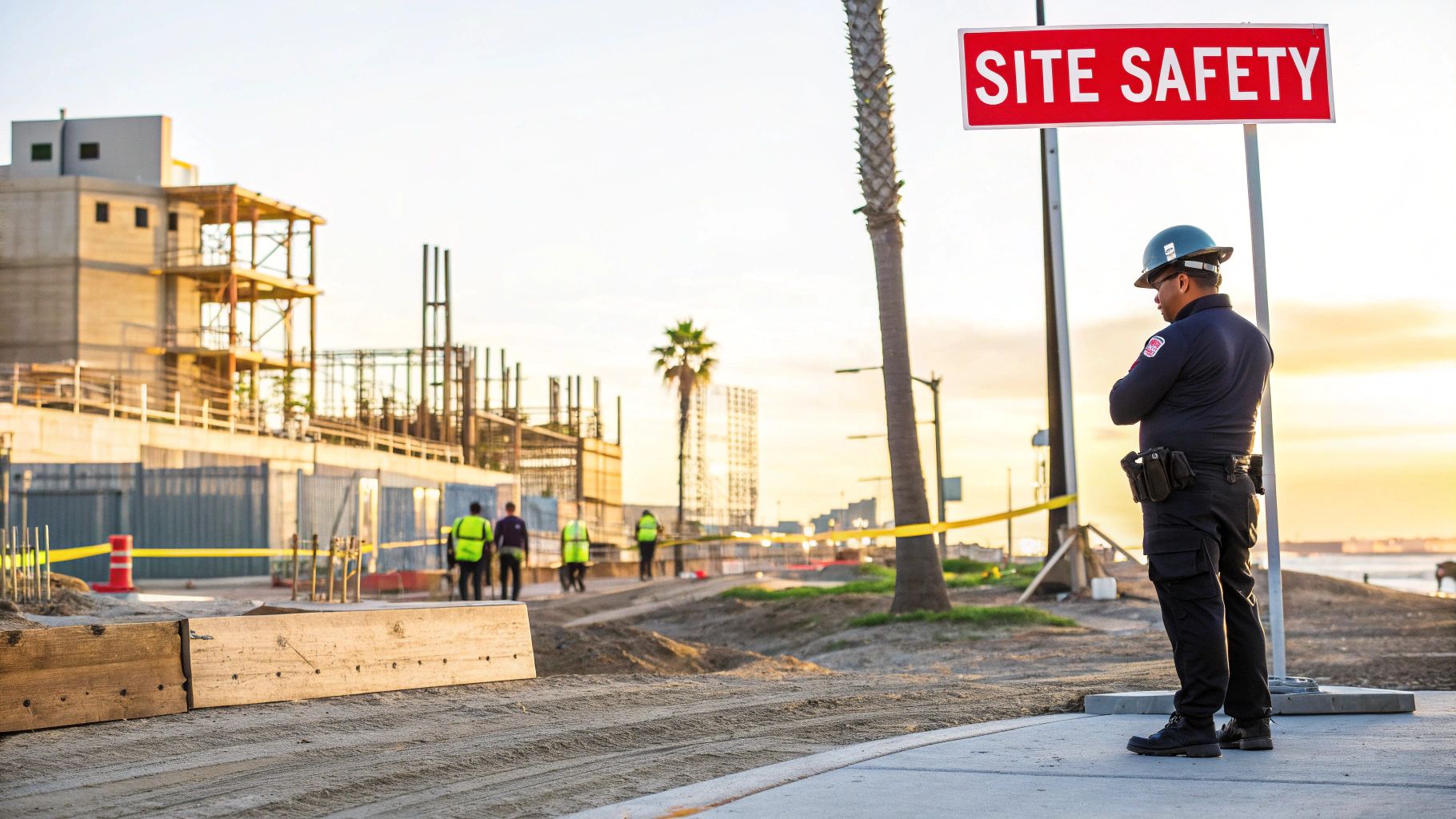
Securing a construction site in Long Beach isn’t like securing one anywhere else. You can't just copy and paste a security plan from another project and expect it to work. That generic approach completely misses the local factors that can make or break your project's safety.
To get construction site security in Long Beach right, you need a strategy built from the ground up with a deep understanding of the local landscape. That means looking at the city's unique geography, its economic drivers, and the dynamics of its diverse neighborhoods. A one-size-fits-all plan is a recipe for vulnerability, leaving your valuable assets exposed to risks you might not even see coming.
The Port of Long Beach and Its Impact on Security
The Port of Long Beach is an economic powerhouse, but its constant activity creates a unique challenge for nearby construction projects. The endless flow of goods and heavy truck traffic provides the perfect cover for thieves trying to move stolen equipment and materials off your site quickly.
Organized theft rings know how to exploit the port's logistical network, making it incredibly easy for them to transport and sell high-value assets long before you even realize they're gone. A security partner with real local experience understands these traffic patterns and knows exactly how to implement countermeasures, ensuring your site isn't just another easy target.
Diverse Neighborhoods Demand Tailored Strategies
Long Beach is a city of neighborhoods, each with its own character and, more importantly, its own security profile. The threats facing a new high-rise downtown are completely different from those for a sprawling residential project near the Traffic Circle or an industrial build-out closer to the port.
You have to consider several factors to get the security approach right:
- Foot and Vehicle Traffic: Busy areas demand tight access control, while quieter neighborhoods might benefit more from highly visible patrols to discourage opportunistic crime.
- Proximity to Major Freeways: A site right off the 405, 710, or 91 gives criminals a quick getaway. That means your security needs faster detection and response protocols.
- Local Crime Trends: Is there a recent spike in copper theft in one part of town? A strong security plan adapts to these specific trends proactively.
True local expertise isn't just knowing the street names. It's about understanding the subtle environmental factors that criminals exploit and designing a security presence that directly counters them.
A knowledgeable security provider will start with a site-specific risk assessment that incorporates all these variables, creating a plan that is both intelligent and responsive to what's happening on the ground.
Local Budgets and Law Enforcement Response
The city's public safety investment also plays a role in your site's vulnerability. A city audit revealed that Long Beach has historically undercharged developers on impact fees, potentially losing out on over $22 million—money that could have gone to police, fire, and transportation improvements.
When municipal budgets get squeezed, it can mean fewer police patrols and less public surveillance, which puts more of the burden on private security to protect your assets. This reality makes a strong, self-reliant security strategy absolutely essential. You can read a detailed analysis of Long Beach safety trends to get more context on these city-specific dynamics.
Ultimately, navigating these challenges requires a security partner who does their homework. With over 26 years of experience in California, we know that effective protection comes from a strategy grounded in local knowledge, not some generic template. It’s about building a security plan that is as unique as your Long Beach project itself.
Building a Multi-Layered Security Defense
When it comes to construction site security in Long Beach, a single solution won't cut it. Think of your security plan like the structure you're building—it needs a solid foundation, reinforced supports, and a protective shell to stand strong. One weak spot can put the entire project at risk.
By layering different security elements, you create a system where each part backs up the others. It’s a progressive approach that ensures if one layer is breached, another is already there to deter, detect, or respond to a threat. This is how you turn your site from an easy target into a hardened, well-protected asset.
The Foundational Layer: Deterrence
Your first and most crucial layer is all about deterrence. The goal is straightforward: make your site look like too much trouble for criminals to even bother with. Most opportunistic thieves are just looking for the path of least resistance.
Visible, professional deterrence measures send a clear signal that your site is actively monitored and protected. This is your frontline defense, and it can stop a huge number of problems before they even start.
A strong deterrence strategy usually includes:
- Robust Perimeter Fencing: A sturdy, well-kept fence is the most fundamental deterrent. It creates a clear boundary and makes it physically difficult for someone to just wander onto your property.
- Clear and Prominent Signage: Posting signs that announce 24/7 surveillance, active security patrols, and trespassing warnings reinforces the message that the site is not an easy mark.
- Strategic Lighting: Well-placed, motion-activated lights are a criminal's worst enemy. Brightly lit entry points, material storage areas, and equipment lots eliminate hiding spots and put any would-be intruders on full display.
These foundational pieces work together to create an environment that tells potential criminals to move along.
This image shows how core security measures like fencing, access control, and cameras form the backbone of a layered defense.
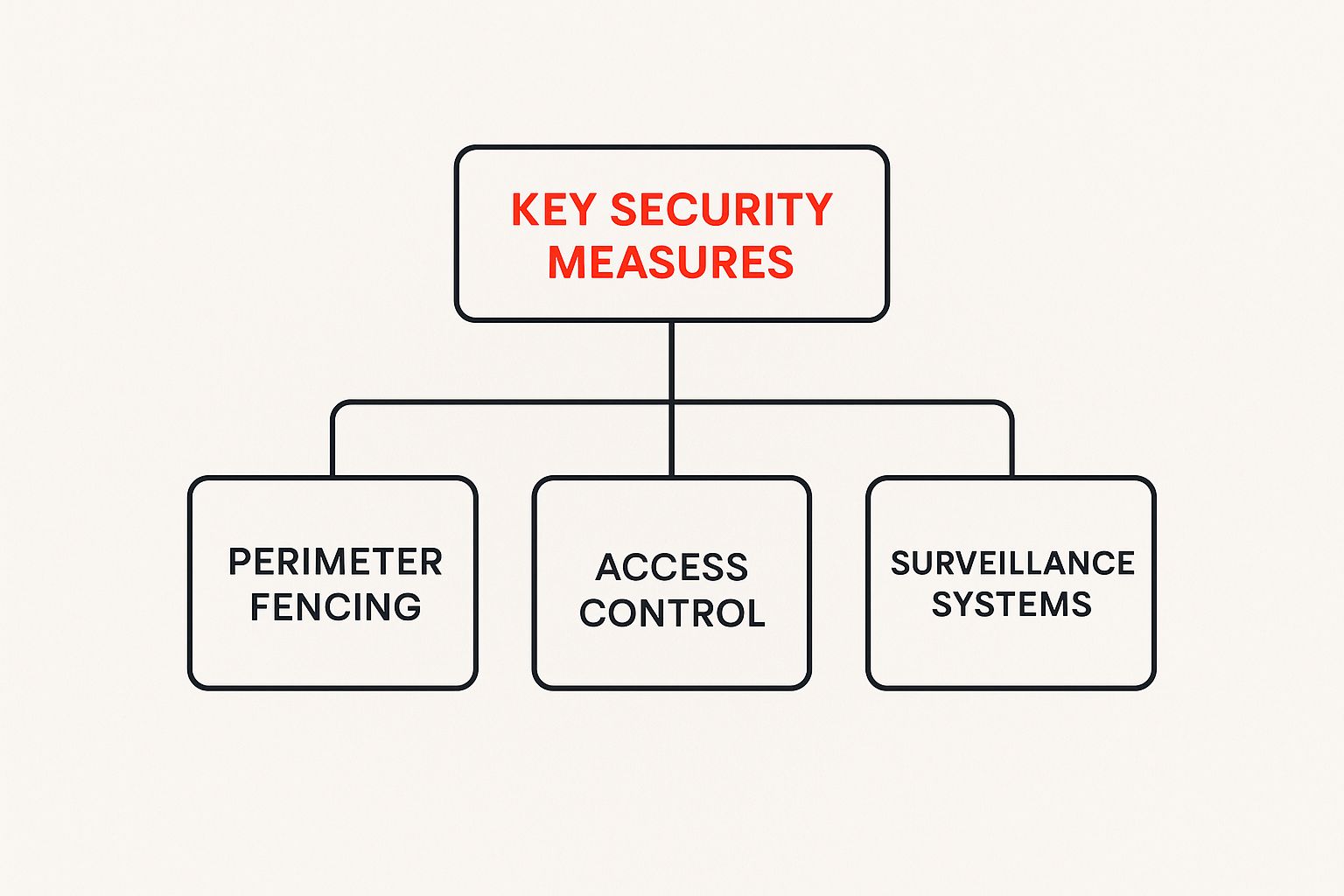
By weaving these three elements together, a project manager establishes a formidable security baseline that actively discourages anyone from trying their luck.
The Second Layer: Detection
So, what happens if a determined intruder gets past your deterrents? This is where your second layer—detection—kicks in. Technology becomes your digital eyes and ears, especially when no one is physically on-site.
Modern detection systems give you real-time alerts, which means you can mount a fast response and potentially stop a crime while it’s happening.
The whole point of detection is to close the gap between when an intrusion happens and when you respond. The faster you know there’s a problem, the faster you can solve it and minimize your losses.
Advanced detection tech for construction sites often involves:
- High-Definition Surveillance Cameras: Placed at key vantage points, these cameras don’t just record what happens; they can be monitored live. Many newer systems even use AI to tell the difference between a person and a stray cat, cutting down on false alarms.
- Motion Sensors and Alarms: These devices can be set up to trigger bright lights, loud sirens, or silent alerts that go straight to a security team or a 24/7 monitoring station.
- Access Control Systems: On larger projects, electronic access control at gates can keep a digital log of everyone who comes and goes, ensuring no one gets in who isn’t supposed to be there.
The Third Layer: Response and Documentation
The final layers of response and documentation are what truly tie your security strategy together. After all, detection doesn't mean much if you don't have a plan for what to do next. This is where a professional human presence becomes absolutely essential.
A quick, decisive response is critical for stopping theft or vandalism in its tracks. For an in-depth look at physical deterrents, check out an ultimate guide to shipping container locks, which are crucial for protecting your most valuable gear. And after an incident, solid documentation is what you'll need for law enforcement and insurance claims.
This critical phase involves:
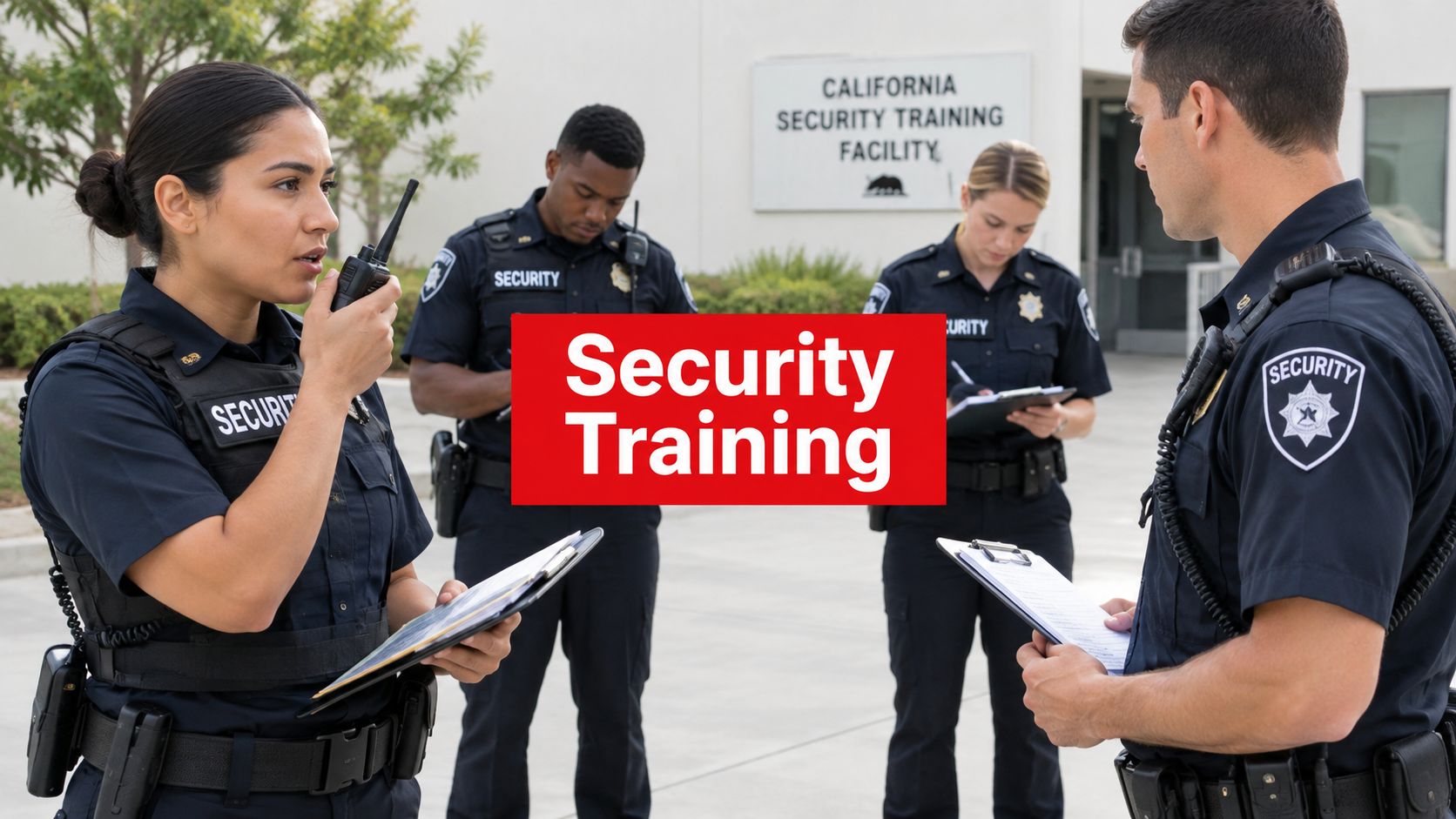
- On-Site Security Officers: A trained guard can provide an immediate physical response that technology simply can't. They can confront intruders, secure the scene, and act as a direct line to police.
- Mobile Security Patrols: If your site doesn’t need a round-the-clock guard, mobile patrols are a great alternative. They provide a visible presence at random intervals, check for any signs of trouble, and can respond quickly to alarms.
- Digital Reporting: A professional security partner will use GPS-enabled systems to give you detailed, time-stamped reports of every patrol and incident. These reports, often including photos and notes, provide total accountability.
By combining deterrence, detection, response, and documentation, you build a truly comprehensive security plan that protects your Long Beach construction project from every angle.
Combining Human Expertise with Smart Technology
When it comes to construction site security in Long Beach, just posting a single guard in a truck no longer works. Today's most effective security strategies blend the irreplaceable judgment of a trained officer with the power of smart technology. This integrated approach creates a formidable, responsive, and accountable security presence that outdated methods can't match.
A traditional plan relies on one person to see everything at once—an impossible task on a sprawling job site. A modern strategy uses technology as a force multiplier. It gives human experts the real-time information they need to act decisively and protect your assets with precision. This synergy is what separates a basic security presence from a true security partnership.
The Power of a Professional Human Presence
Technology is a powerful tool, but it can never fully replace the on-the-ground impact of a professional security officer. Their presence alone is one of the strongest deterrents you can deploy. Would-be thieves looking for an easy score will almost always bypass a site where they see a visible, active security professional on duty.
Beyond just being a deterrent, officers provide the critical element of immediate response. When an alarm goes off or a camera spots something out of place, a trained officer can assess the situation in seconds, intervene to prevent theft or vandalism, and coordinate directly with law enforcement. This ability to think on their feet and adapt to an unfolding event is something technology just can't replicate.
Amplifying Effectiveness with Smart Security Tools
A professional security officer becomes exponentially more effective when backed by the right technology. Instead of relying only on what they can see, they are empowered by a network of digital eyes and ears covering your entire Long Beach job site. This blend of human and machine creates a system of total oversight.
Here are a few key technologies that enhance an officer's capabilities:
- Mobile Surveillance Trailers: These self-contained units can be deployed anywhere on your site. They come equipped with high-definition, AI-powered cameras that intelligently detect intruders while ignoring false alarms from things like stray animals or blowing debris.
- GPS-Tracked Patrols: Modern guard tour systems use GPS to create a verifiable digital record of every single patrol. This technology ensures accountability, confirming that officers are checking critical areas at specified times and giving you detailed reports to prove it.
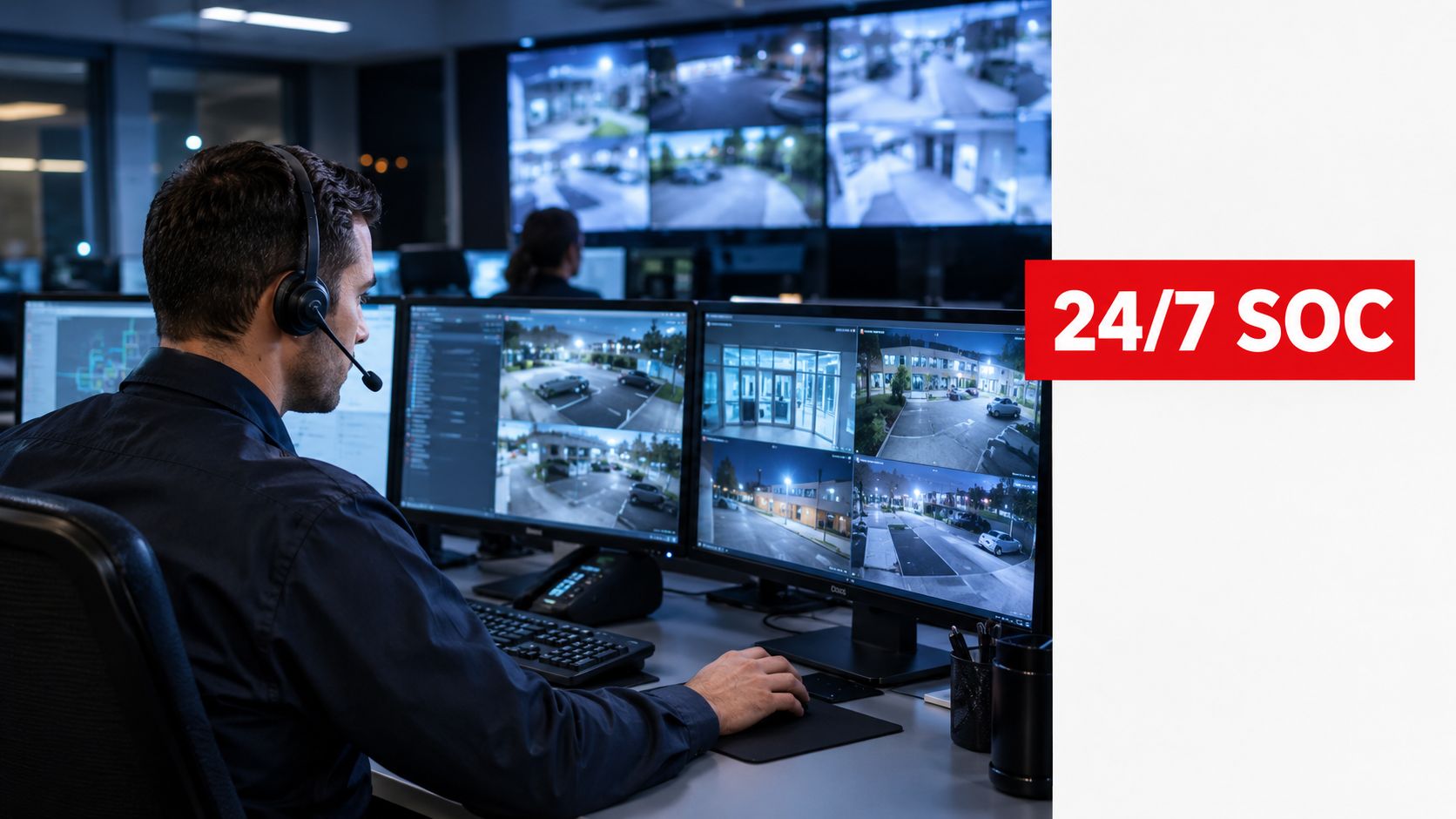
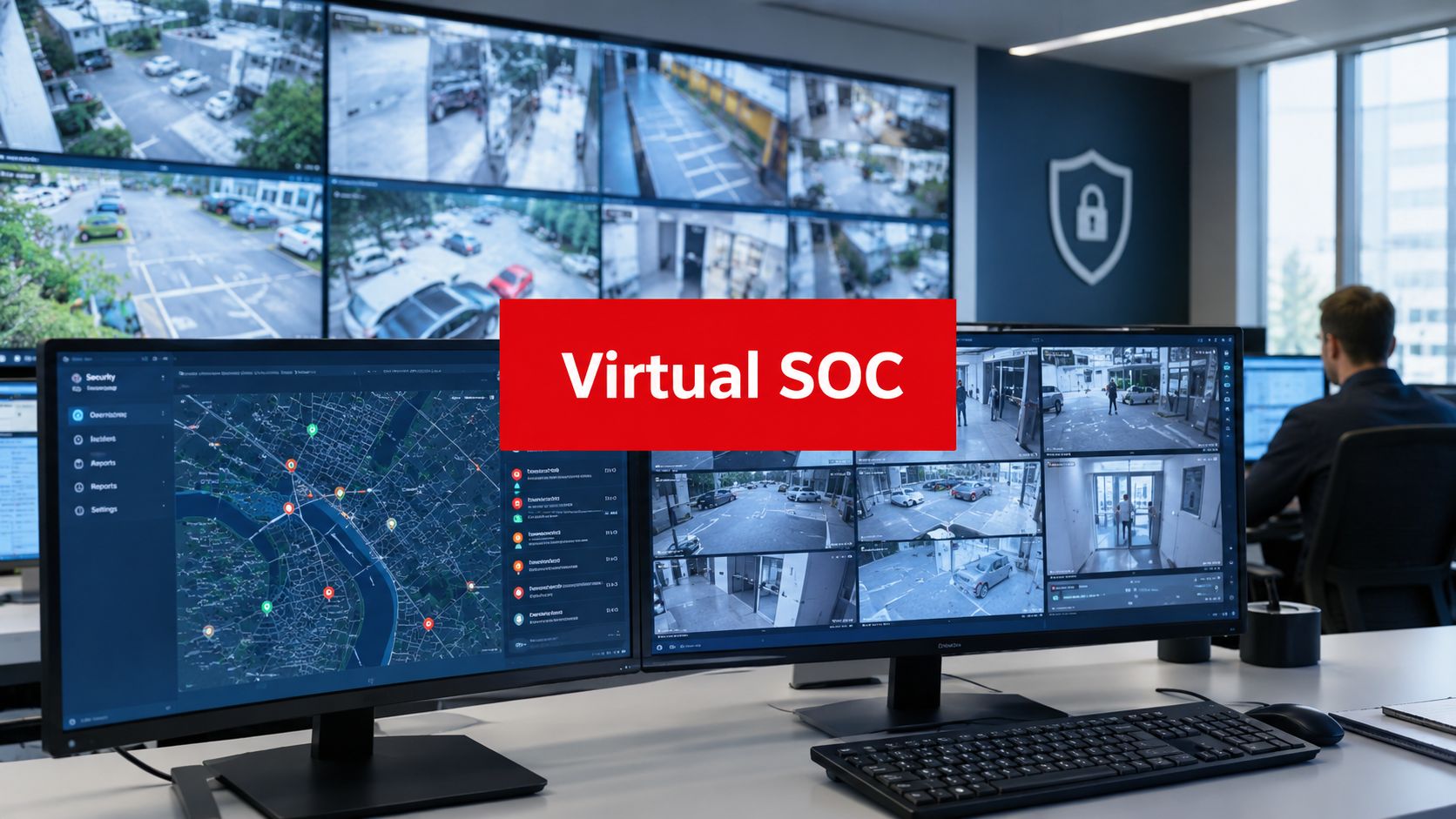
- 24/7 SOC Oversight: Every officer in the field has the full support of a Security Operations Center (SOC). This central command hub provides real-time backup, monitors alerts from the site, and acts as a communications link between the officer, you, and the police.
With over 26 years of experience, we have seen firsthand that combining trained personnel with advanced technology delivers the highest return on investment. It transforms security from a passive expense into an active, data-driven asset protection strategy.
Comparing Security Solutions for Construction Sites
Understanding the difference between a traditional approach and a modern, integrated one is crucial for making an informed decision for your Long Beach project. The value comes into focus when you compare them side-by-side.
| Feature | Traditional Security (e.g., Basic Guard) | Integrated Security (Guards + Technology) |
|---|---|---|
| Deterrence | Limited to the guard's immediate line of sight. | High-visibility patrols enhanced by prominent camera trailers and surveillance signage. |
| Detection | Relies on human observation, which can have blind spots and limitations. | AI-powered cameras and sensors provide 24/7 coverage of the entire perimeter. |
| Response | Can be delayed if the guard is patrolling another area of a large site. | Instant alerts from technology direct officers to the exact location of a breach for a faster response. |
| Accountability | Often relies on handwritten logs, which can be inconsistent or inaccurate. | GPS-verified digital reports provide time-stamped, verifiable data for complete transparency. |
This integrated system ensures that nothing is left to chance. By combining human expertise with smart technology, you create a robust security plan that actively protects your timeline, your budget, and your peace of mind.
For a deeper dive into how this technology can monitor your site around the clock, you can learn more about our remote video monitoring solutions and see how they perfectly complement on-site personnel.
How Security Improves Site Safety and Compliance
When you think about construction site security in Long Beach, it's easy to focus on preventing theft. That's a huge part of it, of course. But for project superintendents, a solid security plan is much more than that—it's a critical tool for boosting job site safety and staying on the right side of regulations.
A secure perimeter isn't just a fence; it creates a controlled environment, which is the foundation of good risk management. You're minimizing the unpredictable variables that so often lead to accidents, project delays, and costly violations. Security stops being a reaction and becomes a proactive strategy for a safe, smooth, and compliant operation.
Mitigating Liability from Unauthorized Access
An unsecured construction site is an open invitation for trouble. Every person who wanders onto your property without authorization—whether it’s a curious teenager, someone looking for shelter, or a thief—is a massive liability risk. If they get hurt, your company could be the one facing a potential lawsuit.
Putting a professional security presence in place establishes clear control over who comes and goes. This isn't just about keeping people out; it's about demonstrating that you've done your due diligence to protect the public. By controlling your perimeter, you drastically reduce the odds of an incident that could spiral into litigation, higher insurance premiums, and a black eye for your company’s reputation.
Protecting Critical Safety Equipment and Infrastructure
Vandalism on a job site often goes beyond simple spray paint. When intruders get in, they can tamper with critical safety infrastructure, creating hidden dangers that your crew might not spot until it's too late.
Consider these scenarios:
- Damaged Scaffolding: A vandal loosens a few supports or removes a plank. The result could be a catastrophic fall hazard.
- Tampered Fire Suppression Systems: Essential gear gets disabled, leaving your project vulnerable to a fire.
- Altered Electrical Systems: Someone cuts wires or damages your temporary power setup, creating a serious risk of electrocution for the first person who flips a switch.
A visible security presence, whether it's an on-site officer or a mobile patrol vehicle, is a powerful deterrent against this kind of malicious damage. It ensures the safety measures you worked hard to implement are still intact when your team clocks in, protecting them from unexpected and preventable accidents.
Safety on construction sites is deeply intertwined with job site security and regulatory compliance. OSHA consistently cites construction as one of the most dangerous industries, and security breaches can directly compromise adherence to its strict guidelines. For instance, tampering with fall protection equipment could lead to a violation of OSHA’s most frequently cited standard.
A robust construction site security Long Beach plan isn't just about protecting assets; it's about protecting people and ensuring you meet regulatory standards. For more on these crucial safety stats, you can find insights about OSHA construction safety statistics at OSHA Online Center. To help you get hands-on, our team has also developed a practical tool. Download our comprehensive construction site safety checklist to help fortify your project against these exact risks.
How to Choose the Right Security Partner in Long Beach
Choosing a provider for construction site security in Long Beach is one of the most important decisions you'll make for your project. This is about so much more than just hiring a guard; it's about finding a partner that directly impacts your budget, your timeline, and your peace of mind.
The right partner becomes an extension of your own team, bringing expertise and unwavering reliability to the job site. You need to look past the initial price tag and find a company that truly understands the unique pressures and risks of building in Long Beach. A true security partner is always thinking ahead, preventing problems before they start, not just reacting after the damage is done.
Look for Deep Local Experience
A security company with deep roots in Long Beach brings an immediate advantage. They already know the local crime patterns, the tricky traffic flows around the port, and the specific dynamics of different neighborhoods.
This isn't just trivia—it's operational intelligence. That local knowledge means they can build a security plan tailored specifically for your site, not just hand you a generic template. When you're talking to potential companies, ask them directly about their experience with projects just like yours, right here in Long Beach or nearby. Their local familiarity is what turns a good security plan into a great one.
Verify Their Technology and Accountability Systems
In today's world, a professional security firm has to be a blend of sharp human instincts and smart technology. Don't just take their word for it—ask for a demonstration. A company that's proud of its systems will be happy to show you how they work.
A key sign of a professional, modern security firm is its use of a GPS-enabled guard tour management system. This technology provides verifiable, time-stamped digital reports, offering complete transparency and ensuring you get exactly the service you are paying for.
Demand proof of accountability. Any company that invests in technology to track its patrols and provide you with detailed digital reports is a company that takes transparency seriously. It shows they're confident in the service they're providing.
Prioritize Officer Training and Retention
High turnover is a well-known problem in the security industry. It leads to inconsistent service, poorly trained officers, and ultimately, a bigger risk for your project. A company that invests in its people is really investing in protecting your site.
Ask direct questions. What's your hiring process? What does your ongoing training look like? What are your employee retention rates?
A provider that’s serious about quality will:
- Offer competitive wages and benefits to attract and keep top-tier officers.
- Provide continuous training that goes beyond the state-mandated minimums.
- Cultivate a supportive company culture where their team members feel valued.
When you partner with a company that has a stable, well-trained workforce, you get professional, reliable officers protecting your assets. It’s also critical to make sure they have the right people for your specific needs, like expertly trained unarmed security officers in Long Beach who are masters of de-escalation and access control. This focus on quality over quantity is what separates a true security partner from just another guard service.
Frequently Asked Questions

Choosing the right security for your construction site in Long Beach means asking the right questions. We often hear from project managers and developers, so we've put together straightforward answers to the most common inquiries. Our goal is to give you the practical information you need to move forward with confidence.
These questions tackle the big concerns, from what actually works to how much it costs. Understanding these points is the first step toward building a security plan that protects your timeline and your bottom line.
What Is the Most Effective Security for a Long Beach Construction Site?
The best approach isn't a single solution; it’s a layered strategy with no single point of failure. It starts with physical deterrents like solid fencing and bright lighting, but it must include modern surveillance technology and a professional human presence. A truly effective plan makes these elements work together.
For a high-risk area like Long Beach, an integrated strategy is the only way to go. This typically includes:
- Technology for Detection: Smart, AI-powered cameras and sensors that watch your perimeter 24/7. This technology is great at spotting real threats while filtering out the noise from false alarms.
- People for Response: On-site security officers or dedicated mobile patrols who can respond to a verified alert immediately. They provide an active, decisive presence that technology alone can't.
When you combine smart tech with human expertise, you create a security posture that’s both proactive in spotting trouble and responsive in handling it. It’s how you get the highest return on your security investment.
How Much Does Construction Site Security Cost in Long Beach?
There’s no one-size-fits-all price because every project is different. Your total cost will depend on your site’s size, its specific location in Long Beach, the value of the materials you have on-site, and the level of protection you need. For example, a dedicated 24/7 on-site guard is a different investment than a mobile patrol that visits several times a night.
A good security partner will never just give you a number. They'll start with a detailed site assessment to understand your unique vulnerabilities and your budget. From there, they can build a custom plan that provides the most value. It's critical to see this as an investment, not just an expense—it's what prevents much larger losses from theft, vandalism, and project-killing delays.
Remember, the cost of a single major theft—when you factor in equipment replacement, project delays, and higher insurance premiums—almost always costs more than many months of a professional security program.
Are Security Guards Necessary if We Have Cameras?
While cameras are fantastic tools for seeing what’s happening and recording it, they can’t physically step in to stop a crime. A camera can film a theft, but it can't confront an intruder, secure a gate that’s been breached, or coordinate directly with police on the ground.
That’s where professional security officers come in. They provide two things cameras can’t: a powerful visual deterrent and an immediate, on-site response. The best strategy uses both. Your technology alerts a responsive guard or a 24/7 Security Operations Center, blending the wide coverage of cameras with the decisive action of a trained professional. That's how you get real protection.
For over 26 years, Overton Security has been the trusted partner for construction projects across California. We combine hands-on leadership with proven technology to deliver security you can count on. Protect your Long Beach project by scheduling a complimentary site assessment today.
Get a free security consultation for your Long Beach project at OvertonSecurity.com