
When we talk about data center security, what exactly does it mean? It’s the essential practice of protecting the physical hardware, the data living on it, and the facility itself from real-world threats. Think of it as a comprehensive shield against unauthorized access, theft, or even environmental damage like floods or fires. A sound strategy blends physical barriers, advanced surveillance, and trained security personnel to wrap the entire facility in a protective layer, keeping digital assets safe from physical risks.
Why Physical Security Is Your First Line of Defense
Imagine your data center as a digital Fort Knox. While we often focus on firewalls and encryption—the complex digital locks on the vault door—none of it matters if someone can simply walk into the room, unplug a server, and walk out. This simple truth highlights a critical point: data center physical security is the bedrock of digital protection. Without a strong physical defense, even the most sophisticated cybersecurity measures can be rendered ineffective.
For facility directors and property managers, getting physical security right isn't just about protecting expensive equipment. It’s about guaranteeing business continuity, safeguarding sensitive client data, and meeting strict compliance standards that carry significant penalties. The stakes are incredibly high, and the market is responding to that urgency with serious investment.
The Growing Demand for Physical Protection
The need for ironclad data centers has never been more critical, driving significant investments in how these facilities are protected. The global market for data center physical security was valued at USD 1.39 billion in 2024 and is projected to reach USD 4.19 billion by 2033. This substantial growth underscores just how vital this field has become.
Currently, North America leads the market with a 37% share, largely due to the proliferation of hyperscale facilities that demand comprehensive security. You can explore more of the numbers behind this trend on Straits Research.
This growth signals a fundamental shift in mindset. Physical security is no longer an afterthought; it's a deeply integrated system essential to modern business operations.
Adopting a Layered Security Mindset
So how do you build an effective defense? It comes down to a concept called layered security. Think of it like a medieval castle. An attacker wouldn't just face a single wall; they would have to overcome a moat, an outer wall, an inner wall, and finally the keep itself. Each layer is designed to deter, detect, and delay threats. If one layer is breached, the next is already in place to stop the intruder.
A truly secure facility recognizes that technology alone is not enough. The most effective security programs blend advanced systems with the irreplaceable judgment and presence of highly trained security professionals.
For over 26 years, Overton Security has partnered with businesses to design and implement these layered strategies. We understand that every facility is unique and requires a customized plan that combines human expertise with smart technology. When you partner with an experienced provider, you're not just buying a service; you're building a resilient defense that protects your critical infrastructure from the outside in.
Building Your Fortress With Layered Security
When you think about securing a data center, the task can feel overwhelming. The most effective strategy, however, is a straightforward layered defense.
Think of it like a medieval castle. To reach the treasure, an intruder has to get past the moat, then the outer wall, then the inner courtyard, and finally, the heavily reinforced keep. Each layer is there to deter, detect, and slow down anyone who isn't supposed to be there.
This "defense-in-depth" approach breaks a large undertaking into manageable zones of protection. If one layer fails, the next is already in place to stop the threat, buying your security team precious time to respond. It's a time-tested method for building a formidable defense around your most critical digital assets.
This flowchart illustrates how physical security serves as the foundation supporting your entire digital protection strategy.
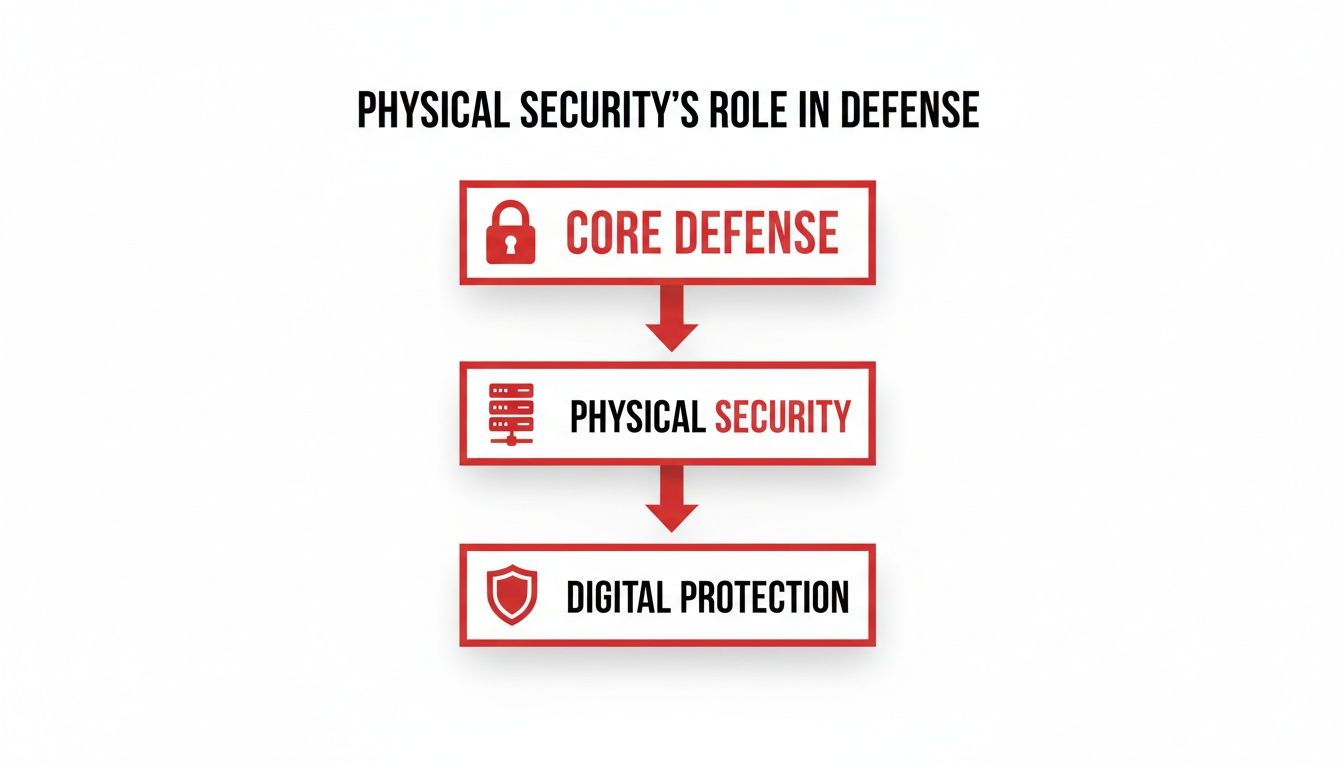
As you can see, your core defenses rely on a solid physical security framework to shield your digital infrastructure from real-world threats. Let's break down the four essential layers that make this fortress work.
To better understand how these layers work together, here's a quick overview of their objectives and the tools used to achieve them.
The Four Layers of Data Center Security Controls
| Security Layer | Objective | Common Security Controls |
|---|---|---|
| Layer 1: Perimeter | Deter and detect unauthorized entry onto the property. | Fencing, crash barriers, gates, surveillance cameras, lighting, vehicle patrols. |
| Layer 2: Facility | Secure the building shell and control all entry/exit points. | Onsite guards, access control systems (card readers), visitor management. |
| Layer 3: Computer Room | Restrict access to the data hall on a "need-to-enter" basis. | Biometrics, mantraps, multi-factor authentication, CCTV monitoring. |
| Layer 4: Rack/Cabinet | Protect individual server racks from unauthorized physical access. | Locking cabinets, asset tags, cage systems, specialized rack access control. |
Each layer builds on the one before it, creating a comprehensive security posture that is incredibly difficult to penetrate.
Layer 1: The Perimeter
Your first line of defense begins at the property line. The primary goal here is to establish a clear boundary and discourage unauthorized individuals from getting close to the building. This is your first and most visible deterrent.
Effective perimeter security is a blend of physical barriers and active surveillance.
- Physical Barriers: Think sturdy fencing, vehicle crash bollards, and controlled entry gates. They create an immediate, formidable obstacle.
- Surveillance: High-resolution cameras with motion detection, paired with bright security lighting, eliminate hiding spots and provide early warnings.
- Professional Presence: Regular, unpredictable vehicle patrols by uniformed officers are a powerful deterrent that technology alone cannot replicate.
An Overton Security vehicle patrol, for instance, creates a constant, visible signal that the site is actively monitored, helping to stop potential threats before they begin.
Layer 2: The Facility
If an intruder manages to bypass the perimeter, the building itself is the next challenge. This layer is all about securing the building's shell and controlling every entry and exit point. The goal is simple: only authenticated individuals gain entry.
At this stage, access control is paramount. Every door, loading dock, and window must be secured and monitored.
A well-defined access control policy is the cornerstone of facility security. It ensures that every entry is intentional, authorized, and logged, leaving no room for unauthorized access through tailgating or social engineering.
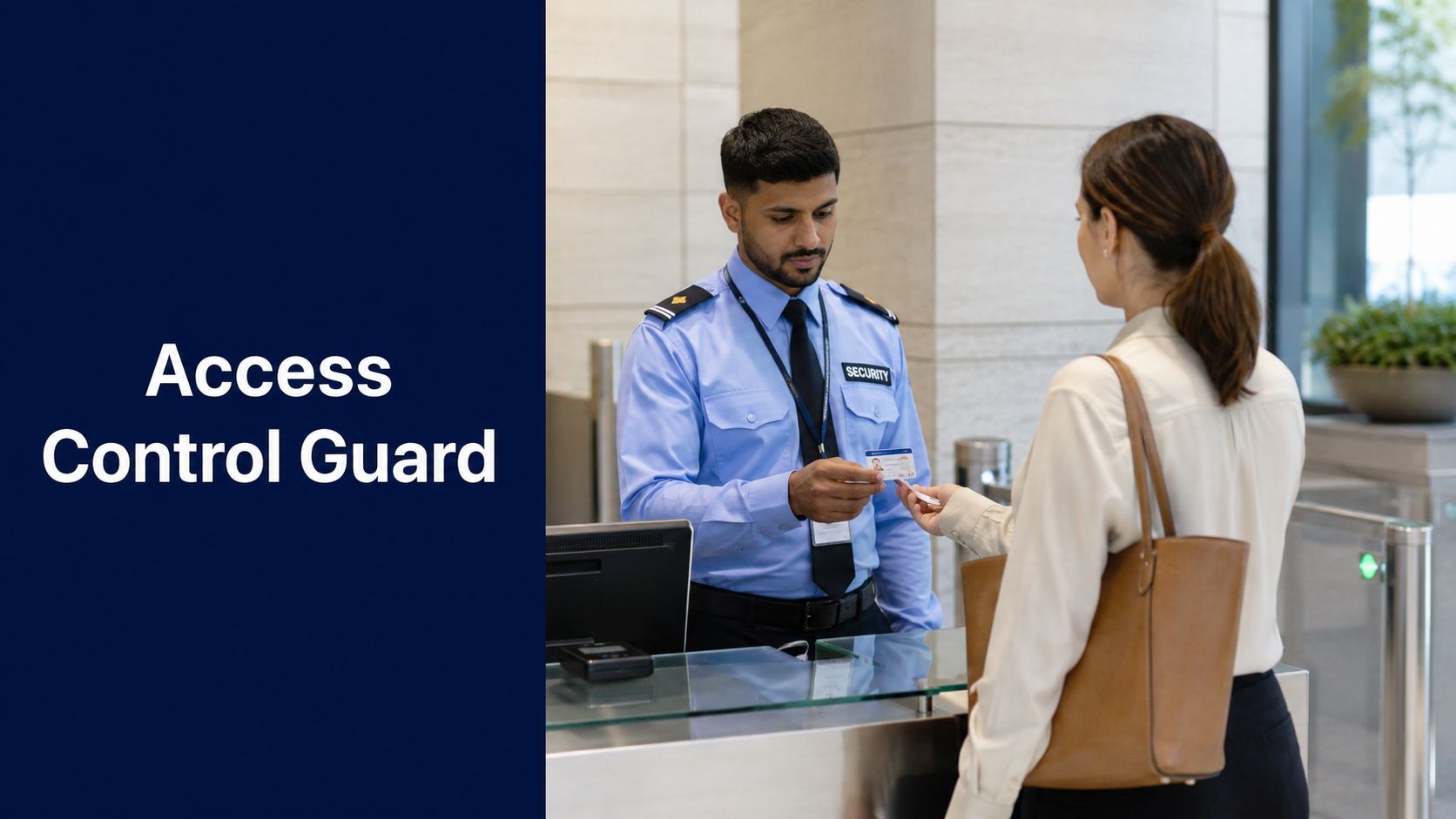
This is where professional security officers stationed at entrances become critical. They are not just there to open doors; they verify identities, manage visitor logs, and enforce access rules with human judgment and authority.
Layer 3: The Computer Room
Once inside the building, access to the most sensitive area—the data hall—must be even more stringent. This third layer is designed to protect your core infrastructure from both external and potential insider threats. Access is granted on a strict "need-to-enter" basis only.
Here, technology and human oversight must work together seamlessly.
- Multi-Factor Authentication: Requiring more than just a keycard—such as a card plus a biometric scan (fingerprint or iris)—dramatically reduces the risk of stolen credentials.
- Mantraps: These single-person entry systems are highly effective at preventing "tailgating," where an unauthorized person attempts to follow an authorized individual inside.
- Constant Monitoring: Every entry and exit is logged and monitored via CCTV, often by a remote 24/7 Security Operations Center (SOC). You can learn more about setting up strong protocols in our guide to access control best practices.
Layer 4: The Cabinet and Rack
The final layer of defense gets granular, securing individual server racks and cabinets. This is absolutely crucial for preventing data theft by malicious insiders or unauthorized technicians, especially in shared colocation facilities.
Even personnel cleared to be in the data hall should only access the specific equipment they are assigned to. This is achieved with locking mechanisms on server cabinets, which can range from traditional keys to advanced electronic locks integrated with the main access control system. By securing assets at the rack level, you create a final, critical barrier that protects data where it resides.
Essential Security Controls and Technologies
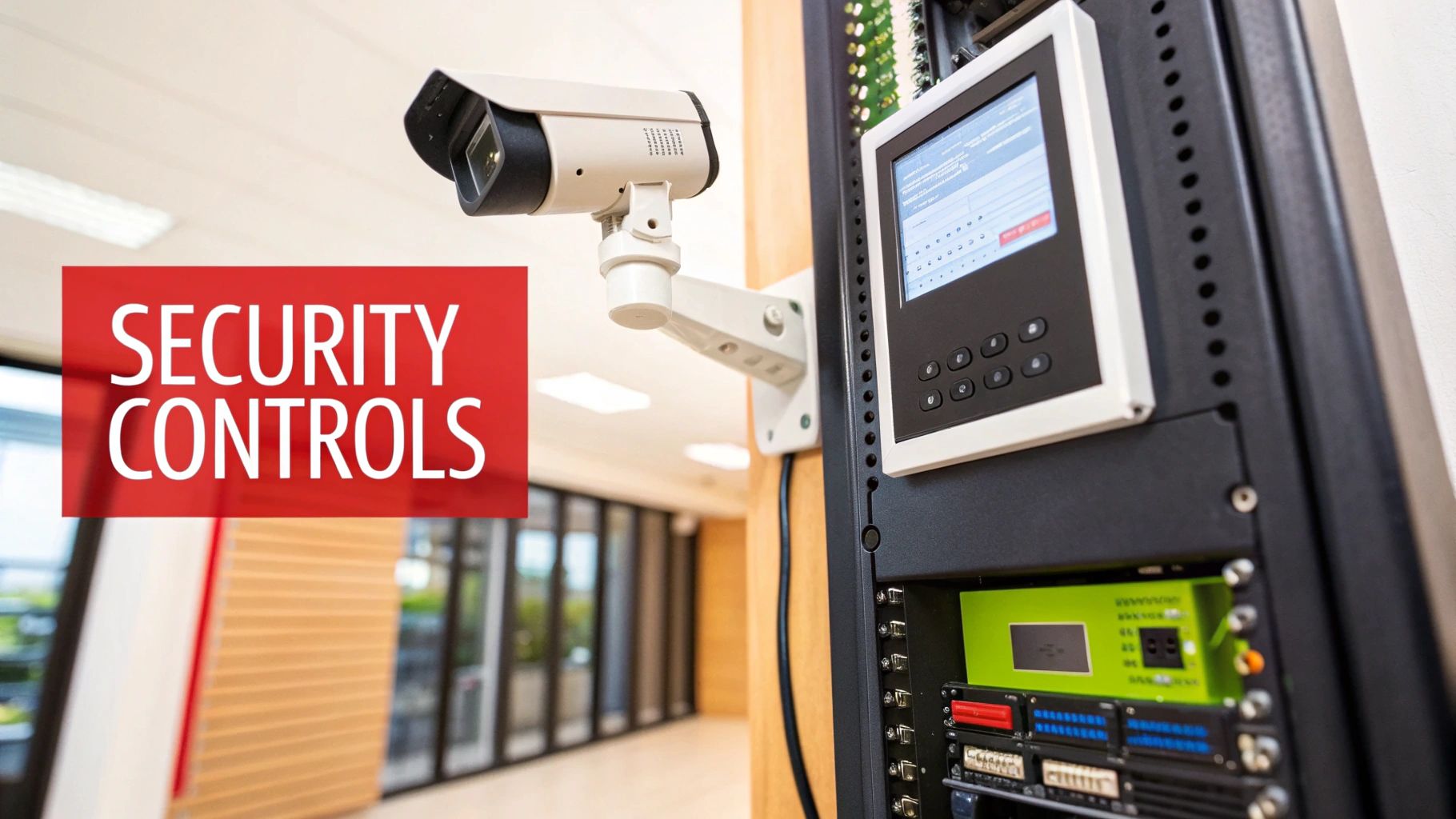
A layered security strategy is your blueprint, but the right tools and technologies are what bring that plan to life. For facilities directors and property managers, understanding these components is key to making informed decisions and building a truly resilient defense. These controls are not standalone gadgets; they are integrated systems that must work in concert to deter, detect, and respond to threats in real time.
Modern data center physical security is a sophisticated blend of access control, surveillance, and physical barriers. When these technologies are paired with expert human oversight, they create a formidable defense that protects your critical assets from every angle. It's about blending smart automation with the irreplaceable judgment of trained professionals.
Advanced Access Control Systems
The cornerstone of physical security is controlling who can enter a facility—and just as importantly, which specific areas they can access once inside. We’ve moved far beyond simple keys and locks. Today’s data centers demand multiple layers of authentication to ensure only authorized individuals get through the door.
- Card Readers and Key Fobs: These are the baseline for most facilities, providing a simple, auditable way to grant and revoke access permissions dynamically.
- Multi-Factor Authentication (MFA): This is a significant security enhancement. MFA requires users to present two or more credentials, like a keycard plus a PIN or a mobile code, making it much more difficult to breach.
- Biometrics: Using unique physical traits like fingerprints, iris patterns, or facial recognition offers a level of verification that's nearly impossible to forge or steal.
Among all controls, advanced access systems are paramount. Innovations like biometric technology have transformed the field, tying access directly to a person's unique identity and eliminating the risks associated with lost or stolen keycards.
Intelligent Surveillance and Monitoring
High-resolution cameras are a given, but modern surveillance is about much more than just recording footage. Intelligent video systems act as a proactive set of eyes, using smart technology to flag potential threats before they can escalate into serious problems.
These systems are often monitored by a dedicated team, 24/7. At Overton Security, our 24/7 Security Operations Center (SOC) provides this critical oversight. Our specialists are trained to analyze alerts, verify potential threats, and dispatch onsite officers or law enforcement when necessary. This seamless link between technology and human response ensures every alert is handled swiftly and effectively.
A camera can record an incident, but a trained SOC specialist can interpret it in real-time. This blend of smart technology and human expertise turns passive monitoring into an active, responsive security measure.
Knowing where to place cameras for maximum effect is also crucial. For guidance on creating an effective surveillance layout, you can check out our guide on where to place surveillance cameras.
Physical Barriers and Structural Hardening
Technology is powerful, but it’s only as good as the physical structure protecting it. Strong physical deterrents are designed to slow down or completely stop an intruder, buying your security team precious time to respond.
- Mantraps: Functioning like a secure airlock for people, these small vestibules have two interlocking doors. The first door must close and lock before the second will open, which effectively prevents unauthorized "tailgating."
- Bollards and Vehicle Barriers: Placed strategically around the perimeter, these reinforced posts can stop a vehicle dead in its tracks, preventing a crash-through attempt on an entrance or wall.
- Reinforced Structures: This includes everything from shatter-resistant windows to reinforced walls and doors, essentially "hardening" the building itself against forced entry.
The importance of integrating these technologies cannot be overstated. As data centers expand into massive campuses, physical security trends for 2025 demand not only integrated defenses but also a tech-savvy, proactive workforce. In fact, solutions like surveillance, intrusion detection, and biometrics are projected to hold a 53.7% revenue share in related security markets. This data highlights the critical need for a security partner who understands how to build these elements into one cohesive and effective program.
The Indispensable Role of Professional Security Officers
In a world filled with high-tech cameras, sensors, and alarms, it’s easy to overlook that your most valuable security asset is human. While technology can record events and trigger alerts, a professional security officer on the ground can observe, think critically, and respond with sound judgment. For a high-stakes environment like a data center, having highly trained, dedicated security personnel isn't a luxury—it's an absolute necessity.
Think of them as the intelligent link between your sophisticated security systems and real-world events. A split-second decision can be the difference between a minor incident and a catastrophic breach. A professional officer is far more than a deterrent; they are the hands-on expert ensuring your entire security ecosystem functions as intended.

Beyond the Uniform: A Partner in Protection
The security industry often struggles with a "burn and churn" staffing model. High turnover rates lead to inconsistent service and officers who are unfamiliar with the site they are assigned to protect. This poses a significant risk for a data center, where knowledge of procedures, personnel, and the facility layout is critical. An inexperienced officer is an easy target for social engineering or might miss subtle cues that something is amiss.
At Overton Security, we have built our 26-year reputation on a different philosophy. We are dedicated to officer retention and professional development because we know an experienced, stable team is your best defense. Our low turnover means you benefit from officers who understand your facility, your team, and your unique security protocols inside and out. They become genuine security partners, not just temporary guards.
An engaged, well-supported security officer is the most powerful tool in your security arsenal. Their ability to assess a situation and make an informed decision is something technology cannot yet replicate.
This commitment to our people is supported by hands-on leadership and our industry-leading security officer training programs. We ensure every member of our team is fully prepared for the specific challenges of a data center environment.
Core Duties in a High-Stakes Environment
An onsite data center security officer’s duties extend far beyond watching a door. They are on the front lines, executing the critical procedures that maintain the integrity of your layered defenses every single day.
- Identity Verification and Access Management: Meticulously checking credentials, cross-referencing identities against approved lists, and ensuring every visitor is properly escorted. There are no shortcuts.
- Log and Incident Reporting: Keeping detailed, accurate logs of all entries, exits, and security-related events using modern digital reporting tools for a clear audit trail.
- Perimeter and Interior Patrols: Conducting regular but unpredictable patrols to spot vulnerabilities, check for signs of tampering, and maintain a strong, visible security presence.
- First Responder Coordination: Acting as the calm, professional point of contact during an emergency—whether it's a security alarm, a fire, or a medical issue—and efficiently coordinating with emergency services.
The Overton Difference: Technology and Accountability
We empower our officers and provide our clients with complete transparency by blending human expertise with smart, practical technology. Every Overton officer is supported by a robust operational framework that drives accountability and ensures consistently high performance.
Our Guard Tour Management System (GTMS) uses GPS and NFC technology to verify patrols in real-time, so you know your facility is being covered. Officers complete detailed digital reports—complete with photos and time-stamped entries—that give you a clear, auditable record of all security activities on your property.
More importantly, every officer in the field has the constant backup of our 24/7 Security Operations Center (SOC). The SOC provides real-time oversight, guidance during incidents, and an immediate point of escalation. This powerful integration of a dedicated onsite officer, customized post orders, and constant remote support elevates the role from a simple guard to an essential part of your comprehensive data center security program.
Navigating Complex Compliance Requirements
For anyone managing a data center, physical security is not just about keeping unauthorized people out. It's about navigating a dense landscape of regulatory and industry standards. Failing an audit or falling out of compliance can lead to severe financial penalties, the loss of critical certifications, and a damaged reputation that is difficult to repair. These rules exist to protect sensitive data, guarantee uptime, and maintain the trust your clients place in you.
Adhering to these standards is more than a simple checklist exercise. It requires a deep understanding of the principles behind them and a serious commitment to building security procedures that are both robust and auditable. Your physical security program must be clearly documented, consistently enforced, and ready to be proven to auditors at any time.
Key Compliance Standards in Plain English
The alphabet soup of compliance standards can be intimidating. While each one has its own specific demands, they all share a common goal: ensuring your physical security measures are comprehensive, effective, and leave nothing to chance.
Here’s a quick breakdown of the major standards:
- SOC 2 (Service Organization Control 2): This standard focuses on how you handle customer data, built on principles like security, availability, and confidentiality. Auditors will scrutinize your access control logs, visitor management protocols, and surveillance records to confirm only authorized personnel can get anywhere near sensitive areas.
- ISO 27001: As the international gold standard for information security, this framework requires formal risk assessments and the implementation of controls to mitigate identified threats. Your entire physical security plan is a critical component of your overall ISO 27001 certification.
- HIPAA (Health Insurance Portability and Accountability Act): If your data center handles protected health information (PHI), HIPAA’s Security Rule is non-negotiable. It mandates strict physical safeguards to protect facilities and equipment from unauthorized access and environmental threats.
At their core, these regulations are designed to shift security from a reactive afterthought into a proactive, documented, and constantly improving process. The proof of compliance is every bit as important as the security measures themselves.
From Policy to Proof
Meeting these standards means building a security-first culture, supported by clear policies that serve as your playbook. When every action is consistent and auditable, you are on the right track. Adhering to these mandates is critical, and a great place to start is by learning how to build a modern compliance risk management framework that ensures your physical measures meet every required benchmark.
Cyber threats are targeting data centers globally, and physical security is increasingly seen as a critical line of defense. With 80% of data breaches now involving cloud-based data, it's no surprise that strict regulations are pushing the physical security market toward an estimated USD 54.98 billion by 2032. This spending spike shows just how vital layered defenses are in colocation centers that protect mission-critical data for finance, healthcare, and other heavily regulated industries. You can find more insights about this growing market and its drivers.
With 26 years of experience in this field, Overton Security understands this landscape inside and out. We work with clients to develop and implement customized post orders that align perfectly with their specific compliance needs. Our Guard Tour Management System (GTMS) generates detailed digital activity reports, giving you the tangible, time-stamped evidence auditors demand. This transforms your day-to-day security operations into a source of auditable proof, empowering you to confidently demonstrate your commitment to protecting critical infrastructure.
Partnering Up for Total Data Center Protection
Protecting a data center isn’t about just installing cameras and alarms. It’s about creating a living defense system where technology and human expertise work hand-in-hand. This isn't a "set it and forget it" task; it demands constant vigilance, deep knowledge, and an unwavering commitment to quality. That has been the core of our philosophy at Overton Security for over 26 years.
We have never aimed to be the biggest security provider—only the most reliable. Our focus on quality over quantity means we maintain a low manager-to-client ratio, giving you the hands-on leadership and focused attention your critical infrastructure demands. We invest in our people, moving away from the industry's typical "burn and churn" hiring model to provide you with a stable, experienced team that knows your facility inside and out.
Your Trusted Security Partner
Choosing the right partner means matching your needs with proven capabilities. Here’s a quick look at how Overton Security aligns with the layered defense strategy we've discussed:
- Vehicle Patrols: Our marked patrol cars are a strong visual deterrent, creating a protective presence around your perimeter that helps stop threats before they begin.
- Onsite Security Officers: Our highly trained officers are your front line. They manage access, verify every identity, and act as expert first responders on the ground.
- 24/7 SOC Monitoring: Every officer on site is backed by our Security Operations Center, which provides real-time oversight and ensures an immediate, coordinated response to any incident.
- Technology-Driven Transparency: You are never in the dark. Our Guard Tour Management System (GTMS) delivers detailed digital reports, giving you a clear, auditable record of all security activity.
A partnership with Overton Security is an investment in a complete security solution. Every layer of your defense is reinforced by experienced professionals and systems that demand accountability. We don't just provide coverage—we deliver confidence.
Your data center is far too valuable to leave its security to chance. Let's work together to build a program that protects your assets, keeps you compliant, and gives you lasting peace of mind.
Contact Overton Security today to schedule a comprehensive security assessment for your facility.
Common Questions About Data Center Security
Even with the best intentions, facility managers and property owners often have questions when it comes to securing a data center. Let's walk through some of the most common inquiries, providing clear, practical answers to help you protect your critical infrastructure.
How Is Data Center Security Really Different From Regular Commercial Security?
While both involve protecting property, data center security operates on a much higher level with far greater stakes. Standard commercial security typically focuses on general threats like vandalism or theft of physical items. Data center security, however, is about protecting incredibly valuable digital assets from highly sophisticated physical attacks and insider threats.
This requires a far more rigorous, multi-layered approach. Data centers must adhere to strict compliance standards like SOC 2 or HIPAA. They rely on advanced technology like biometrics and mantraps and enforce intense access control protocols where every entry is tracked and audited. The goal isn't just general deterrence; it's about having absolute, provable control over who gets near your core hardware.
What’s the Right Mix of Technology and Onsite Guards?
The best data center security programs don't see this as an either/or question. They blend technology and human expertise so they work together seamlessly—because one cannot fully replace the other. Technology provides constant, unbiased monitoring. Your access control system will enforce permissions perfectly 24/7, and your cameras will record everything without blinking.
However, technology lacks judgment. Professional security officers bring the critical thinking and response capabilities that automated systems do not possess. They can spot unusual behavior that a camera might miss, de-escalate a tense situation, verify an identity beyond a simple card swipe, and manage unexpected emergencies. The ideal setup uses technology for the heavy lifting of surveillance and access enforcement, while empowering trained officers to manage exceptions, respond to incidents, and provide an authoritative physical presence.
What's the Very First Step in Building a Security Plan?
The first and most critical step is always a comprehensive risk assessment. Before you can build a defense, you must know exactly what you are defending against. This is not just a quick walkthrough; it's a deep-dive evaluation of your facility, from the perimeter fence right down to the individual server rack.
A thorough risk assessment is the foundation of your entire security strategy. It identifies your unique threats—whether environmental, criminal, or operational—and allows you to allocate resources effectively instead of guessing where your weaknesses are.
A professional assessment will analyze potential threats, review your existing controls, and pinpoint gaps. This process gives you the data-driven insights needed to design a layered security plan that is tailored to your facility, budget, and compliance requirements. It ensures every dollar you spend is directed where it will have the greatest impact.
Protecting a data center requires a partner who truly understands the unique challenges of safeguarding critical infrastructure. With over 26 years of experience, Overton Security combines trained personnel, advanced technology, and hands-on leadership to deliver reliable, comprehensive security solutions.