A preventable incident rarely starts with the incident itself. It starts with a gate that doesn't close, a poorly lit stairwell, an unattended loading area, or a patrol route that exists on paper but isn't verified in the field. By the time a property manager receives the call, the damage may already be done, and the security team is left documenting what happened instead of preventing the next occurrence.
Proactive security solutions change that operating model. They combine trained human judgment, visible patrols, reliable procedures, digital accountability, and monitoring systems that help teams identify and address risk earlier. For property managers responsible for residential communities, retail centers, construction sites, office buildings, and mixed-use portfolios, the objective isn't more activity. It's measurable risk reduction.
Understanding the Shift to Proactive Security Solutions
A property manager receives an after-hours call from a retail tenant. A rear service door was found open, a storage area shows signs of tampering, and no one can confirm when the door was last checked. The officer's report is complete, but the report only answers what happened after the vulnerability had already been exploited.
A reactive program responds to that call. A proactive program asks different questions before the call arrives. Was the door included in a documented patrol route? Did the officer verify the lock rather than merely pass the entrance? Did a camera or access alert reach someone who could act? Did the post orders explain when to notify the monitoring team, contact a supervisor, or request emergency assistance?
Presence is not the same as prevention
A uniformed officer can deter unwanted activity, but coverage alone isn't a strategy. A guard who has no current site plan, no defined escalation process, and no way to prove completed patrols gives a property manager limited control over actual risk.
Proactive security means identifying predictable weaknesses and assigning clear actions to address them. At a residential property, that may involve checking parking structures, monitoring access points, documenting lighting concerns, and responding to recurring trespass patterns. At a construction site, it may mean inspecting material storage, confirming perimeter conditions, and adjusting mobile patrol timing around known vulnerabilities.
Practical rule: If a security provider can't explain what the team does before an incident occurs, the program is probably reactive.
The historical development of security technology reflects this same principle. Augustus Russell Pope patented an electromagnetic burglar alarm in the 19th century, establishing an early model for using sensors and alerts to identify intrusion before losses escalate, as described in this history of security technology. The value wasn't observation by itself. It was earlier notice followed by an opportunity to intervene.
Why expectations have changed
Proactive security is no longer limited to premium high-rises or large corporate campuses. Residential communities need consistent access control and patrol verification. Retail centers need loss prevention, customer safety, and faster responses to loitering or trespassing. Construction managers need protection for equipment, materials, and incomplete structures.
The shift also reflects enterprise buying behavior. In 2024, more than 70% of respondents in a global research report increased spending on proactive security solutions compared with the prior year, and the same research identified automation as a critical capability for a proactive security strategy, according to this Omdia research report on automation and proactive security. The lesson for property managers is straightforward. Prevention, automation, and risk-based prioritization have moved into the operating budget conversation.
A security program should therefore answer three practical questions: What can go wrong, how will we notice it early, and who will act before the exposure becomes an incident?
Core Components of a Proactive Security Strategy
A reliable proactive program has interconnected parts. A risk assessment identifies weaknesses, post orders convert those weaknesses into assignments, patrols create visible and physical deterrence, and monitoring systems provide oversight when the site team is dispersed or working after hours.
Start with a property-specific risk assessment
A generic checklist misses the conditions that make one site different from another. The assessment should examine:
- Access points: Review vehicle gates, pedestrian entrances, loading areas, roof access, stairwells, and tenant-only doors.
- Visibility gaps: Identify poor lighting, obstructed camera views, isolated corridors, and areas that officers can't inspect effectively from a vehicle.
- Operational pressure points: Consider deliveries, resident move-ins, retail closing routines, construction material storage, and periods when staffing changes.
- Recurring behavior: Review trespass, vandalism, theft, alarm activity, fire-watch concerns, and service calls to find patterns worth addressing.
The assessment should produce decisions, not just observations. If a rear gate is repeatedly found unsecured, the response might include a checkpoint, a documented lock inspection, a lighting correction, and an escalation rule for repeated failures.
Turn findings into post orders
Post orders should tell an officer what to check, when to check it, what evidence to capture, and what happens next. “Patrol the property” isn't enough. A useful instruction identifies the route, checkpoint, condition to verify, report format, and escalation threshold.
This is also where hiring standards matter. Property managers reviewing screening practices can use a resource such as this volunteer background check guide to understand the types of background-screening considerations organizations may evaluate when placing personnel in trusted roles. A security provider should apply screening and training standards appropriate to the assignment and applicable requirements.
Build layered coverage
Preventive patrols work best when they complement, rather than duplicate, technology. Cameras can provide visibility, sensors can generate alerts, officers can verify conditions in person, and a supervisor or SOC can coordinate escalation.
The market is expanding around this integrated model. One forecast cited in the Omdia material values the global proactive security market at USD 12.5 billion in 2025 and projects USD 24.8 billion by 2034 at a 7.9% CAGR, while another forecast places the market at USD 50.24 billion in 2025 with growth to USD 98.86 billion by 2030. These are separate market projections, not guarantees for an individual property, but they demonstrate broad demand for earlier detection and prevention capabilities in the sector.
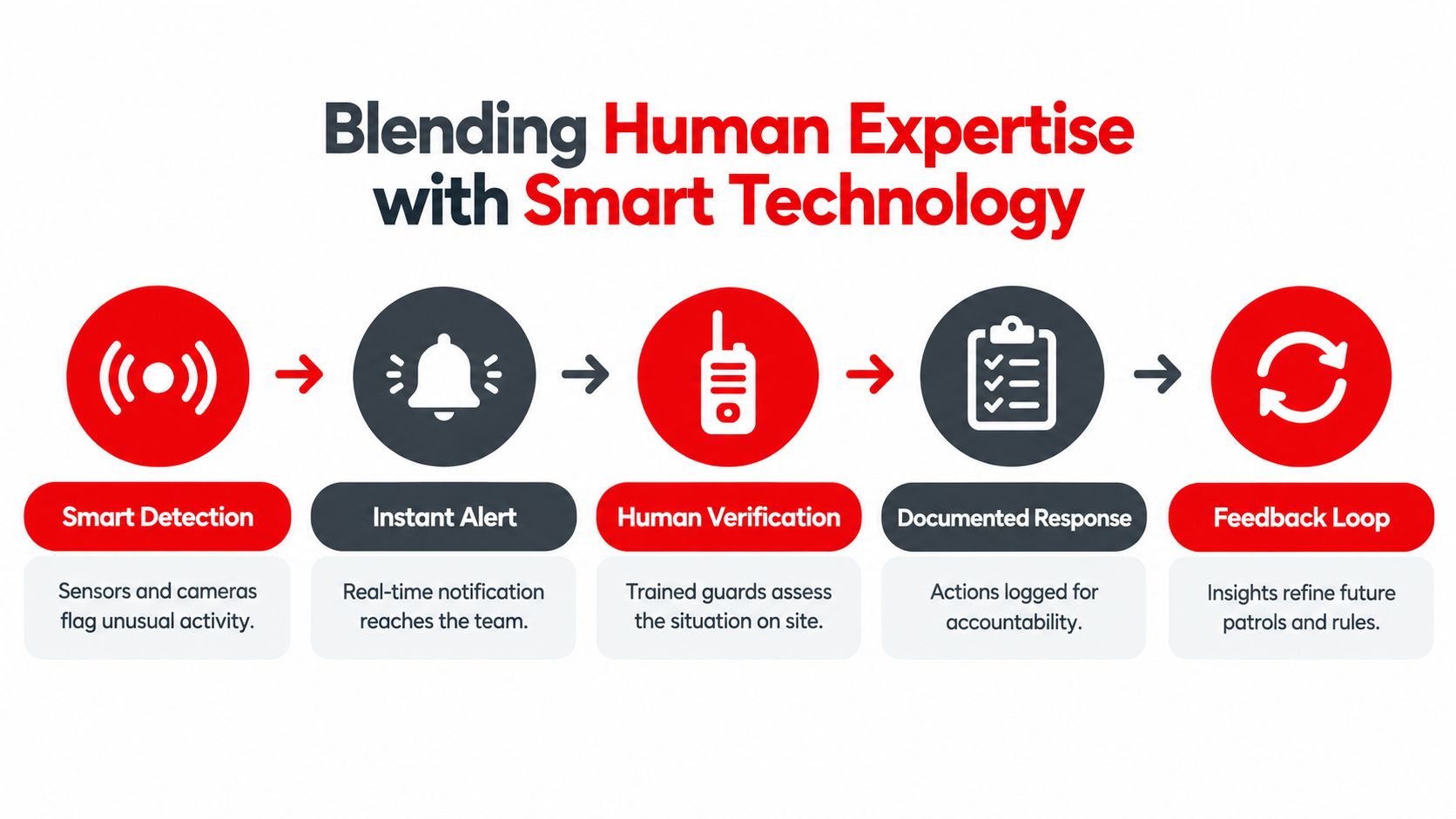
The operating sequence should be clear:
- Detect: A sensor, camera, officer, resident, or employee identifies an unusual condition.
- Notify: The alert reaches the responsible monitoring or supervisory team.
- Verify: A trained person confirms whether the condition is harmless, suspicious, or urgent.
- Respond: The team follows the post order and documents the action.
- Improve: Managers review the record and adjust routes, instructions, staffing, or equipment.
That feedback loop separates a strategic program from a collection of disconnected security services.
Blending Human Expertise with Smart Technology
Technology becomes useful when it produces an action someone can verify. A camera may show activity near a parking structure, but a trained officer determines whether the person is a resident, an employee, a trespasser, or someone requiring immediate assistance. The SOC provides coordination, while the officer provides context.
Make patrol activity verifiable
A Guard Tour Management System, or GTMS, replaces the uncertainty of paper logs with field-created records. Officers can scan NFC tags, barcodes, QR codes, or GPS checkpoints, depending on the system and site design. The platform can record the checkpoint, time, location, instructions, exception questions, photos, notes, and incident details, as described by Trackforce's guard tour system.
The process should be simple enough to use during a real patrol:
- Scan the checkpoint: The officer confirms arrival at the assigned location.
- Inspect the condition: The officer checks doors, fences, lighting, equipment, or other site-specific concerns.
- Record exceptions: The officer answers required questions and adds photos or notes when conditions differ from expectations.
- Escalate when needed: The system or officer triggers the relevant response instead of waiting for a later report.
- Close the loop: A supervisor reviews the record and assigns follow-up work.
A mobile system can also connect an incident to the exact patrol point where it was found. That detail helps property managers distinguish between a route that was completed and a vulnerability that was corrected, as explained by Patrol Points' mobile guard-tour platform.
Use the SOC as an operating layer
A 24/7 Security Operations Center should do more than watch screens. It should monitor field activity, receive alerts, support lone workers, confirm welfare checks, dispatch assistance, and escalate events according to the account plan. Centralized guard-management platforms can combine command-center oversight, checkpoint tracking through QR codes, NFC tags, or geolocation, and media-rich incident reports submitted from the field, according to Trackforce's guard-management overview.
Microsoft describes SOCs as providing 24/7 monitoring and rapid response, with organizations tracking mean time to detect, or MTTD, to determine whether tools, processes, or staffing changes accelerate detection. In a property setting, the same logic applies. The manager should know how quickly the team identifies a failed gate, suspicious activity, alarm condition, or safety issue, and how quickly the assigned responder takes action.
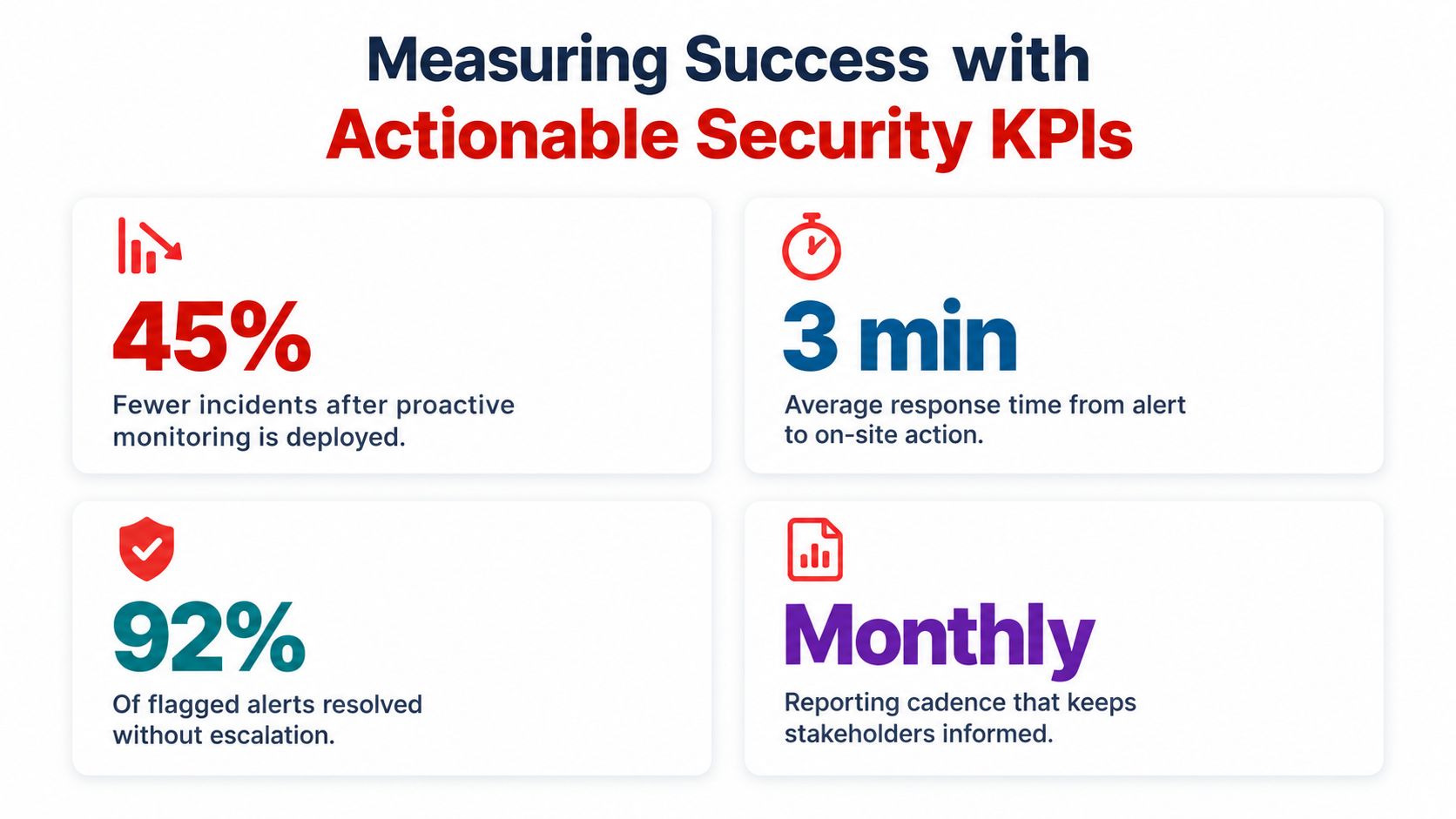
Ask for records that connect the alert to the response. A useful report shows the time of detection, verification, dispatch, arrival, action taken, and final disposition. That information gives a property manager something stronger than a general statement that the site was monitored.
For a practical example of how management systems and security operations can work together, review Overton's security management innovations. The important principle is broader than any one provider. Human judgment should validate technology, and technology should make human performance visible.
Balancing Technology Investments with Human Patrols
Property managers shouldn't buy sensors just because sensors are available. The right investment depends on the risk, the physical environment, and the action required after detection.
Technology performs well when the condition is observable and repeatable. Cameras can extend visibility across large areas. Access alerts can identify doors opened outside expected conditions. Remote monitoring can help a central team recognize activity when an onsite officer isn't positioned nearby.
Human patrols perform better when the situation requires interpretation, service, discretion, or physical intervention. An officer can speak with a resident, identify a blocked fire exit, assist a confused visitor, observe changing conditions at a construction site, or coordinate a safe response to a developing problem.
Match the control to the exposure
Use this decision matrix to avoid technology-led purchasing:
| Property Risk Scenario | Best Proactive Approach | Why It Works |
|---|---|---|
| Retail shrinkage and recurring loitering | Visible unarmed security officers, targeted mobile patrols, camera review, and documented closing checks | Officers provide presence and judgment, while monitoring and records reveal patterns around entrances, exits, and vulnerable areas |
| Residential trespassing and parking concerns | Concierge coverage where resident interaction matters, verified patrol routes, access-point checks, and remote video monitoring | The team can deter activity, support residents, and verify conditions across garages, amenities, and perimeter areas |
| Construction equipment and material theft | Dedicated or scheduled vehicle patrols, perimeter inspections, lighting and camera coverage, and strict post orders | Officers can inspect changing site conditions and document tampering, while technology extends visibility between visits |
| Fire-watch or life-safety exposure | Trained fire-watch personnel, frequent documented rounds, and immediate escalation procedures | Human inspection remains essential when systems are offline or conditions require physical verification |
| Multi-site portfolio oversight | Centralized SOC support, GPS-enabled patrol verification, standardized reporting, and local officers | Portfolio managers gain consistent records without removing local judgment from each property |
A concierge officer may outperform another camera in a Class A lobby because the assignment includes service, access control, and immediate human interaction. A remote camera may outperform a static post for a broad perimeter that needs continuous observation. A mobile patrol may be the sensible middle ground for several nearby properties, while a dedicated vehicle patrol makes more sense when one site has concentrated risk.
Spend on execution before adding complexity
Before approving new software, confirm that existing post orders are current, officers know the site, supervisors review reports, and escalation contacts answer calls. Poor execution will undermine an expensive system.
The best technology investment is the one that gives a trained person better information and a clear reason to act.
For property managers in Los Angeles, San Jose, or other California markets, the decision should account for the actual site layout and operating schedule, not a vendor's standard package. A balanced program might combine unarmed guards, vehicle patrol in Los Angeles, remote monitoring, and periodic management reviews. The right mix is the one that closes a specific exposure and leaves evidence that the control worked.
Measuring Success with Actionable Security KPIs
A provider can produce more reports without reducing risk. Property managers need measures that connect activity to outcomes, especially when presenting security decisions to owners, HOA boards, tenants, or corporate leadership.
Track detection as a physical-security metric
In cybersecurity, mean time to detect, or MTTD, measures how quickly a team identifies suspicious activity. Microsoft explains that SOCs use MTTD to evaluate whether tooling, process changes, or staffing improvements accelerate detection, as outlined in its SOC monitoring and MTTD guidance.
Physical security teams can apply the same discipline. Start the clock when a sensor, camera operator, officer, employee, or resident creates the first alert. Stop it when the responsible team recognizes and records the condition. A lower MTTD generally gives the team a shorter opportunity window in which to verify and intervene.
Pair MTTD with response and recurrence measures:
- Mean time to verify: Measure how quickly the team determines whether an alert represents a real condition.
- Mean time to respond: Record the time from verified alert to on-site action or completed remote intervention.
- Recurrence rate: Track whether the same gate, access point, lighting fault, trespass pattern, or procedural failure returns.
- Resolution status: Separate closed incidents from incidents that were merely documented and left unresolved.
- Patrol completion quality: Review whether officers reached required checkpoints and completed the required inspection, not just whether a route was marked complete.
Prove remediation, not just detection
Exposure-management thinking has moved toward combining discovery, validation, prioritization, and remediation rather than treating findings as separate alert streams. For a property manager, that means a report should identify the issue, assign an owner, record the corrective action, and confirm whether the vulnerability remains.
A quarterly review should answer:
- Which risks were identified?
- Which risks received priority and why?
- What action corrected each exposure?
- Did the same issue recur?
- What should change in patrol timing, staffing, post orders, lighting, access control, or monitoring?
A compiled incident-management review reports 28% fewer recurring incidents, prevention of about 40% of potential incidents through early detection, and a 63% reduction in MTTR for critical incidents when machine-learning-based incident management was used, according to this incident-management transformation review. Those figures come from a compiled review and shouldn't be treated as a promise for a physical property. They do support a sound management principle: measure whether early signals lead to fewer repeat events and faster resolution.
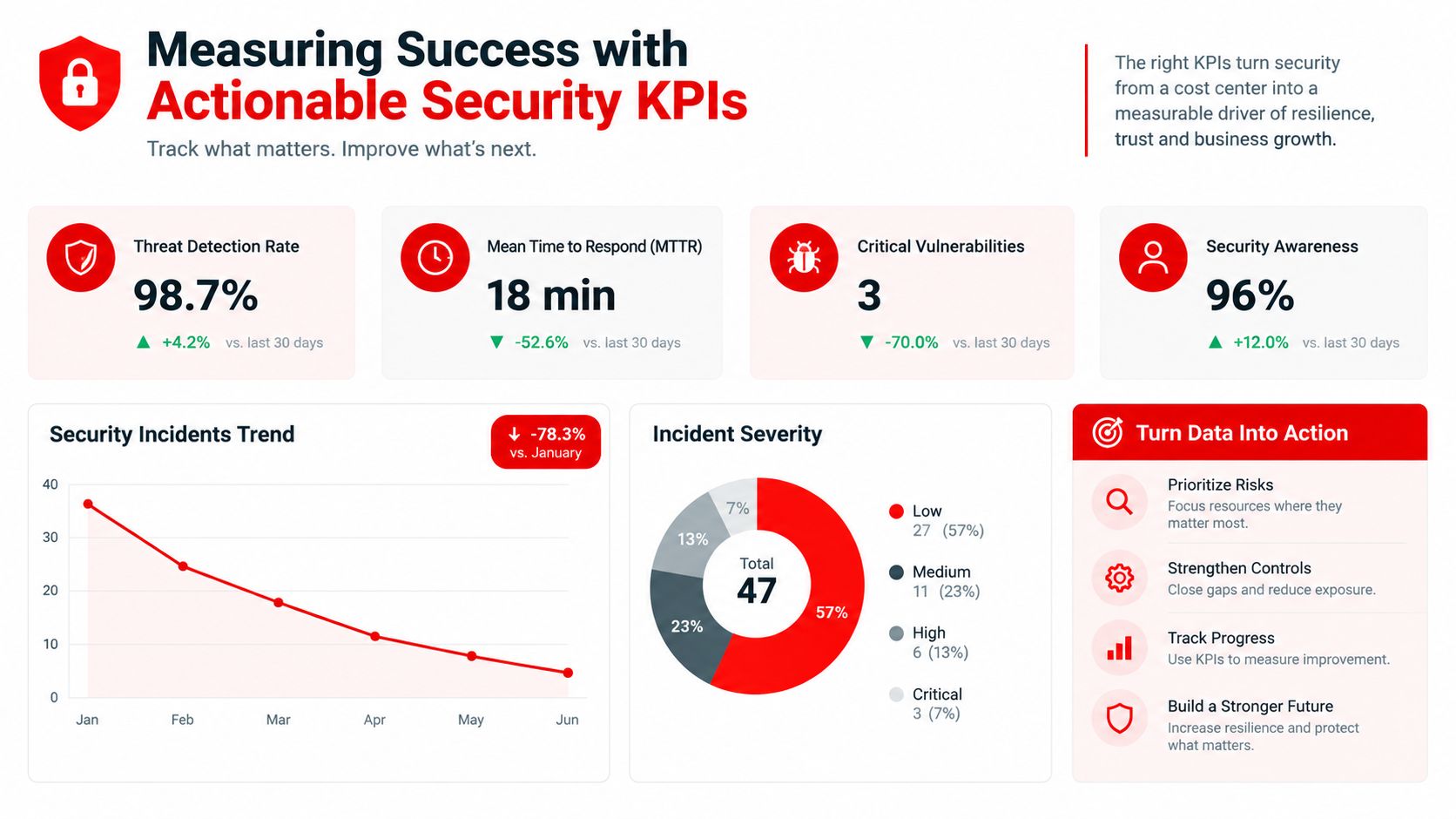
Property managers can use security performance indicators to organize these measures into a reviewable operating picture. The goal isn't to make the dashboard impressive. It's to show that the program identified exposures, assigned corrective action, and reduced the chance of repetition.
Implementation Roadmap for Property Managers
Moving from a reactive guard contract to proactive security doesn't require changing every control at once. It requires a sequence that starts with evidence and gives officers, managers, and stakeholders a shared operating plan.
1. Assess the site under real conditions
Walk the property during the periods when risk is most likely to appear. Review access points, lighting, parking areas, loading zones, vacant spaces, construction materials, fire systems, and resident or tenant traffic. Compare the physical inspection with existing incident reports, alarm activity, complaints, and patrol records.
The output should be a prioritized risk register. Separate immediate life-safety concerns from recurring nuisance conditions and longer-term capital improvements.
2. Rewrite the post orders
Write instructions around observable actions. Identify each checkpoint, inspection requirement, reporting field, escalation contact, and decision threshold. Include maps or site plans where they help officers move efficiently and require photos or notes for conditions that need follow-up.
Train officers on the revised orders in the environment where they'll use them. A document that looks complete in an office can still fail if it doesn't match the property's gates, doors, tenant routines, or construction phases.
3. Design patrol coverage around risk
Set patrol routes and timing based on the risk register, not habit. Use visible patrols for deterrence, targeted checks for vulnerable areas, and dedicated coverage where the exposure justifies it. For portfolios, decide whether shared patrols provide adequate visibility or whether a dedicated vehicle patrol is necessary for one property or a defined group of sites.
Build exceptions into the plan. A blocked checkpoint, resident complaint, alarm, unsecured door, or damaged fence should trigger a defined action rather than an informal note.
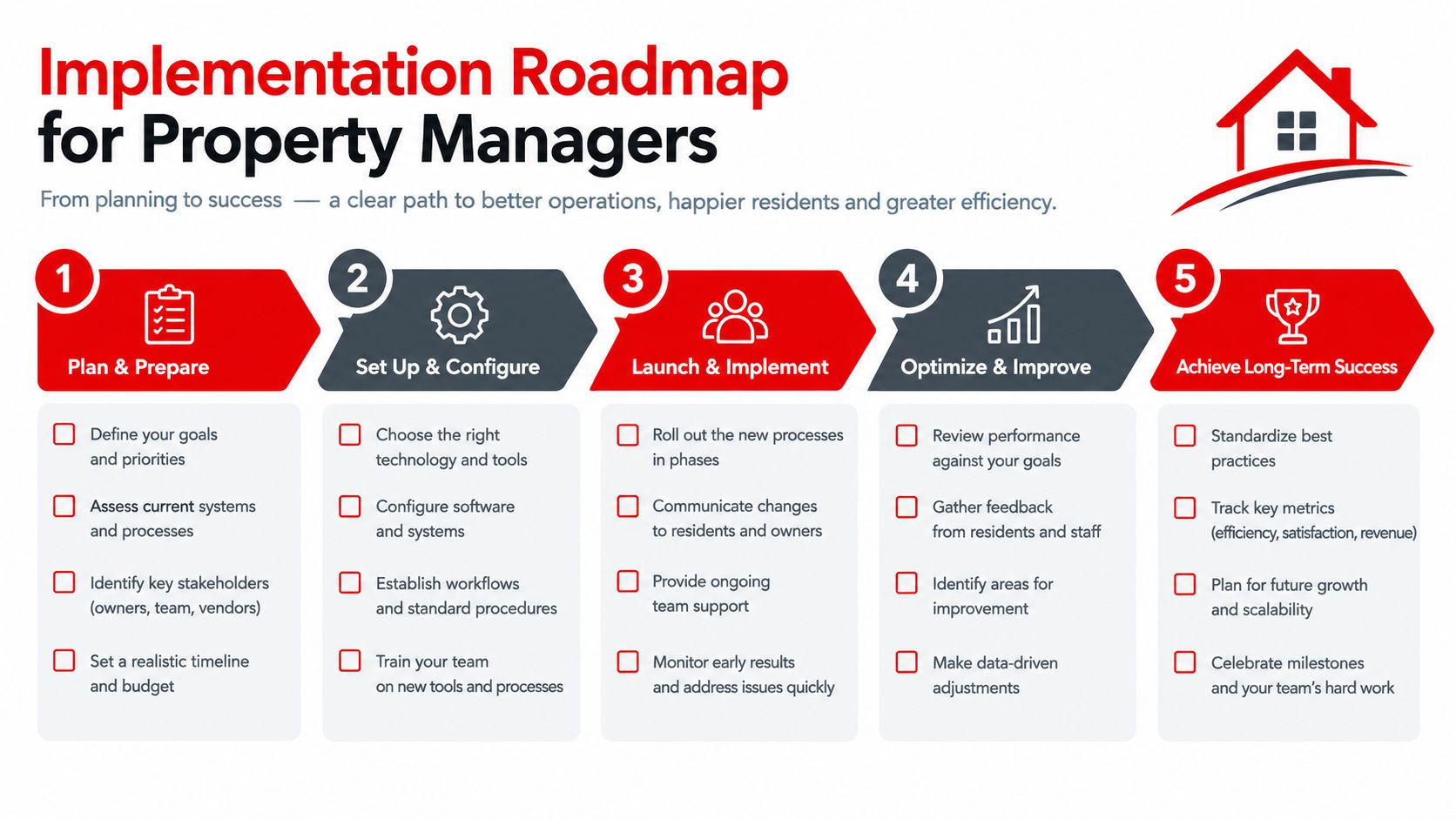
4. Add digital verification and SOC support
Deploy NFC, QR, barcode, or GPS checkpoints where they improve accountability. Configure the system to capture incident details, photos, exception answers, and instructions at the point of inspection. Give the SOC clear responsibility for monitoring alerts, supporting lone workers, dispatching assistance, and escalating events.
Don't automate a process that nobody owns. Assign responsibility for reviewing incomplete routes, unresolved incidents, and recurring exceptions.
5. Set the review cadence
Meet with the security provider after implementation to review route completion, detection time, response time, unresolved conditions, recurrence, and stakeholder feedback. Use the provider's incident response process as a reference point when evaluating how alerts move from detection to closure.
Communicate changes to tenants, residents, and onsite teams without creating alarm. Explain that patrol timing, access checks, reporting, or monitoring may change to improve consistency and response. Then revisit the plan when the property changes, construction advances, occupancy shifts, or incident patterns develop.
Building a Long-Term Security Partnership
A proactive program depends on people who know the property and care whether the plan works. High turnover breaks that continuity. New officers may miss site-specific patterns, misunderstand post orders, or lack the confidence to escalate a developing issue.
Independent reporting found that annual turnover in the security industry reached 50.8% in 2023, compared with 38.4% for the private sector overall, as reported by the Center for American Progress. For property managers, the operational consequence is clear. A provider that constantly replaces officers may still fill shifts, but shift coverage isn't the same as dependable site knowledge.
Choose stability and accountability
Ask prospective providers:
- Who manages the account? Confirm the manager's workload and expected site-visit schedule.
- How are officers supported? Review training, recognition, communication, and advancement practices.
- How is performance verified? Request examples of patrol records, incident workflows, and escalation reporting.
- Who reviews trends? Make sure someone converts recurring findings into changes in post orders or coverage.
- How does the SOC support the field? Clarify monitoring, wellness checks, GPS oversight, dispatch, and escalation responsibilities.
Overton Security has operated for 26 years, focusing on quality over quantity, a low manager-to-client ratio, hands-on leadership, professional officer retention, GPS-enabled patrols, digital reporting, and 24/7 SOC oversight. Those capabilities matter only when they produce consistent execution, transparent records, and responsive communication.
The right partner won't sell technology as a substitute for judgment or officers as a substitute for management. It will build a practical system in which trained people, clear orders, verified patrols, and centralized oversight reinforce one another.
Overton Security provides onsite armed and unarmed officers, vehicle patrols, concierge security, construction site coverage, fire watch, remote monitoring, and 24/7 SOC support across California, including Los Angeles, San Jose, San Diego, Sacramento, and other major markets. Visit Overton Security to discuss your property's current exposures, review your patrol and monitoring model, and build a proactive security program with measurable accountability.