A property manager can have officers on site, cameras on, and patrols scheduled, yet still lack a dependable security operation. Reports may arrive late, escalation paths may be unclear, and no one may know who owns training, post orders, compliance, or corrective action after an incident. That gap creates confusion for residential communities, retail centers, construction sites, healthcare facilities, and multi-site portfolios.
Security manager responsibilities extend well beyond filling shifts. The role combines risk assessment, written procedures, officer development, incident coordination, technology oversight, compliance, client communication, and measurable improvement. The U.S. Occupational Information Network defines security managers as professionals who directly manage an organization's security functions, including the physical safety of employees and facilities, rather than merely administering a guard schedule. O*NET's security manager summary provides a useful baseline for property and facilities leaders who need clear accountability.
The role is also becoming more formal. One labor-market projection cited by the University of Utah expects security manager employment to grow 14.2% from 2024 to 2034, with about 13,204 job openings nationally. The University of Utah's career profile connects that growth with the expanding need for organized security operations, incident response, and compliance oversight.
The eight responsibilities below show what a manager owns, how expectations change by property type, what belongs in post orders and job descriptions, and how Overton supports execution through its 24/7 SOC, GPS-enabled GTMS, customized site plans, and low manager-to-client ratio. For related operational planning, compare these key duties for fleet safety managers with the broader accountability required in site security.
1. Developing and Implementing Security Policies and Procedures
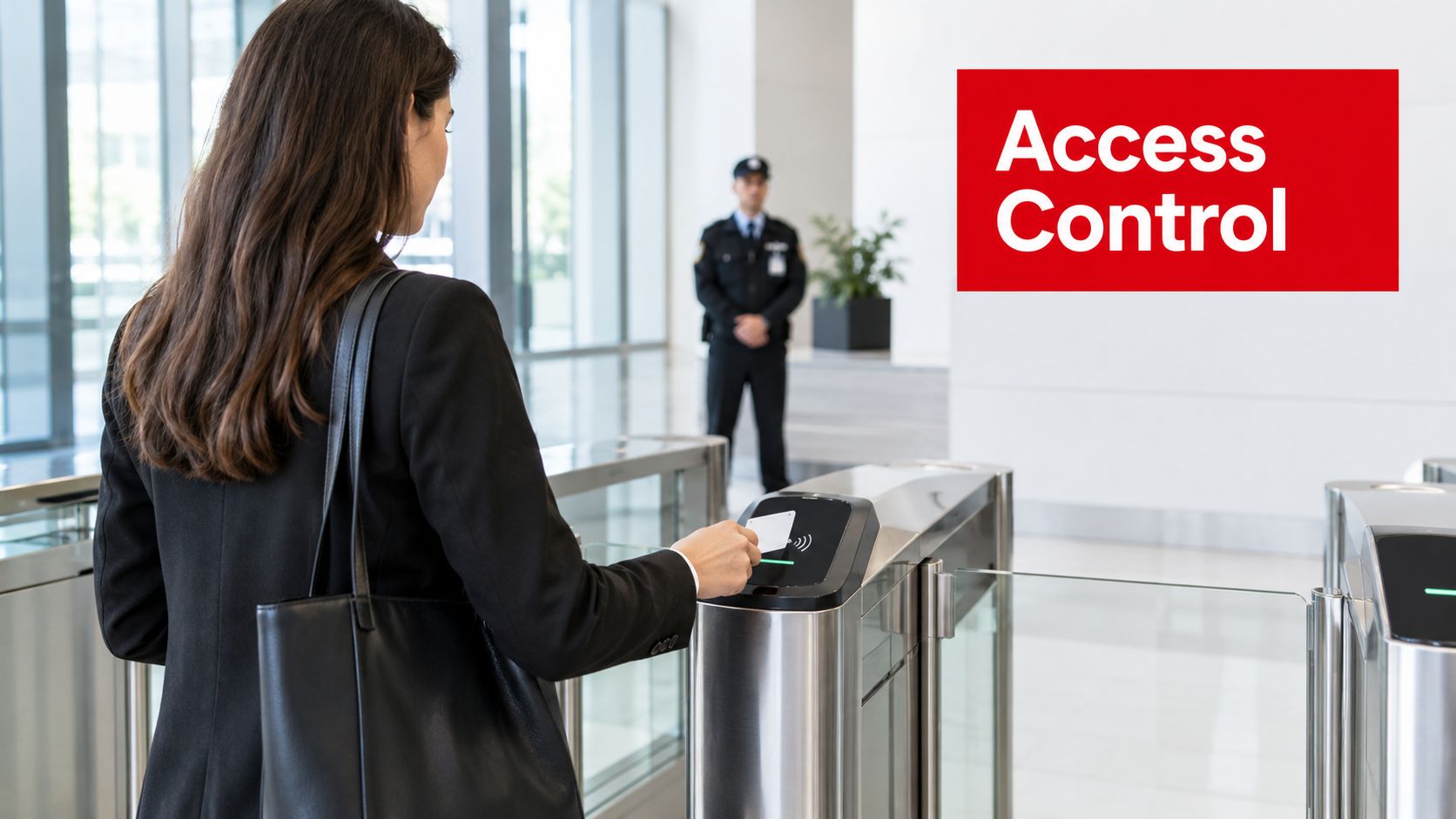
A security manager turns general expectations into written instructions officers can use during a busy shift. Policies should define access control, patrol duties, emergency response, incident reporting, officer conduct, visitor handling, and escalation authority. Without that framework, two officers may respond to the same situation in completely different ways.
The best procedures reflect the property's purpose. A retail center may need clear loitering and disruptive-behavior guidance that protects customers without treating ordinary community activity as a threat. A residential high-rise may need concierge standards covering greetings, visitor verification, package handling, and restricted access. A construction site needs equipment inspection, gate control, after-hours perimeter checks, and procedures for documenting site conditions.
A medical campus requires another layer of care. Visitor credentials, restricted areas, patient privacy, staff entrances, and emergency coordination all affect how officers perform their duties. The policy must support safety without creating unnecessary delays for patients, families, contractors, or clinical staff.
What strong post orders include
A useful post order is specific enough to guide a new officer and practical enough for an experienced supervisor to audit. It should identify:
- Post location and purpose: Explain the officer's primary responsibility, visibility requirements, and relationship to nearby posts.
- Routine duties: State patrol routes, checkpoint expectations, door checks, visitor procedures, equipment inspections, and reporting requirements.
- Escalation rules: Define when the officer contacts a supervisor, property representative, law enforcement, emergency services, or the security operations center.
- Documentation standards: Specify what photographs, statements, timestamps, and follow-up notes belong in a report.
- Service expectations: Describe how officers should communicate with residents, tenants, customers, vendors, and employees.
Frontline officers should help review procedures because they encounter practical obstacles management may miss. Keep the language clear, train on changes before implementation, and review procedures whenever property use, staffing, equipment, or incident patterns change.
2. Staffing, Training, and Officer Development
Coverage on a schedule isn't the same as a prepared team. Security managers recruit, onboard, train, supervise, and develop officers so the people assigned to a property can manage both routine duties and unexpected events. Their decisions affect service consistency, client confidence, officer retention, and the tenant or customer experience.
Training should match the environment. A concierge officer in a luxury residential building needs hospitality skills alongside access control and emergency procedures. A construction officer must recognize equipment, protect gates and tool yards, and document changing site conditions. Retail officers need to balance loss prevention with calm customer service, while mobile patrol officers must understand GPS checkpoint scans, vehicle inspections, and digital reporting.
The Overton Security officer training programs reflect this broader view of readiness. Officers need more than a uniform and a post assignment. They need practical instruction, clear standards, coaching, and a path to improve.
Development that supports retention
A manager who only corrects mistakes after an incident is managing reactively. Stronger programs combine initial onboarding with recurring development:
- Mentorship: Pair newer officers with experienced team members for practical guidance on communication, report writing, and site-specific judgment.
- Scenario practice: Use realistic exercises for de-escalation, medical emergencies, suspicious activity, fire watch, access disputes, and evidence preservation.
- Career progression: Show how an officer can move toward lead officer, supervisor, or manager responsibilities.
- Performance feedback: Review reports, attendance, checkpoint completion, client feedback, and response quality together rather than relying on one metric.
- Officer input: Ask officers which procedures create confusion and where additional training would improve performance.
Overton's people-first approach is relevant here. The company emphasizes supporting and retaining professional officers rather than relying on constant turnover. Competitive pay, benefits, recognition, and advancement support can help a manager preserve site knowledge and build a stable team.
3. Risk Assessment and Threat Analysis
A security manager shouldn't assign the same patrol pattern to every property. Risk assessment identifies where, when, and why a site is vulnerable, then connects those findings to staffing, patrol routes, technology, procedures, and budget decisions.
A retail assessment may reveal a blind spot near fitting rooms or a recurring problem around a loading area. The response could involve repositioning patrols, improving camera coverage, clarifying employee reporting, or coordinating with store management. At a construction site, theft risk may increase around shift changes, when tools and materials move between crews. End-of-shift inventories, gate verification, and targeted evening patrols may provide a better response than adding officers everywhere.
Residential properties present a different challenge. A manager may find that visitor credential checks become inconsistent during peak arrival periods. Adjusting concierge coverage, simplifying the verification process, or creating a defined overflow procedure can improve control without making residents feel obstructed. At a warehouse, inadequate perimeter lighting may deserve attention before adding another routine patrol.
A practical security risk management approach from Overton should connect observations with decisions rather than produce a report that sits unused.
Assess the property as it operates
Managers should evaluate more than the site map. Walk the property during different operating periods, speak with property staff and officers, review incident history, examine access points, and note how tenants, vendors, employees, and visitors move through the environment.
Rank vulnerabilities by likely consequence and operational impact. Document photographs, diagrams, and notes so later reviews can show whether conditions improved. Reassess after renovations, occupancy changes, new tenants, schedule changes, major incidents, or technology changes.
Practical rule: A risk assessment is useful only when it changes a decision, such as where an officer stands, which door remains controlled, what gets inspected, or who receives an escalation call.
4. Incident Response and Investigation Coordination
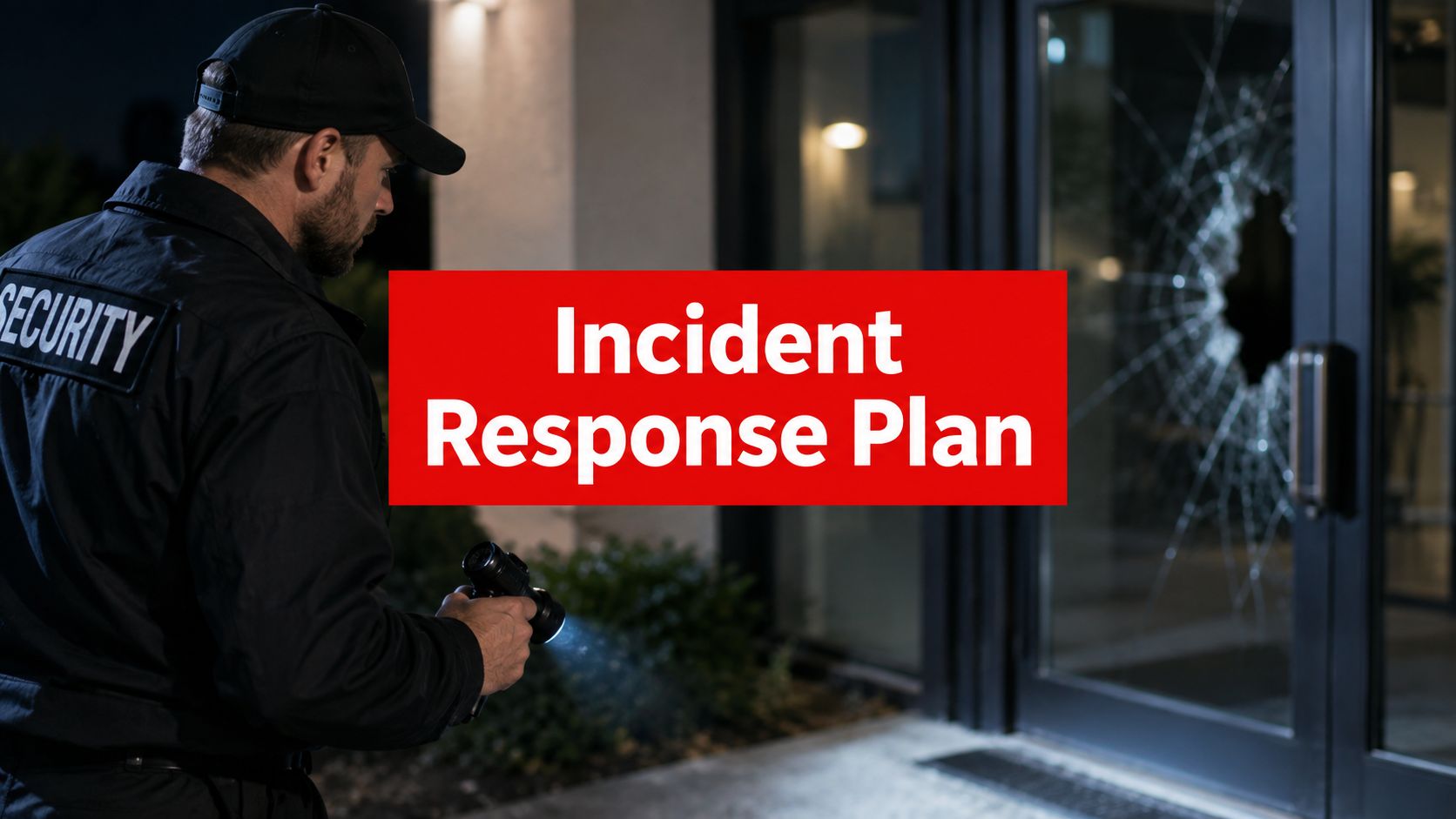
An incident response plan must answer practical questions before people are under pressure. Who takes command? Who calls emergency services? Who preserves video? Who contacts the client? What information belongs in the first report, and what requires follow-up?
Security managers coordinate the response from initial notification through investigation and corrective action. They may work with law enforcement, emergency services, property leadership, legal counsel, tenants, or construction management. Their responsibility includes protecting people, controlling the scene, preserving evidence, documenting facts, and making sure unresolved issues don't disappear after the immediate danger passes.
Consider a construction site where an officer discovers equipment theft. The response may include photographing the scene, preserving evidence around an access point, contacting law enforcement, checking CCTV footage, interviewing nearby personnel, and reviewing whether gate procedures or patrol timing contributed to the event. A residential team facing reports of suspicious activity near a mailroom may conduct a premises check, speak with the reporting resident, document findings, increase visibility, and brief the next shift.
The Overton incident response process supports the principle that response should be structured, documented, and communicated.
Build the response around facts
Effective managers establish contact trees and incident authority for every shift. Officers should know how to preserve a scene, obtain witness information, document descriptions, and protect reports, photographs, video, and communications in a secure system.
Client communication matters during the response. Property leaders should receive timely, factual updates from the security team rather than learn about an event through another party. After the incident, conduct a debrief while details remain clear. Review what happened, what worked, what failed, and which procedure, staffing decision, or physical condition requires correction.
A manager also needs to support officers involved in traumatic incidents. Access to appropriate counseling or peer support can help the team recover and return to duty with better preparation.
5. Client Communication and Relationship Management
Security managers are accountable for more than internal execution. They translate daily activity into information a property manager, facilities director, construction superintendent, or portfolio leader can use.
A mixed-use property may need clear reporting on patrol activity, access concerns, tenant complaints, and unresolved maintenance issues. A construction superintendent may need daily summaries that reflect changing work zones, deliveries, gates, and equipment storage. A residential community manager may care as much about concierge professionalism and resident experience as about patrol visibility. A retail owner may want incident patterns, vandalism concerns, and practical loss-prevention recommendations.
Regular communication creates a feedback loop. Site visits help managers observe conditions directly, speak with officers, and confirm that post orders match the property as it exists today. Reports should be concise and actionable. A long activity log that doesn't identify trends, ownership, or next steps can overwhelm a client without improving decisions.
Make accountability easy to see
Overton's low manager-to-client ratio is designed to support more hands-on contact, consistent site visits, and responsive problem-solving. That approach works best when managers:
- Set a communication rhythm: Agree on routine reports, review meetings, urgent notifications, and escalation contacts.
- Report limitations clearly: Explain what officers can control and where lighting, access hardware, tenant behavior, law enforcement response, or property maintenance affects outcomes.
- Close the loop: Record the concern, assign an owner, set a follow-up point, and confirm whether the fix worked.
- Share useful positives: Recognize professional service, successful de-escalation, improved reporting, or strong coordination, not only problems.
- Protect client attention: Focus reports on decisions and trends instead of sending every operational detail without context.
A security manager should function as a dependable operating partner, not a person the client hears from only after an incident.
6. Technology Integration and System Management
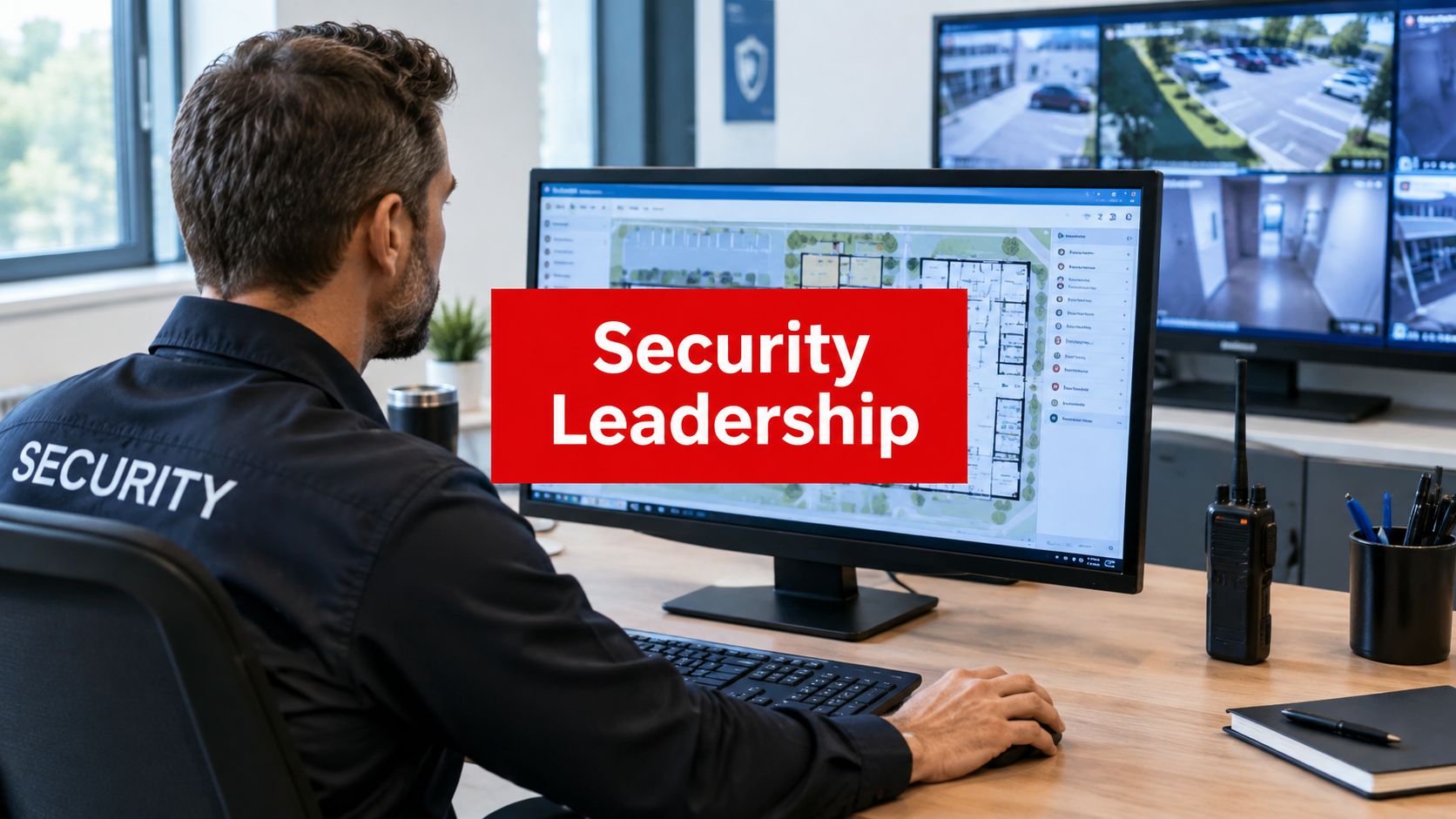
Technology can make security activity visible, but it can't replace judgment. Security managers select, configure, maintain, and evaluate tools such as access control systems, CCTV and video management platforms, alarms, mobile patrol tracking, digital reporting, and remote monitoring.
At a multi-property portfolio, a patrol vehicle may use GPS tracking, NFC checkpoints, a camera, and a mobile reporting application. Those tools can show whether an officer visited designated areas, document property conditions, and provide time-stamped reports for review. At a high-rise, digital visitor credentials and communication tools can help the concierge team manage arrivals while preserving access control. At a construction site, checkpoint scans can confirm coverage around gates, storage areas, and tool yards.
Overton combines GPS-enabled guard tour management, digital Daily Activity Reports, photo uploads, and 24/7 SOC oversight. The SOC can support dispatch, wellness checks, GPS monitoring, and incident escalation. That combination gives managers another layer of visibility, but it still depends on officers who understand the site and know what action to take when conditions don't match the system record.
Measure usefulness, not device count
A technology rollout fails when officers receive inadequate training or clients expect capabilities the system doesn't provide. Managers should define backup procedures for outages, including paper logs or alternate communication channels, and should review privacy and data-security practices.
Review each platform regularly. Ask whether it improves patrol verification, response coordination, reporting quality, or client decision-making. If it only adds documentation work without improving the security outcome, adjust the process.
Technology should confirm and strengthen professional judgment. It shouldn't encourage officers to treat a checkpoint scan as proof that every condition at a property was safe.
7. Compliance, Licensing, and Legal Accountability
Compliance protects the operation before a dispute occurs. Security managers track company requirements, officer credentials, training records, insurance, contracts, incident documentation, and applicable federal, state, and local obligations. They also need to understand the limits of officer authority and make sure procedures don't encourage actions that create unnecessary exposure.
A California security operation may need to verify current guard cards, background-screening records, training documentation, insurance coverage, and contract requirements. An armed program adds further licensing, qualification, storage, and audit responsibilities. The exact obligations depend on the service, jurisdiction, contract, and role, so managers should obtain qualified legal and regulatory guidance instead of relying on generic templates.
Documentation must tell a clear factual story. An incident file may include officer and witness statements, contact information, photographs, a timeline, classification, notifications, and corrective actions. Accurate records help clients, insurers, investigators, and counsel understand what happened and what the organization did next.
Managers can also review resources such as LA Law Group, APLC's discussion of negligent security and justice when evaluating how property conditions, policies, and documentation relate to legal accountability.
Create a compliance routine
A practical program includes version control for policies, defined retention rules, scheduled license reviews, and an annual audit of insurance and contract obligations. Managers should monitor updates from relevant industry associations and regulators, then communicate changes to officers before the new procedure takes effect.
They should also separate high-risk incident files and notify legal counsel promptly when facts, allegations, or contractual requirements warrant it. Compliance isn't a binder on a shelf. It is the repeated process of checking, documenting, training, and correcting.
8. Strategic Planning and Performance Measurement
The final responsibility is turning activity into better decisions. Security managers develop strategies that fit the client's risk, operating priorities, service expectations, and available resources. They also choose measures that show whether the program is working.
A retail portfolio might track incident patterns, customer concerns, patrol completion, and loss-prevention observations. A construction client may monitor tool theft, access violations, perimeter events, and reporting quality. A residential community could review guest complaints, concierge feedback, access exceptions, and response documentation. A logistics facility may compare conditions across locations and focus attention where recurring problems need a root-cause response.
Managers should avoid metrics that reward the appearance of performance. A low incident count may reflect under-reporting rather than improved safety. A high number of patrol scans may show activity without proving that officers identified and resolved hazards. Use activity measures to confirm execution, then pair them with outcome measures and qualitative feedback.
Build a review cycle
Start by identifying the client's priorities. Establish a baseline early in the service relationship, then review performance regularly enough to correct problems before they become routine. Use several measures so the team doesn't over-optimize one number at the expense of service quality or honest reporting.
Involve officers in measurement design. They can identify which checkpoints are realistic, which reports take too long, and which recurring conditions deserve tracking. Share results transparently with clients and staff, including missed targets and corrective actions.
A security manager should ask:
- What changed: Did risk, occupancy, construction activity, tenant mix, or operating hours shift?
- What explains the result: Is the issue related to staffing, procedure, equipment, environment, reporting, or behavior?
- What action follows: Which person owns the correction, and when will the team review it?
- What evidence matters: Which reports, photographs, observations, or client feedback will confirm improvement?
8-Point Comparison: Security Manager Responsibilities
| Item | Implementation complexity | Resource requirements | Expected outcomes | Ideal use cases | Key advantages |
|---|---|---|---|---|---|
| Developing and Implementing Security Policies and Procedures | High, tailored drafting and regular review | Policy writers, legal review, management time, training materials | Consistent operations, reduced liability, training foundation | Any property needing standardized protocols (residential, retail, construction, corporate) | Clarity of roles, legal defensibility, consistent incident handling |
| Staffing, Training, and Officer Development | High, ongoing recruitment and continuous training | Trainers, onboarding programs, wages/benefits, mentorship time | Higher retention, improved professionalism and incident handling | Customer-facing sites, high-turnover roles, clients valuing service quality | Better service quality, lower turnover, skilled workforce |
| Risk Assessment and Threat Analysis | Medium, specialized surveys and periodic reassessment | Security analysts, site surveys, data tools, time for fieldwork | Targeted investments, prioritized vulnerabilities, reduced wasted spend | Complex sites, limited budgets, locations with evolving threats | Data-driven prioritization, early vulnerability ID, optimized resource allocation |
| Incident Response and Investigation Coordination | High, detailed protocols and cross-agency coordination | Trained officers, SOC support, documentation systems, liaison channels | Rapid coordinated response, preserved evidence, lower liability exposure | High-incident environments, critical facilities, retail and healthcare sites | Faster containment, legal defensibility, clear command and documentation |
| Client Communication and Relationship Management | Medium, processes, reporting cadence and site visits | Account managers, reporting tools, time for client engagement | Stronger trust, better-aligned services, higher renewal rates | Large accounts, portfolios, clients needing proactive support | Improved retention, proactive issue resolution, transparency |
| Technology Integration and System Management | High, selection, integration, maintenance, and upgrades | IT support, capital investment, training, SOC monitoring | Real-time visibility, scalable oversight, improved documentation | Multi-site portfolios, remote monitoring needs, data-driven programs | Accountability via tracking, scalability, analytics for improvement |
| Compliance, Licensing, and Legal Accountability | Medium, ongoing regulatory monitoring and audits | Legal counsel, background checks, insurance, record retention systems | Regulatory compliance, reduced fines, defensible operations | Regulated jurisdictions, armed services, high-liability contracts | Legal defensibility, client confidence, reduced regulatory risk |
| Strategic Planning and Performance Measurement | Medium-High, analytics, KPI design, and review cycles | Analysts, performance data systems, KPI framework, review meetings | Aligned strategy, measurable improvements, justified budgets | Organizations seeking ROI, multi-site operators, long-term programs | Data-driven decisions, measurable ROI, continuous improvement |
Turn Responsibilities Into Visible Security Performance
Strong security management connects all eight responsibilities into one operating system. Risk assessment informs post orders. Post orders shape staffing and training. Trained officers produce better reports and incident response. Those reports reveal compliance gaps, technology problems, recurring threats, and opportunities to improve. Client communication keeps the work aligned with property priorities, while performance measures show whether the program is producing dependable results.
Property managers and facilities leaders can start with a focused review of their current job description, contract, or post orders. Confirm who owns each responsibility, including risk reviews, procedure updates, training records, incident escalation, system maintenance, compliance checks, client reporting, and corrective action. If ownership is unclear, the task will often be delayed until an incident exposes the gap.
Next, choose a small set of outcome-focused measures. Combine service execution, such as patrol completion or report timeliness, with measures that matter to the property, such as recurring access issues, unresolved hazards, tenant concerns, equipment losses, or response documentation quality. Don't collect data just because a platform can collect it. Use information to make a decision, assign an owner, or change a procedure.
Schedule recurring reviews rather than treating security planning as a one-time project. Revisit risks after renovations, occupancy changes, staffing changes, major incidents, new tenants, new construction phases, or changes to operating hours. Review performance with officers and client representatives so the written plan reflects actual conditions.
The right operating model depends on the environment. A residential high-rise may need concierge security and controlled visitor access. A retail center may benefit from unarmed officers, visible mobile patrols, and loss-prevention coordination. A construction site may need dedicated patrols, gate control, and detailed equipment checks. Healthcare, commercial, and multi-site California operations may require a combination of onsite officers, remote monitoring, fire watch, and mobile response.
Overton Security supports these programs with more than 26 years of experience, hands-on managers, customized post orders and site plans, officer development, GPS-enabled GTMS reporting, and 24/7 SOC oversight. Its services include onsite armed and unarmed officers, vehicle patrols, concierge security, fire watch, remote monitoring, construction site security, event staffing, and commercial and retail protection across California communities including Los Angeles, San Francisco, San Diego, Sacramento, San Jose, Oakland, Long Beach, and Fresno.
Review your property's security manager responsibilities with Overton Security and identify where staffing, post orders, officer training, mobile patrols, concierge coverage, fire watch, or remote monitoring can strengthen execution. Visit Overton Security to discuss a customized program for your residential, retail, construction, healthcare, commercial, or multi-site California operation.