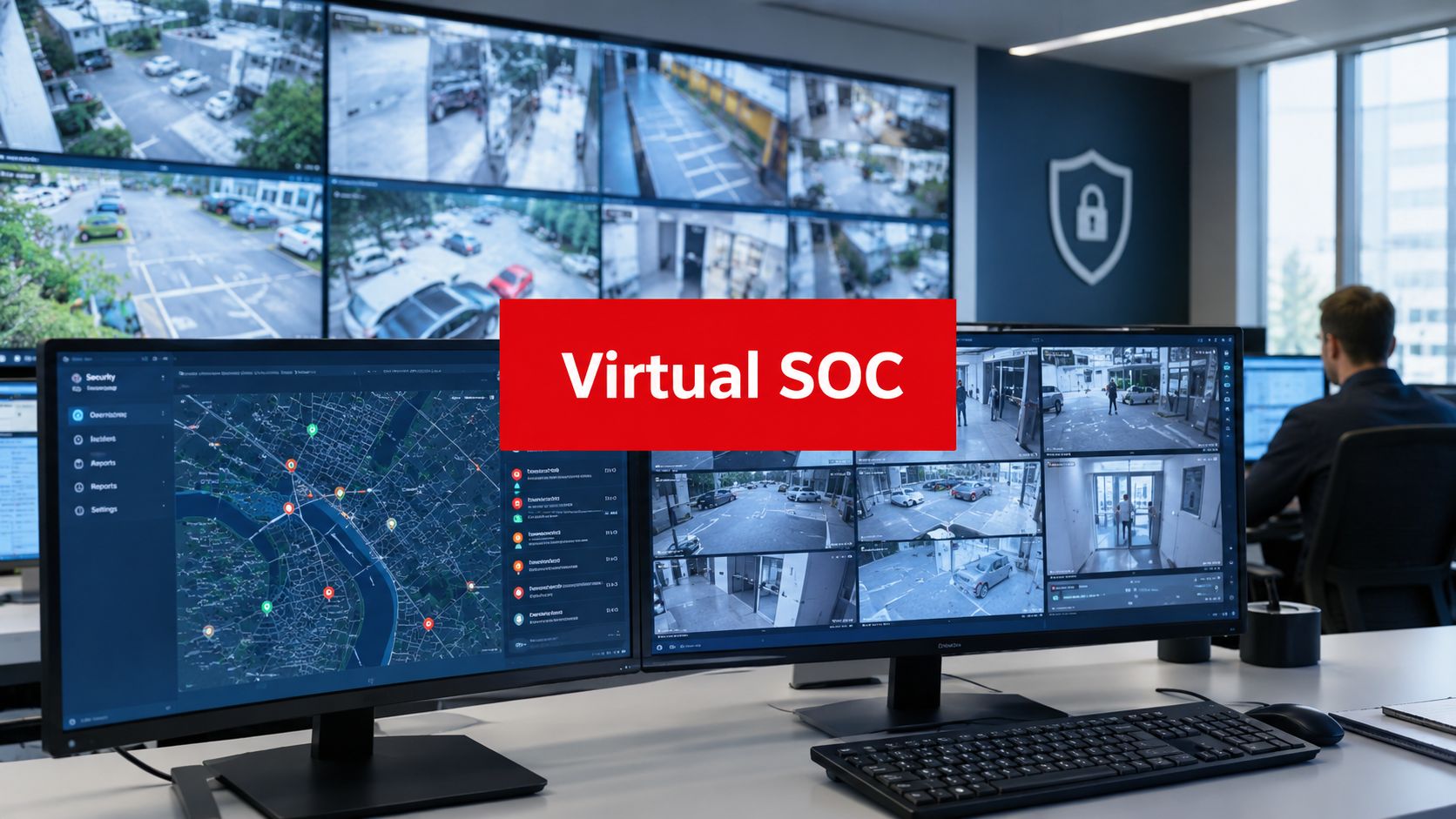

Is your building truly secure, or are there blind spots you haven't considered? Real security for buildings isn't just about locks and alarms; it's a proactive, multi-layered strategy that anticipates risks, controls access, and ensures a swift, effective response when an issue arises. This guide will walk you through how to build that robust framework, starting with a thoughtful risk assessment and moving into the smart integration of technology and trained professionals.
Building a Modern Security Framework
For anyone managing a property—whether you're an HOA board member, a commercial property manager, or a business owner—reliable protection is non-negotiable. A modern security framework goes beyond simply reacting to incidents. It’s about creating an environment that actively discourages threats before they have a chance to materialize. This means a smart blend of strategic planning, physical deterrents, and intelligent technology, all working in concert to protect your people and assets.
A truly effective security strategy is built on three core pillars. This infographic shows how Assessment, Management, and Response form the bedrock of a complete security plan.
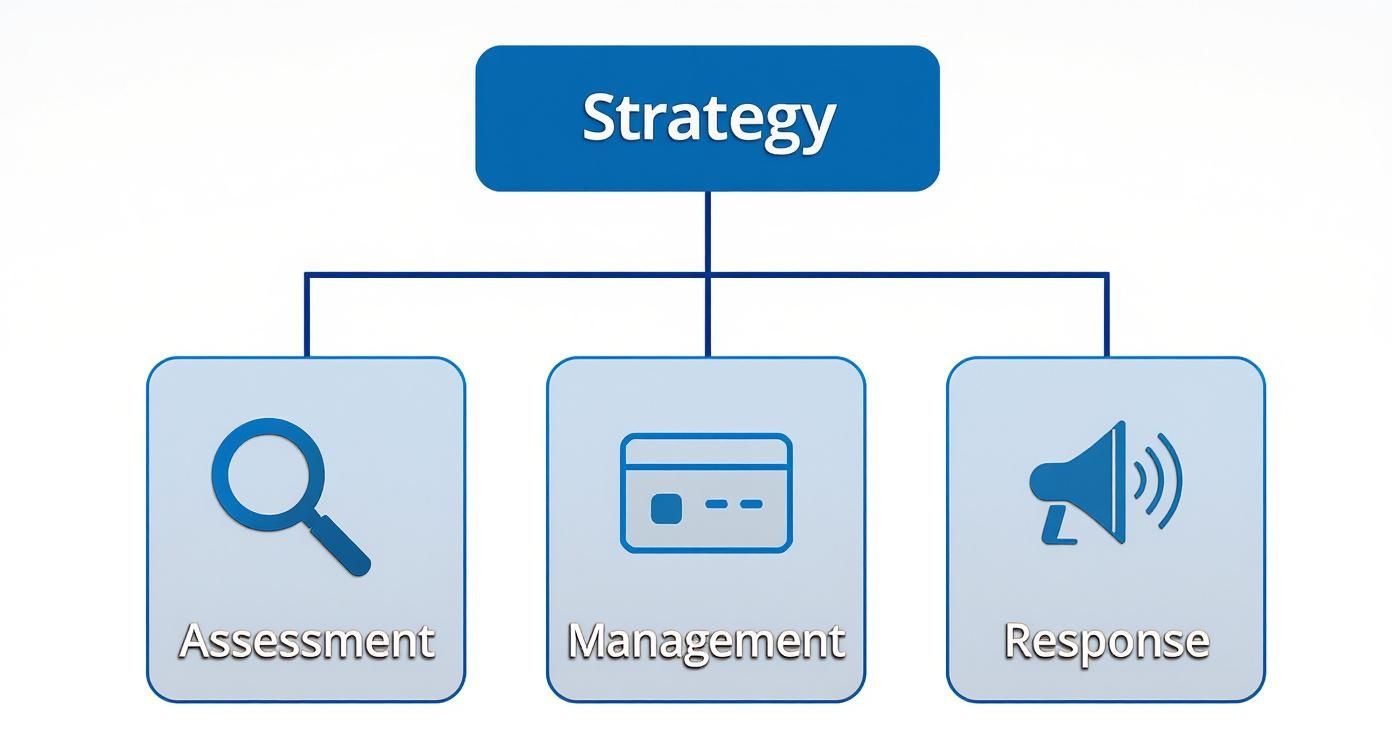
As you can see, these aren't just separate items on a checklist. They are deeply connected parts of a bigger picture that has to be tailored to the unique realities of your property.
Understanding the Core Components
A solid plan always starts with a clear-eyed look at your unique vulnerabilities. What works for a high-rise office in downtown Los Angeles is completely different from the needs of a sprawling residential community in San Jose. The goal is to build a customized plan that solves your specific challenges, whether that’s preventing unauthorized access, deterring theft on a construction site, or ensuring tenants feel safe in the parking garage.
A well-rounded framework always includes these key elements:
- Threat Assessment: This is where it all begins. We identify and prioritize potential security risks based on your property’s location, its use, and the daily flow of people.
- Access Control: This is about managing who gets in and where they can go. It can range from simple key cards to a professional concierge service that acts as a friendly but firm gatekeeper.
- Visible Deterrence: Sometimes, the best defense is a strong presence. Professional security patrols and on-site officers discourage criminal activity just by being there, consistently and visibly.
- Technology Integration: This is where we combine human expertise with smart systems like CCTV cameras, GPS-enabled reporting for patrols, and 24/7 monitoring for complete oversight.
At Overton Security, we’ve spent over 26 years perfecting this integrated approach. Our experience has shown us time and again that the most secure properties are the ones where technology empowers highly-trained personnel, creating a seamless and effective defense.
This fusion of human skill and smart technology ensures every angle is covered. It gives property managers the real-time data and accountability they need to make informed decisions and delivers the peace of mind that comes from a reliable partnership.
To get a more detailed look at these concepts, you can explore our in-depth guide on securing a building. Adopting this proactive mindset doesn't just protect your assets—it actively enhances your property’s value and builds tenant confidence.
To break it down even further, let's look at how these pillars come together in a modern strategy.
Core Components of a Modern Building Security Strategy
| Security Pillar | Objective | Key Elements |
|---|---|---|
| Risk Assessment | To identify and prioritize potential threats and vulnerabilities unique to the property. | Site surveys, historical incident analysis, traffic pattern studies, and local crime data review. |
| Access Control | To regulate and monitor entry to the property and sensitive areas within it. | Key card systems, biometric scanners, concierge services, gate control, and visitor management logs. |
| Visible Presence | To deter potential criminals and provide a rapid on-site response. | Uniformed security patrols (vehicle or foot), static guard posts, and marked security vehicles. |
| Technology & Monitoring | To provide 24/7 oversight, evidence collection, and operational efficiency. | CCTV surveillance, alarm systems, GPS tracking for patrols, and centralized monitoring stations. |
Each component supports the others, creating a layered defense that is far more effective than any single solution on its own.
It All Starts with a Strategic Threat Assessment
Many property managers believe building security begins with installing cameras or hiring officers. In our experience, that’s a mistake. Real security, the kind that actually works, starts with a deep and honest look at what you’re trying to protect against. A professional threat assessment is the strategic bedrock of your entire security plan.
Think of it this way: you wouldn't want a doctor to prescribe medication without a diagnosis. A threat assessment is that diagnosis for your property's security health. It’s a process that looks past the obvious to uncover the unique vulnerabilities your specific building faces, ensuring every dollar you spend on security is a dollar well spent.
This deep dive analyzes everything—your building's location, its physical layout, the flow of people in and out, and any history of past incidents. It’s the essential first step that provides a clear, actionable roadmap for protecting your people and property.
Figuring Out Your Unique Risk Profile
Every property is different, and so are its risks. A commercial property manager in a bustling downtown core might be concerned about unauthorized access to the parking garage after hours. It’s a common pain point. But for a construction superintendent on a more isolated site, the biggest fear is the theft of high-value tools and materials—a crime that can bring a multi-million dollar project to a screeching halt.
A proper assessment identifies and organizes these potential threats, looking at them from all angles.
- External Threats: These are the dangers coming from the outside, such as theft, vandalism, trespassing, or even more organized criminal activity. Local crime statistics and the nature of the surrounding neighborhood are key factors here.
- Internal Threats: These risks come from within your own walls. This could be employee misconduct, a disgruntled ex-employee trying to gain access, or simple human error that accidentally leaves a door unlocked.
- Situational Vulnerabilities: These are the risks tied to how your building is used. A retail center, for example, has a completely different set of vulnerabilities during the frantic holiday season than it does in mid-July. A residential community’s risks can shift dramatically with high resident turnover.
Prioritizing Threats: What to Tackle First
Once you’ve identified potential threats, the next job is to prioritize them. Not all risks are created equal. A professional assessment weighs each one based on two critical factors: its likelihood of happening and the potential impact if it does.
A minor act of graffiti might be a low-impact nuisance. But recurring equipment theft on a construction site? That’s a high-impact, high-likelihood event that demands an immediate and powerful response.
This approach, often called a risk matrix, lets you direct your resources where they’ll do the most good. It prevents overspending on long-shot threats and ensures your biggest, most glaring vulnerabilities are addressed first.
A proper threat assessment shifts your security plan from a reactive, "what-if" game to a proactive, strategic operation. It answers the most important question: "What are our most pressing security challenges, and what's the smartest way to solve them?"
By starting with this foundational analysis, you’re building a security framework that’s actually designed for your property, not a one-size-fits-all solution. This informed approach leads to far more effective protection and gives you a rock-solid justification for security investments when talking to board members, tenants, or corporate leadership. It’s the cornerstone of intelligent, modern security for buildings.
Implementing Effective Access Control Systems
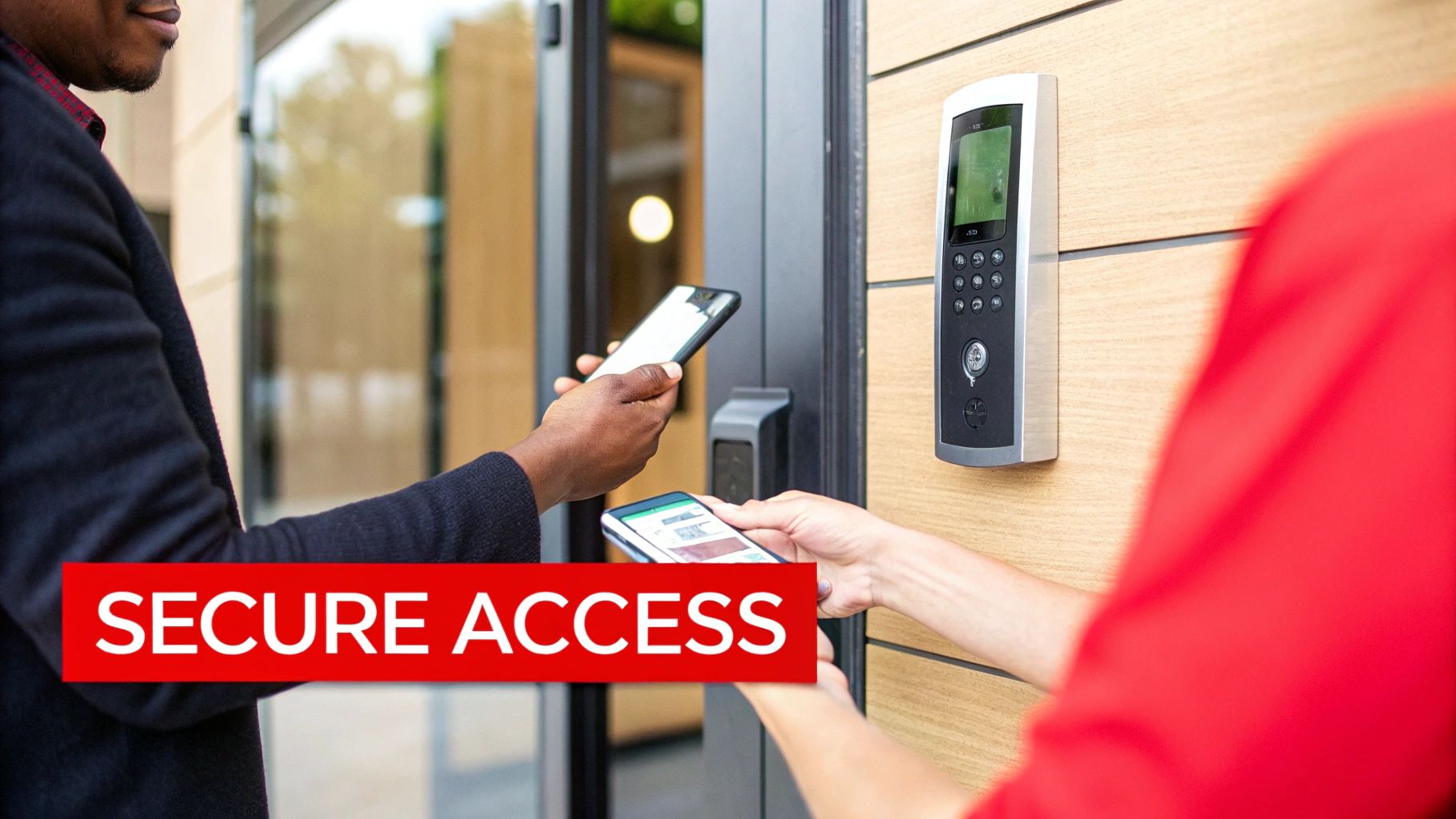
Deciding who enters your property isn't just a minor detail—it's the frontline of your security strategy. Effective access control acts as the ultimate gatekeeper, ensuring only authorized people get into the right places. It's the system that dictates the flow of people through your building, from the main lobby to the most sensitive back rooms, and it's your first and best chance to stop an incident before it begins.
We've come a long way from the simple lock and key. Today, property managers and HOA boards have a toolbox of sophisticated options that balance serious security with genuine convenience for tenants and visitors. But this isn't a one-size-fits-all situation. The needs of a bustling Class A office tower are a world apart from those of a quiet residential community, so finding the right fit is everything.
Matching the System to Your Property
The best access control solution is the one that fits your day-to-day operations seamlessly. A high-rise in downtown Los Angeles, for example, needs a system that can handle hundreds of people flowing in and out daily without creating a logjam at the entrance. On the other hand, a residential HOA in San Jose needs something that's straightforward for residents to use for themselves and their guests, without sacrificing security.
Here are a few of the most common technologies you'll encounter:
- Key Card and Fob Systems: The trusted workhorses of access control. They’re reliable and allow you to grant or revoke access with a few clicks instead of re-keying the entire building. Plus, you get a digital trail of who went where and when.
- Mobile Credentials: This turns a smartphone into a digital key. It’s incredibly convenient, especially for properties with a lot of tenant turnover, since you can manage everything remotely.
- Biometric Scanners: For maximum security, nothing beats biometrics. Using unique identifiers like fingerprints or facial patterns makes it impossible for someone to borrow, steal, or duplicate a credential.
The demand for these systems is growing rapidly. The access control in buildings market is projected to grow from an estimated $16.3 billion in 2025 to $60.4 billion by 2035. It’s a clear sign that property owners are moving toward smarter, more robust security solutions.
The Human Element in Access Control
For all their power, technology systems can be impersonal. They can experience technical issues or lack the nuance to handle a unique situation. This is precisely why pairing advanced tech with a professional human presence creates such a powerful, layered security solution. A well-trained concierge or front desk security officer brings critical thinking and adaptability that no automated system can ever match.
Combining a modern access control system with a professional concierge service doesn't just enhance security—it transforms the tenant and visitor experience. It blends warm, reassuring hospitality with reliable, failsafe protection.
A professional officer can do things a card reader can't: visually verify an ID, assist a visitor who’s having trouble, or manage a flood of deliveries with a personal touch. They become the friendly, welcoming face of your property while acting as a clear visual deterrent. This human oversight is your fail-safe, ensuring security and service continue without interruption.
This blend of smart technology and human expertise is truly a cornerstone of modern building security. For property managers aiming to build a secure yet welcoming community, it's the perfect formula. If you want to dive deeper into building a rock-solid strategy for your property, check out our guide on https://www.overtonsecurity.com/access-control-best-practices/.
The Vital Role of Security Patrols
Technology is a fantastic tool, but nothing deters a potential threat quite like the visible presence of a professional security officer. For any serious approach to security for buildings, this human element isn't just a nice-to-have; it’s a core piece of the puzzle, bringing judgment, immediate response, and a sense of calm that a camera simply can't provide.
If you’re a property manager, an HOA board member, or a business owner, think of patrols as the active, on-the-ground extension of your entire security plan. Their presence accomplishes two things at once: it makes opportunistic criminals think twice, and it gives your tenants, employees, and residents a real, tangible sense of safety. The key is selecting the right type of patrol for your property's unique layout and risks.
On-Site Officers for Constant Coverage
Some properties simply need someone there, always. Think about a high-end Class A office building lobby, a bustling retail center, or a large construction site after hours. These are high-stakes environments where a dedicated, on-site security officer provides an unmatched level of protection.
Here, a constant, stationary presence is critical for controlling access, reacting instantly to problems, and managing the daily flow of people. Your on-site officer quickly becomes the face of your security program, blending customer service with clear, authoritative oversight.
Mobile Patrols for Efficient, Wide-Area Monitoring
But what about larger properties? For sprawling business parks, residential communities, or a portfolio of multiple sites, stationing a dedicated guard at every building isn’t practical or cost-effective. This is where mobile vehicle patrols come in as a smart, efficient solution.
Marked security vehicles conducting patrols at random intervals create a powerful deterrent. Potential wrongdoers can’t predict when or where an officer will show up, which disrupts their ability to plan. It’s the perfect way to secure parking lots, check perimeter fences, and respond to alarms without the expense of a full-time stationed officer. To see how this works in practice, you can learn more about how mobile security patrols can be customized for different properties.
A proactive patrol isn't just about driving by. It's about systematically checking every access point, looking for signs of trouble, and documenting every move to ensure there's a clear record of activity.
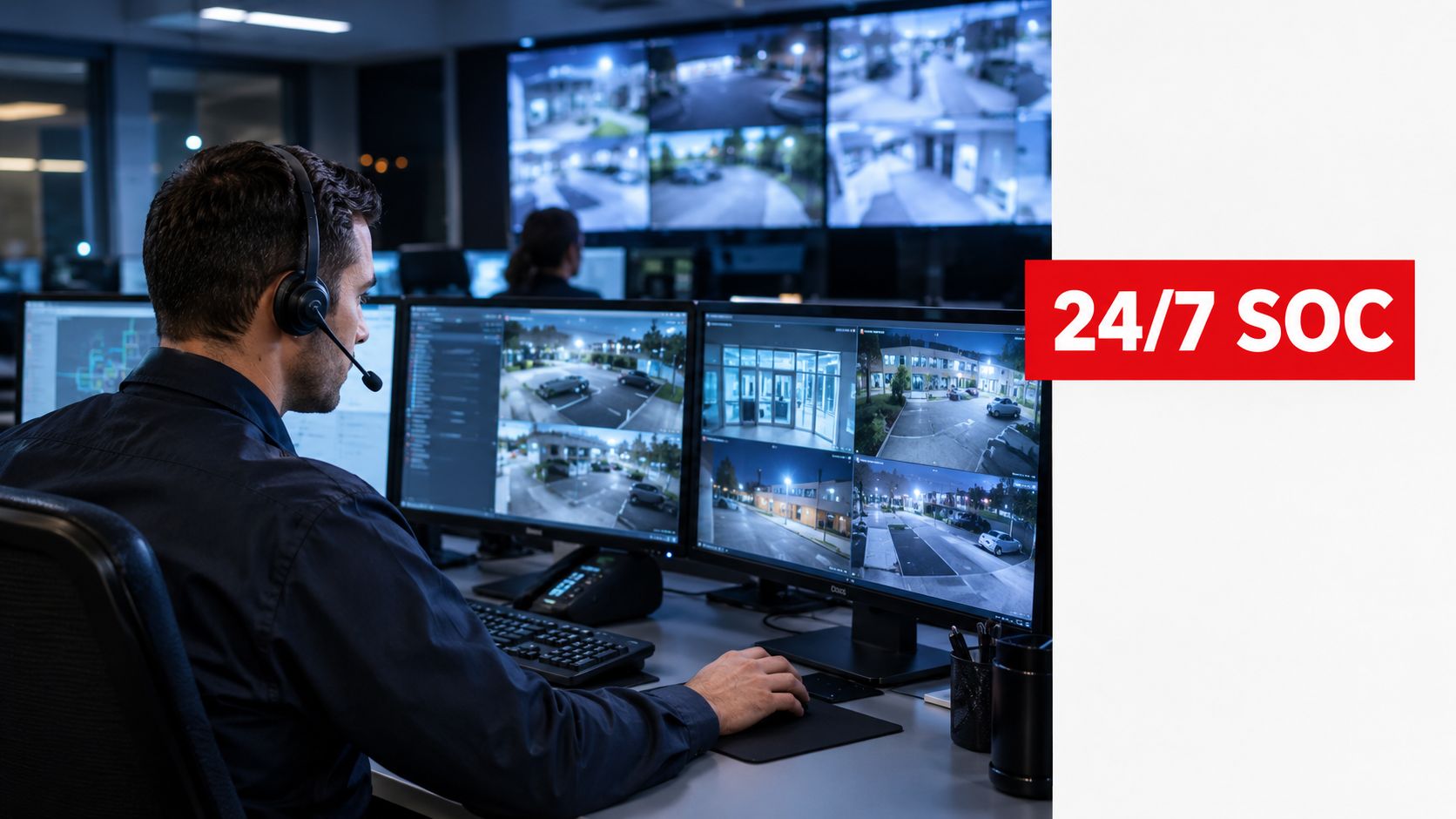
At Overton Security, we enhance this by pairing our experienced officers with smart technology. Every officer is connected to our 24/7 Security Operations Center (SOC) and uses a GPS-enabled system to log their patrols in real-time. This means our clients get detailed digital reports for every patrol, complete with photos and time-stamped notes.
This level of accountability and our focus on quality over quantity sets us apart from the “burn and churn” staffing model so common in the industry. We focus on hiring, training, and retaining professional officers who act as proactive problem-solvers, not just passive observers. By merging the classic deterrent of a uniformed officer with the accountability of modern technology, we deliver a patrol program that’s both effective and transparent.
Integrating Technology for Smarter Security
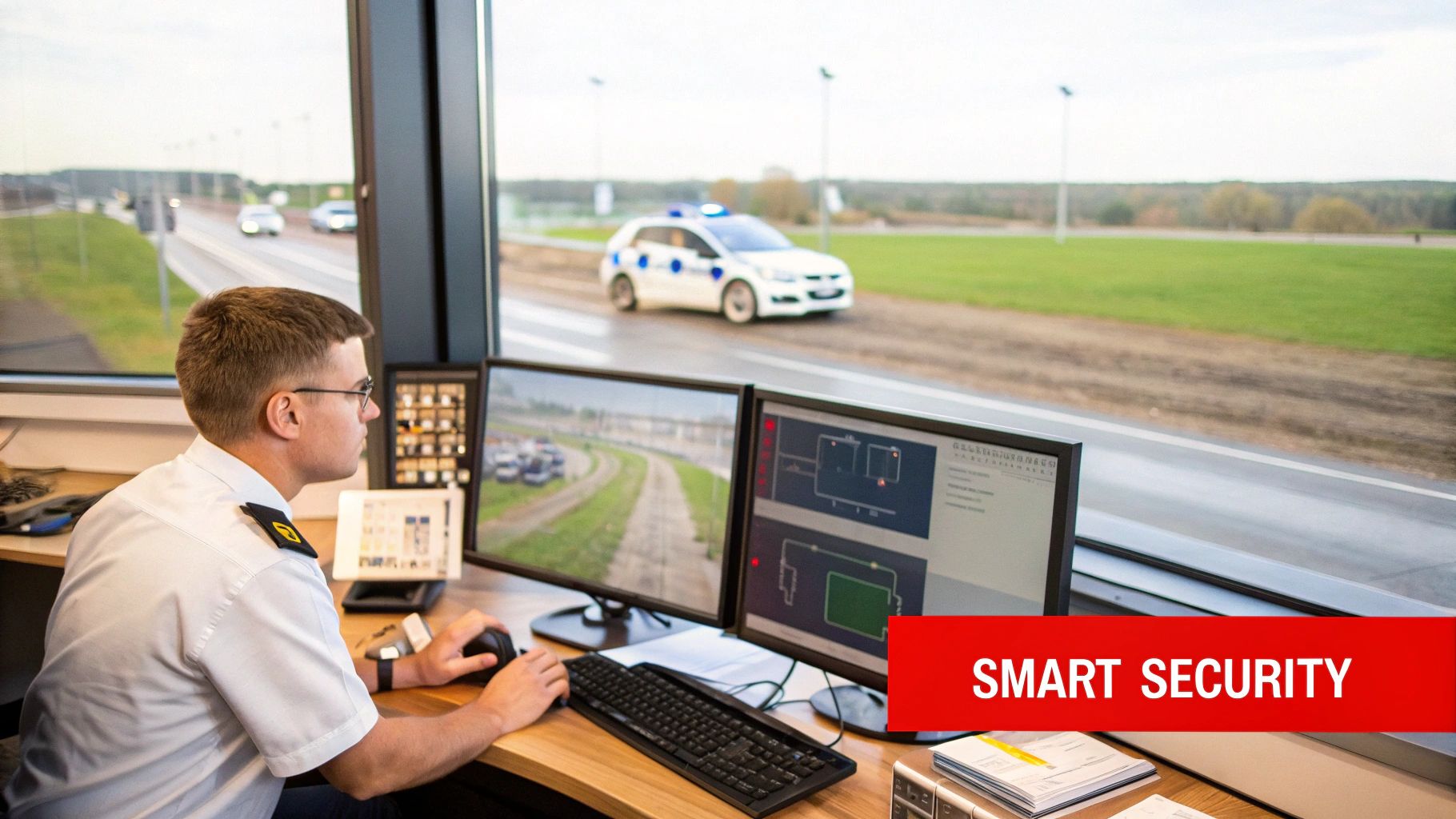
The best modern strategies for security for buildings don't force a choice between human expertise and technology. Instead, they blend them into a single, powerful ecosystem where each part makes the other stronger. Technology isn't here to replace trained officers—it's here to empower them.
Think of your security plan as a highly skilled team. Your officers are the seasoned players on the field, making critical judgment calls. Smart technology acts as their eyes and ears everywhere at once, feeding them the right information at the right moment so they can act decisively.
This fusion creates a security posture that’s far more resilient and responsive than what people or tech could ever achieve alone. It shifts your building’s protection from reactive to proactive.
Creating a Unified Security Ecosystem
A truly integrated system is more than just a collection of gadgets. It’s a network that links tools like CCTV surveillance, AI-powered video analytics, and automated alarms together. This network doesn't just collect data; it analyzes it and delivers real intelligence straight to the people who need it.
For a facilities director, this means getting a complete picture of the entire property from one dashboard. For an officer on patrol, it means receiving an instant alert about a specific issue, allowing them to go straight to the problem before a small concern has a chance to escalate.
This approach is built on key components working in concert:
- Advanced CCTV Surveillance: High-definition cameras keep a constant watch over critical areas like entry points, parking garages, and lobbies.
- AI-Powered Video Analytics: This technology automatically spots unusual activity, like a car loitering in a restricted zone or someone trying a secure door after hours, without a person needing to watch hours of footage.
- Integrated Alarm Systems: When analytics flag a potential threat, the system can instantly trigger an alarm, notify the on-site officer, and alert our 24/7 Security Operations Center (SOC).
The goal is to use technology as a force multiplier. It provides the tireless efficiency of automation while keeping the critical thinking and nuanced judgment that only a well-trained human can provide. The result is fewer false alarms and faster, more effective resolutions.
This integrated model is a direct answer to today's evolving threats. The growing complexity of risks calls for a holistic approach that watches over every component of your infrastructure. As threat detection becomes more sophisticated, AI gives security teams the power to get ahead of risks with real-time alerts.
Augmenting Human Expertise, Not Replacing It
There's a common misconception that more tech means fewer people. At Overton Security, we see it completely differently. We use technology to amplify the skills of our professional officers, freeing them to focus on high-value tasks that demand human intellect and interpersonal skills.
For example, when AI analytics flag a suspicious event, an alert goes straight to the patrol officer’s handheld device. They get the exact location and a description of what’s happening, allowing them to respond with total situational awareness. To protect the integrity of your electronic security network, it's also wise to consider implementing anti-jammer device protection.
This combination delivers the best of both worlds. You get the unwavering vigilance of a smart system that never gets tired, paired with the on-the-ground expertise of an officer who can de-escalate a situation and make a sound judgment call. This 26-year-old philosophy of blending human skill with smart tools ensures your building is protected by a truly intelligent security framework.
Choosing Your Partner in Building Security
Selecting the right security provider is one of the most critical decisions a property manager, HOA board, or business owner will make. This isn't just another vendor contract; it's a decision built on trust, reliability, and a shared goal of protecting what matters most. Great building security isn't an off-the-shelf product. It’s a dynamic partnership that demands real-world experience, open communication, and a strategy that fits your property perfectly.
The most effective security plans are always custom-built. They start with a thorough threat assessment and then seamlessly weave together a visible physical presence, smart access control, and supportive technology. This integrated approach closes gaps and creates layers of protection that deter, detect, and respond to problems before they escalate.
Finding a Partner Committed to Quality
In an industry where many companies focus on rapid growth, finding a provider that prioritizes quality over quantity can make all the difference. A true security partner wants to build a lasting relationship, not just fill a post. This commitment shows up in how they structure their teams and support their clients.
A low manager-to-client ratio is a tell-tale sign of a service-focused security firm. It means you get a dedicated point of contact who truly knows your property's unique challenges and can respond to your needs with hands-on leadership, not distant oversight.
This focus on service must extend to the officers on the ground. A quality partner invests heavily in its people, rejecting the common "burn and churn" staffing model that plagues the industry. By offering professional training, competitive pay, and a supportive culture, they retain skilled, long-term officers who are genuinely invested in their roles. That stability and professionalism translate directly into more dependable protection for your property.
The Overton Security Partnership
The global building security systems market is growing, driven by new tech and rising safety concerns. It’s on track to exceed $100 billion by 2025 as property owners look for more advanced solutions. You can dive deeper into these market trends with this report from Data Insights Market. Amidst all this change, the value of a trusted, experienced partner has never been higher.
For over 26 years, Overton Security has built its reputation on a straightforward philosophy: deliver exceptional service through experienced people and transparent systems. We combine the steady presence of highly-trained officers with real-time accountability tools like GPS-enabled patrols and detailed digital reports. This gives our clients a clear, verifiable picture of the security activity on their property at all times.
Effective security for buildings delivers much more than just protection; it provides lasting peace of mind. We invite you to contact us for a professional consultation and see how a true partnership with Overton Security can safeguard your assets and strengthen your community.
Common Questions About Building Security
When considering an upgrade to their security strategy, property managers and business owners often have similar questions. Drawing on our deep, hands-on experience, we’ve put together straightforward answers to the inquiries we hear most often.
What’s the First Step to Improve My Building's Security?
The best place to start is with a professional threat assessment. Before you consider buying new cameras or hiring guards, you need a clear, expert view of where your property is truly vulnerable. A thorough assessment cuts through guesswork and pinpoints your specific risks—from a forgotten back door to overlooked opportunities for theft.
Think of it as creating a strategic roadmap. This crucial first step ensures every dollar you spend goes toward solving your biggest challenges first, preventing investment in solutions that don't fit your actual needs.
Is a Visible Guard Better Than an Advanced Camera System?
This is a common question, but it’s not an "either/or" situation. The most effective security is a blend of both. Technology, like a high-quality camera system, is your tireless, impartial witness. It provides constant monitoring and a rock-solid record of events, which is invaluable for oversight and evidence.
However, a visible, human guard brings something technology cannot replicate: active deterrence and nuanced judgment. A professional security officer can de-escalate a tense situation, assist someone in need, and make critical, split-second decisions. The ideal setup uses technology to make a highly-trained officer even more effective, creating a security presence that’s both smart and strong.
How Do I Know the Security Officers Are Reliable?
Reliability comes down to how a security provider treats its people. To ensure dependable officers on your property, partner with a company that has rejected the industry's common "burn and churn" approach to staffing.
A provider that invests in its team—through competitive wages, continuous training, and a culture of respect—will attract and retain professional, motivated officers. Modern accountability tools like GPS-enabled patrols and detailed digital reports then provide transparent, undeniable proof that they’re on-site and performing their duties correctly.
How Much Does Professional Building Security Cost?
The cost of professional security varies depending on specific needs, such as the number of officers, the type of patrol service, and the technology involved. However, the conversation shouldn't just be about cost—it should be about the value and ROI of preventing a single, serious incident.
Consider this: the financial loss and reputational damage from one major break-in, theft, or act of vandalism can easily dwarf the investment in proactive security. A quality provider will begin with a proper assessment and provide a custom proposal built specifically for your property’s needs and budget.
A proactive security plan isn't an expense; it's one of the most valuable investments you can make in your property. With over 26 years of experience, Overton Security delivers reliable, transparent, and effective security solutions designed for your unique needs. Contact us today for a professional security consultation.