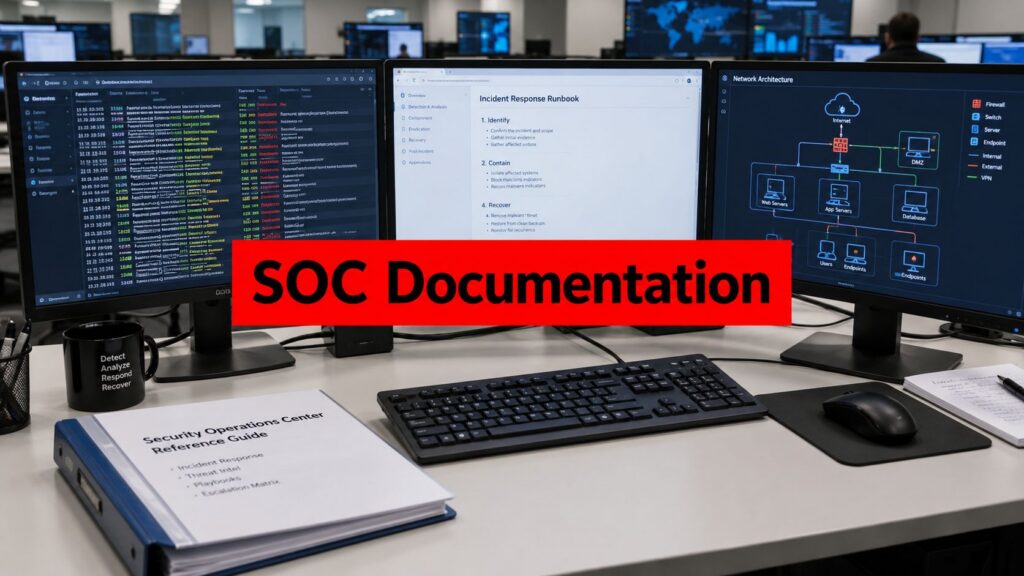
The popular advice is simple: collect everything, keep it forever, and accountability will take care of itself. In a property-security environment, that approach usually creates noise instead. A SOC may have camera alerts, GPS checkpoints, dispatch notes, access-control events, photographs, and officer narratives, yet a property manager still may not be able to answer three basic questions: What happened, who acted, and what remains unresolved?
Effective security operations center documentation isn't a warehouse of alerts. It's a controlled record of decisions, actions, evidence, ownership, and closure. For a commercial property manager, HOA board, construction superintendent, or facilities director, the useful record is the one that shows an issue was noticed, assessed, escalated when necessary, and resolved with a clear rationale.
That distinction matters when onsite security officers, mobile patrols, remote monitoring, and client teams share responsibility. A well-designed documentation system connects those activities without forcing nontechnical stakeholders to interpret raw event streams.
Rethinking Security Operations Center Documentation
More data doesn't automatically produce better security. Research indicates that 85% of surveyed SOCs use endpoint alerts as their primary response trigger, while 69% still rely on manual or mostly manual metric reporting, a gap documented in the 2025 SANS SOC survey. The lesson for physical security is clear: collection and accountability are different jobs.
A property manager doesn't need a screen full of disconnected alerts. They need to know whether a perimeter alarm was verified, whether an officer arrived, whether a tenant or vendor was notified, and whether someone owns the next step. A retail center manager may need a recurring false alarm identified as a facilities issue, while a construction superintendent may need a theft-related event linked to a gate, camera clip, patrol arrival, and police notification.
Practical rule: If a record doesn't preserve the decision context, it may document activity without proving accountability.
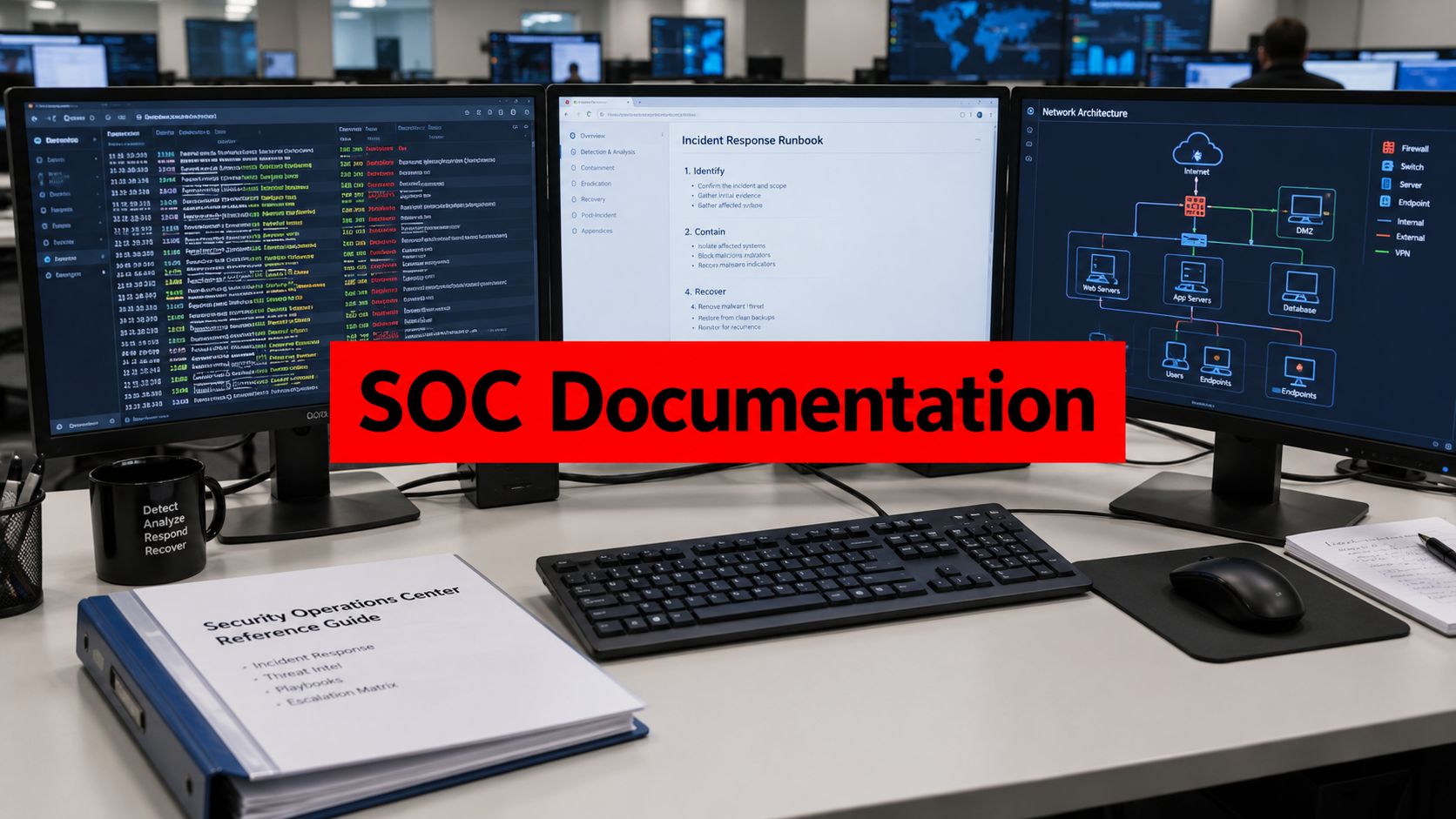
A thick manual also tends to fail under pressure. During a simultaneous access violation and officer-welfare alert, a dispatcher won't search through a large policy binder for an obscure paragraph. They need a tested runbook, clear minimum fields, defined escalation thresholds, and an interface that makes the next action obvious.
Data should answer operational questions
Useful documentation answers questions such as:
- What was observed: Separate factual observations from assumptions or conclusions.
- Who acted: Identify the officer, analyst, dispatcher, supervisor, or client contact responsible for each step.
- When it happened: Preserve time and time zone consistently across systems.
- What evidence exists: Link photographs, video, access events, GPS checkpoints, and communications.
- What happens next: Record ownership, status, escalation, and closure approval.
This is the difference between a log and an operational record. The first tells you that an event occurred. The second allows a property manager to make a decision and later reconstruct why the team responded as it did.
Core Components of an Effective SOC Documentation Program
Good SOC documentation fails for a simple reason. Teams often treat it as report writing, when property operations need a controlled record that can survive a shift change, a client question, or an investigation. NIST framed log management as an operational discipline in its NIST publication, and that same discipline fits physical security work on the ground.
For a property portfolio, the record usually starts outside the server room. A camera analytic flags tailgating at a loading dock. A guard misses a patrol checkpoint. A resident calls about a propped door. A dispatcher spots unusual vehicle movement after hours. Each one can affect tenant safety, site access, staffing decisions, or client reporting, so the documentation program has to carry information from field activity to management action without losing context.
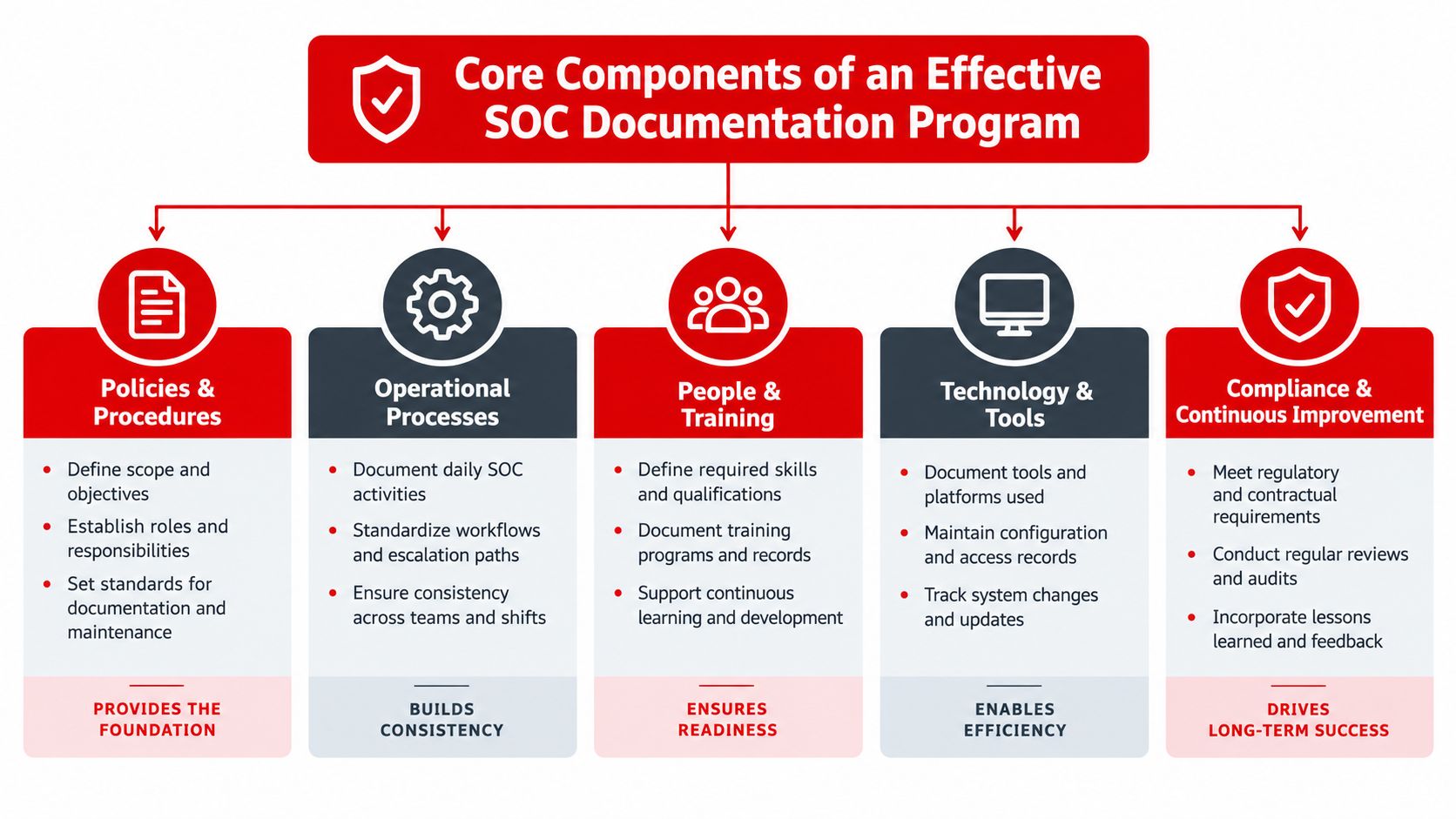
Five components do most of the work.
Start with event definition. Teams need a clear rule for which incidents become formal records and which stay as routine observations. Life-safety events, suspected crimes, access-control failures, system outages, officer-welfare alerts, fire-watch observations, welfare checks, and patrol exceptions do not carry the same risk, but each category needs a documented handling path. Without that decision up front, one property gets a full case file while another gets a vague note for the same issue.
Then lock down minimum fields. The point is not paperwork. The point is making sure a property manager, supervisor, or investigator can tell what happened and what still needs action. A usable record should capture the incident identifier, date and time with time zone, property and exact location, reporting officer or analyst, event category, factual observations, actions taken, notifications, escalation decisions, evidence references, handoff status, and closure approval.
Next comes collection and transmission. Officers may submit Daily Activity Reports from the field, scan NFC checkpoints through a GPS-enabled Guard Tour Management System, upload photos, and coordinate with a 24/7 SOC. If those inputs move through too many tools without control, records become inconsistent fast. Authorized users, clean handoffs, and protected transfer between patrol, dispatch, supervisors, and client-facing systems matter.
Access and review decides who can see, edit, export, and approve records. Retention and disposal decides how long they stay useful and defensible. If an entry is amended, keep the original, the editor, the time, the reason, and the prior value. If a routine patrol note later becomes part of a theft inquiry or liability dispute, that history matters. Teams refining this model can compare their process with security operations center best practices for patrol, remote monitoring, and dispatch.
Designing Incident Escalation Procedures and Runbooks
Good escalation procedures do not start with software fields or compliance language. They start with a property problem. A door is forced, a garage camera drops, a patrol officer misses a welfare check, a tenant reports suspicious activity, and the SOC has minutes to decide who acts, who gets called, and what gets written down so the property manager can defend the response later.
That is why one generic workflow fails. A life-safety event, an access-control exception, a suspected crime, and a temporary device outage may all reach the same console, but they do not carry the same response ownership. They also do not create the same documentation burden. Some incidents need immediate dispatch and supervisor notification. Others need verification, monitoring, and a clean handoff to site staff by morning.
Useful runbooks follow the decision path in the order operators work:
- Confirm how the event entered the SOC, such as patrol report, remote video, access alarm, intercom call, or client request.
- Capture only the facts known at that point, including uncertainty.
- Assign the next owner of the event.
- Trigger the correct notification path.
- Set the status that tells everyone what happens next.
- Define what closes the event, and who can approve that closure.
In practice, the documentation standard has to fit the pace of the floor. If the runbook is too long, dispatchers and analysts skip steps or fill gaps from memory after the fact. If it is too thin, supervisors cannot tell why one property received a callout while another got a watch order. The Indiana State of Hoosier Cybersecurity 2025 report makes the broader point clearly. Teams without written incident procedures and usable logs struggle when they need to reconstruct what happened.
Authority must also be explicit. The runbook should match actual escalation boundaries across junior to senior SOC roles. A newer analyst may validate an alarm, open the record, and escalate. A supervisor may authorize tenant notifications, law enforcement contact, client wake-up calls, or final closure after evidence review.
I have seen the biggest failures happen at the handoff between remote monitoring and field response. The camera operator sees enough to worry. The guard gets only half the context. The property manager receives a vague summary hours later. A documented triage sequence prevents that drift. For physical security environments, Overton's security event triage process is a practical reference for matching severity to response ownership and recording decisions at the moment they were made.
Structuring Daily Activity Reports and Client-Facing Logs
Raw patrol data rarely answers a property manager's question by itself. A GPS checkpoint confirms that an officer reached a location. A photograph shows a condition. A camera verification records what monitoring staff observed. The Daily Activity Report must connect those pieces into a concise operational account.
CISA and the FBI recommend that incident records capture the date, time, location, type of activity, number of people affected, equipment involved, submitting organization, and designated point of contact, as outlined in their incident reporting guidance. For property operations, those fields create a reliable foundation for follow-up.
Separate the working record from the client summary
A useful documentation matrix maps each event to the output a client receives:
| Event type | Operational record | Client-facing output |
|---|---|---|
| Routine patrol | Checkpoint scans, time, officer, observations, photographs | Daily Activity Report |
| Access exception | Door or gate, observed condition, verification, notification | Exception log and service summary |
| Suspected crime | Timeline, evidence references, dispatch, agency contact | Incident report and management notification |
| System outage | Affected device, duration, workaround, owner | Service exception and corrective-action update |
| Officer-welfare alert | Check-in status, contact attempts, supervisor action | Restricted incident record and client notice where appropriate |
The narrative should lead with the condition, not the technology. “South loading gate was found unsecured, officer secured it, contacted the site representative, and attached a photograph” is more useful than listing several system events without a conclusion.
Monthly summaries should identify patterns without burying the reader in raw data. Repeated false alarms, missed checkpoints, unresolved access violations, delayed acknowledgments, and recurring lighting or camera issues deserve a visible exception section with an owner and next action.
For teams refining templates, Overton's incident report templates offer a practical starting point for organizing factual descriptions, actions, outcomes, and supporting evidence. The report should help a nontechnical stakeholder decide what to approve, repair, investigate, or monitor.
Managing the Information Lifecycle and Record Retention
A routine patrol exception and a suspected theft shouldn't receive identical retention treatment. Applying the highest level of control to every record consumes attention and makes important evidence harder to find. Applying minimal controls to a serious event creates a different risk.
NIST defines log management as the generation, transmission, storage, access, and disposal of log data, and recommends prioritizing practices according to risk reduction and organizational need before selecting tools, as stated in the NIST draft revision.
Use tiers instead of one universal rule
A practical model might distinguish:
- Life-safety and suspected-crime records: Require rapid supervisory review, linked evidence, explicit escalation, and controlled retention.
- Access-control failures and system outages: Need an owner, service-level target, corrective-action status, and review for recurring patterns.
- Officer-welfare alerts and emergency dispatches: Require restricted access, complete communication history, and clear supervisory closure.
- Routine patrol exceptions: Should remain searchable and auditable, but can follow a lighter review path when no further action is needed.
The exact schedule belongs in the organization's records matrix. That matrix should identify the event type, source system, data owner, classification, retention duration, archive location, retrieval method, review frequency, and destruction authority.
Define requirements before buying storage
Teams often select a platform first and then attempt to force every event into its default categories. The stronger approach starts with questions:
- Which events must be retrievable for management review?
- Which records may contain sensitive personal information?
- Who can export or approve a record?
- What happens when a legal or regulatory preservation request arrives?
- How will archived records be tested for retrieval?
This structure reduces clutter without treating documentation as disposable administration. It also supports handoffs between onsite officers, mobile patrol supervisors, remote monitoring teams, and property contacts.
Ensuring Evidentiary Reliability and Legal Hold Readiness
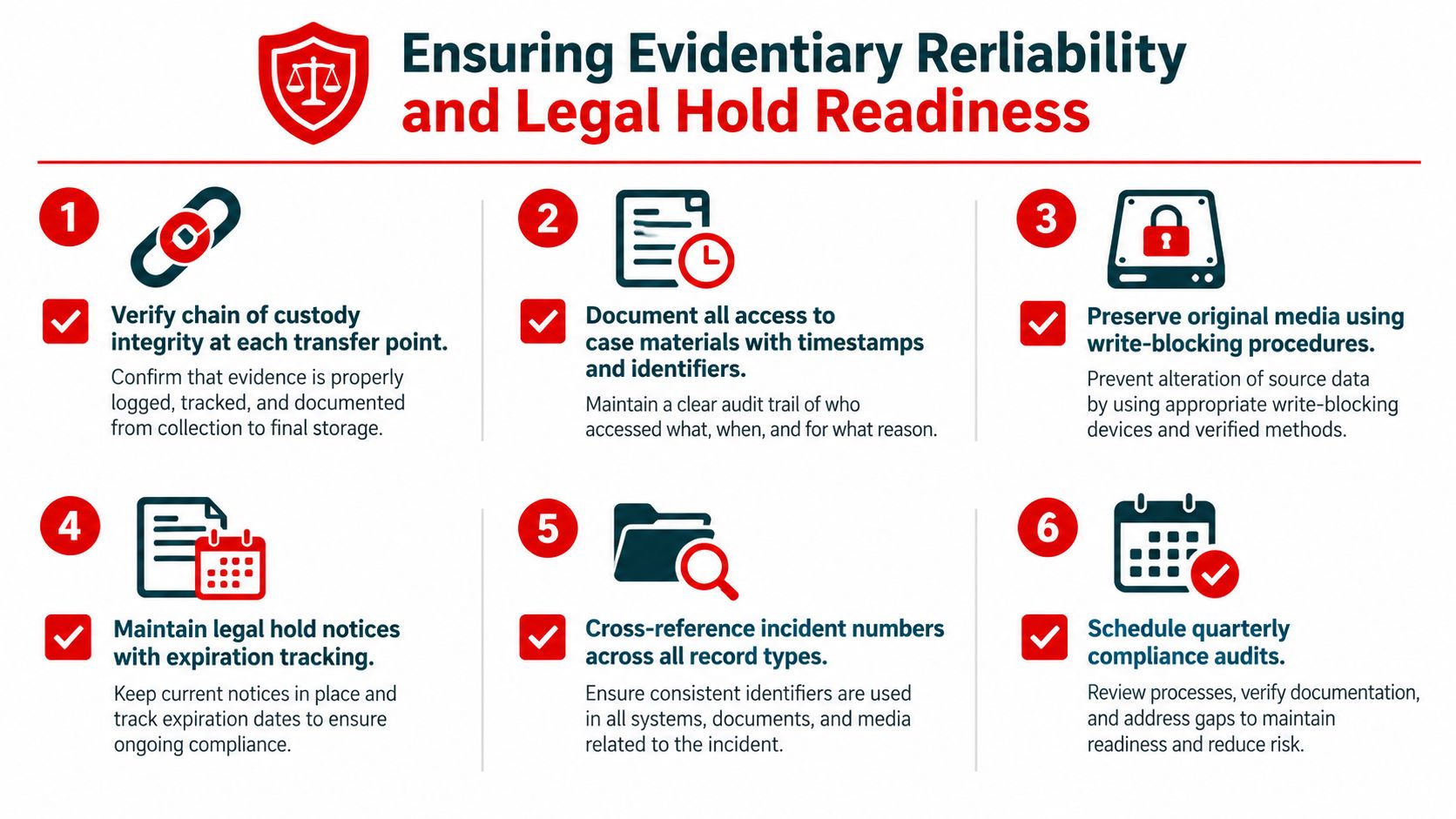
A security record can begin as an operational note and later become relevant to a liability claim, trespassing investigation, theft allegation, use-of-force review, or insurance inquiry. Reliability depends less on polished writing than on whether the organization can show that the record remained identifiable, complete, and protected from unauthorized alteration.
CISA states that log integrity is essential and recommends continuous storage on a separate system, frequent backups, and cryptographic hashing so unauthorized alterations can be detected, as explained in its cyber incident analysis guidance.
Protect the timeline
Synchronize timestamps across cameras, access-control systems, dispatch platforms, GPS guard-tour tools, and analyst consoles. If one system records an event at a different time from another, investigators may struggle to establish sequence, especially when a patrol arrival, door event, camera clip, and client notification must be compared.
Every amendment should preserve the prior value and identify the editor, time, reason, and new value. Don't overwrite the original narrative because a later interview changes the interpretation. Add a supplemental statement instead.
Control custody and preservation
A defensible process should include:
- Chain-of-custody fields: Record who collected, transferred, accessed, exported, or reviewed each item.
- Authoritative records: Distinguish the original camera file, access log, or report from working copies.
- Legal holds: Mark affected records, suspend normal destruction, identify the hold owner, and track release or expiration.
- Separate storage: Preserve copies outside the affected source system when that system can't maintain the required duration.
- Retrieval tests: Confirm that authorized staff can locate and open archived records.
Organizations that need a plain-language introduction to custody documentation can review Reworx Recycling's documentation guide. The same core discipline applies in security operations: identify the item, control access, preserve the original, and document each transfer.
Standardizing Documentation Across Multi-Site Portfolios
Multi-site standardization fails when corporate teams force every property into the same report. A residential tower, a retail center, and a construction site do not produce the same incidents, and property managers still need records they can compare across the portfolio.
The practical answer is a shared documentation framework with site-level operating detail layered underneath it.
A portfolio manager covering residential towers in Los Angeles, retail centers in San Jose, and construction sites in Sacramento needs incident records that roll up cleanly without stripping out what happened on the ground. If one site logs a recurring gate issue, another records missed patrol checkpoints, and a third tracks repeated camera verification requests, leadership should be able to see whether those are separate local problems or a pattern in access control, patrol execution, or remote monitoring coverage. That breaks down fast when one team writes “unauthorized entry,” another writes “door problem,” and another writes “access concern” for the same type of event.
Start with a controlled vocabulary that every site uses in the same way. Keep the fields consistent enough for trend reporting, vendor oversight, and shift handoffs, but leave room for local instructions inside the workflow. The common layer should cover event categories, severity labels, status values, escalation ownership, required evidence fields, closure reasons, and client notification types.
Then let each property define how that standard gets applied. A high-rise may need instructions for resident access, loading docks, and concierge handoffs. A construction site may need separate steps for equipment yards, material storage, and after-hours gate checks. A healthcare property may need tighter limits on who can view or describe sensitive information in an incident record.
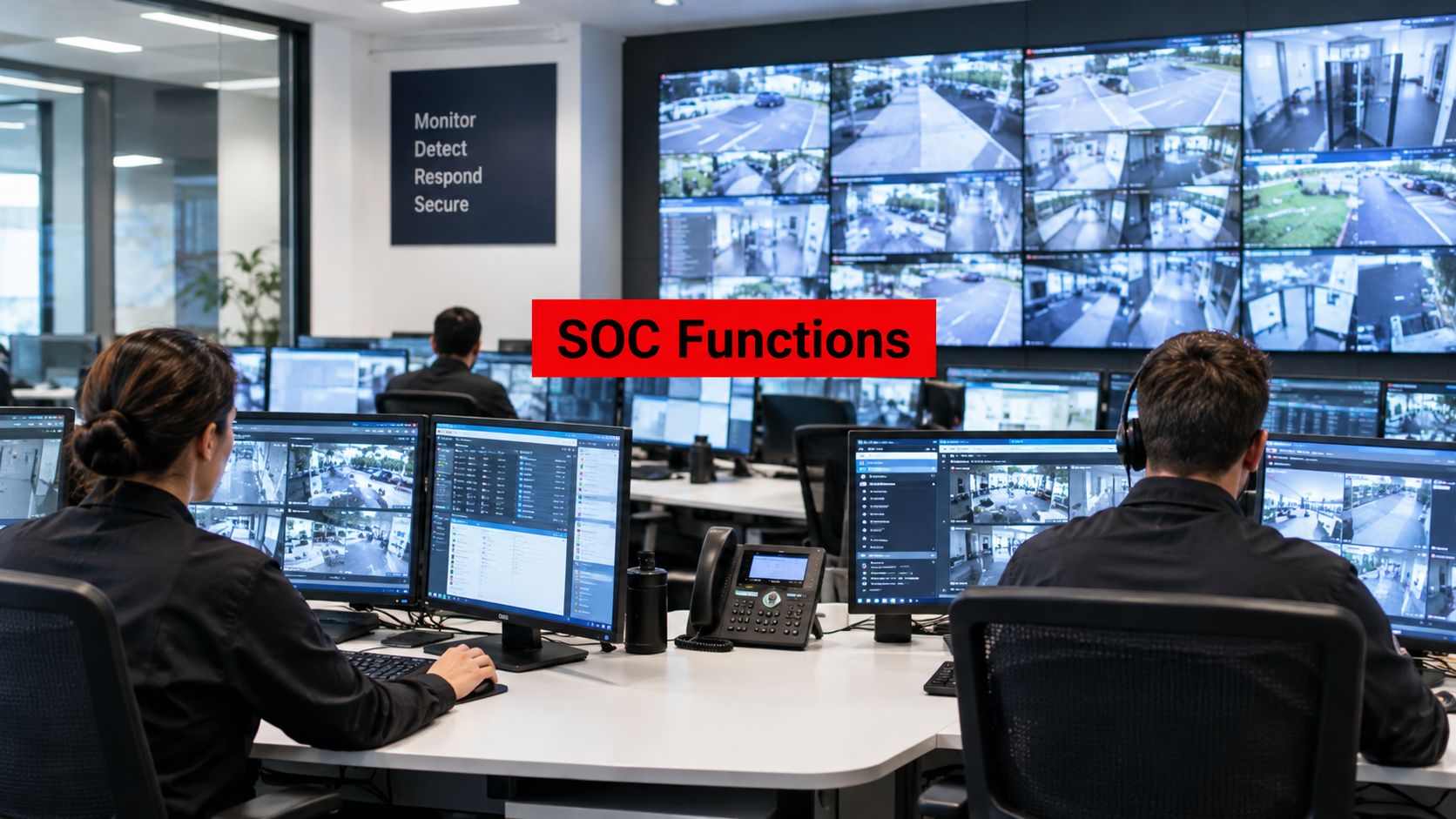
This matters most at the handoff between onsite personnel and a centralized SOC. The officer contributes direct observation, patrol activity, and physical response. The SOC validates alarms, documents calls, tracks open actions, and keeps the issue visible until someone closes it with the right authority. That is how documentation connects guard activity to remote monitoring and gives property managers something they can act on.
Analysts at IBM found that organizations whose internal security teams detected breaches did so in an average of 172 days, according to the IBM Cost of a Data Breach report. In physical security operations, the lesson is operational rather than technical. Clear ownership and a usable chronology reduce dropped handoffs and make recurring property issues easier to spot.
Overton Security shows this model in practice, combining GPS-enabled patrol records, digital reports, photographs, and 24/7 SOC oversight within a broader onsite and remote security workflow. The software matters. The operating standard behind it matters more.
Turning Records into an Operational Feedback Loop
The report is closed. The work is not.
SOC documentation starts paying off after the immediate response, especially in physical property security where the same weak door hardware, bad lighting, unclear visitor process, or inconsistent patrol handoff can keep generating avoidable incidents. If the record only proves that a call was answered, the site learns nothing. If the record is reviewed well, property managers get a clear view of what keeps breaking down across guard activity, remote monitoring, and site operations.
CISA calls for a defined event-data logging process that establishes how each event type is captured, tracked, and handled under policy and procedure, as outlined in its incident-management resource guide. In practice, that structure gives supervisors something they can audit, compare across shifts, and turn into site-level corrections.
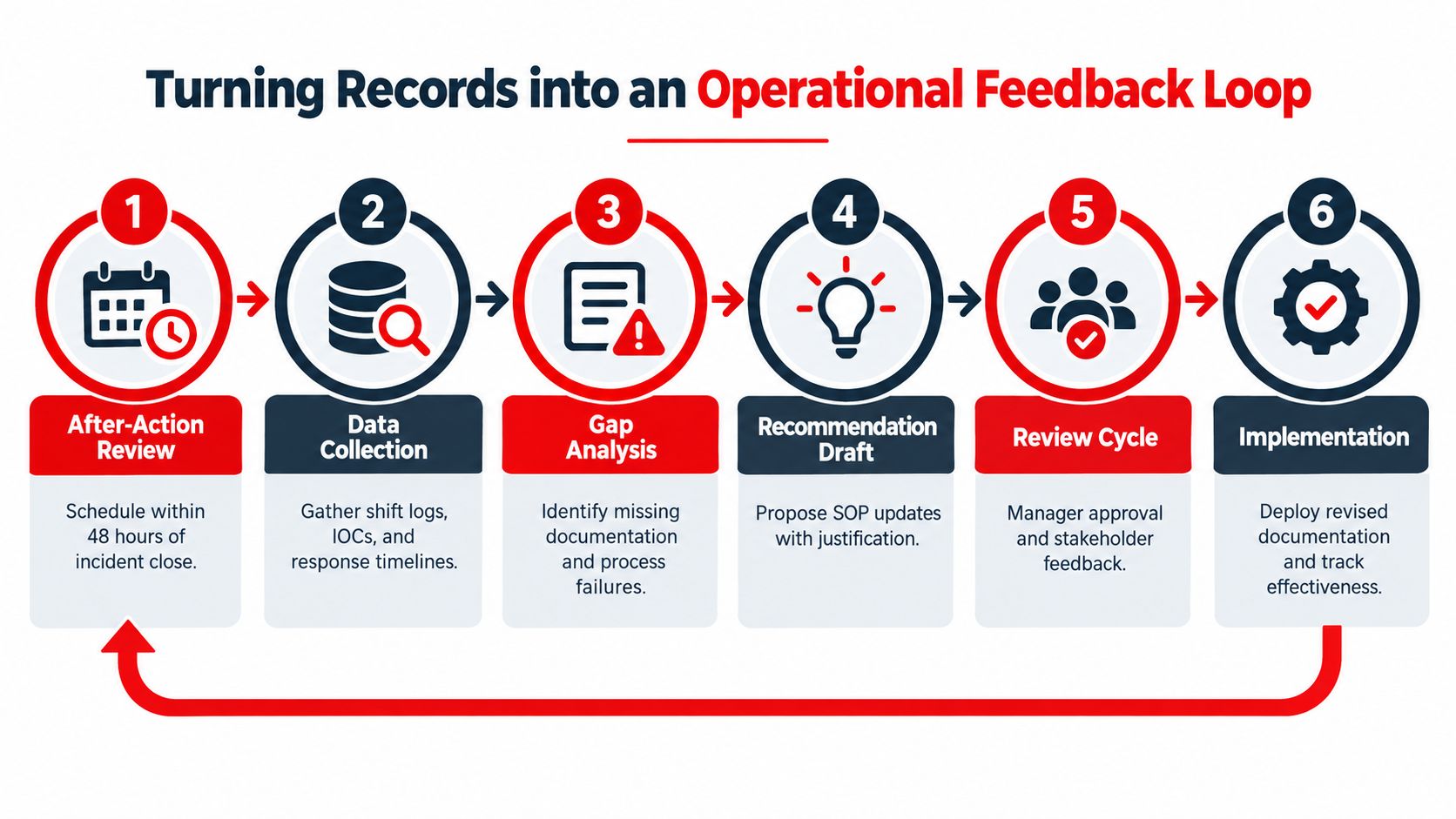
A good review cycle checks whether records are usable, not merely present. The questions are practical. Are required fields, evidence references, and ownership details complete? Do reports separate observed facts from assumptions? Do timestamps line up across cameras, access control, patrol apps, and dispatch logs? Did the team notify the right role under the site procedure? Does the closure note explain why the event was resolved, and can a property manager understand the remaining risk?
Every after-action review must end with a corrective action, an owner, and a due date. When officers repeatedly document an unsecured service gate, the answer may be a post-order change, a facilities repair request, a camera-angle check, and a return inspection. When analysts keep escalating unclear alarms because the runbook leaves too much room for interpretation, the procedure needs sharper decision points.
Training should absorb the same lessons. Supervisors can use recurring documentation mistakes for coaching, and account managers can use service summaries to press for property fixes that reduce repeat calls on the next shift.
Quick Reference Checklist for SOC Documentation Audits
Use this checklist during a documentation audit with the security director, property manager, account manager, or site supervisor. The aim isn't to reward a large volume of records. It's to confirm that each important event can be understood, verified, assigned, and reviewed.
Record design
- Event categories: Are life-safety events, suspected crimes, access failures, outages, welfare alerts, patrol exceptions, and routine activity clearly differentiated?
- Minimum fields: Does each incident include an identifier, date, time zone, location, reporter, activity type, affected people where relevant, equipment, actions, notifications, evidence, status, and closure owner?
- Factual writing: Do reports separate observations from conclusions and preserve uncertainty without speculation?
- Controlled vocabulary: Do all sites use consistent event, severity, status, and closure terms?
Operational control
- Runbooks: Can an analyst or dispatcher determine the next action quickly during a live event?
- Ownership: Does every open incident have a named role responsible for the next step?
- Handoffs: Do shift changes preserve chronology, pending actions, evidence references, and client notifications?
- Client outputs: Do Daily Activity Reports, exception logs, incident reports, and monthly summaries translate activity into decisions?
Integrity and retention
- Time synchronization: Do cameras, access systems, dispatch tools, GPS checkpoints, and analyst consoles use consistent time settings?
- Audit trails: Do amendments preserve the original value and identify the editor, time, and reason?
- Access control: Can the organization show who viewed, exported, or approved sensitive records?
- Retention matrix: Does each event type have an owner, retention period, archive location, retrieval process, and destruction authority?
- Legal holds: Can normal disposal be suspended promptly, with affected records marked and separately protected?
- Recovery testing: Can staff retrieve archived records and verify that they remain readable and complete?
Improvement
- Quality sampling: Do supervisors review records for completeness, neutrality, timely escalation, evidence linkage, and authorized closure?
- Corrective action: Do recurring patterns lead to revised post orders, site plans, training, equipment changes, or client decisions?
- Management reporting: Do summaries show unresolved ownership and meaningful exceptions rather than raw alert volume?
A mature program doesn't prove that officers patrolled or that a SOC received alerts. It shows how people converted observations into decisions, decisions into action, and action into accountable outcomes.
Overton Security provides onsite security officers, mobile patrols, remote monitoring, GPS-enabled guard-tour records, digital Daily Activity Reports, and 24/7 SOC support for properties across California. Visit Overton Security to discuss a documentation-centered security program for your residential community, commercial property, construction site, healthcare facility, or multi-site portfolio.