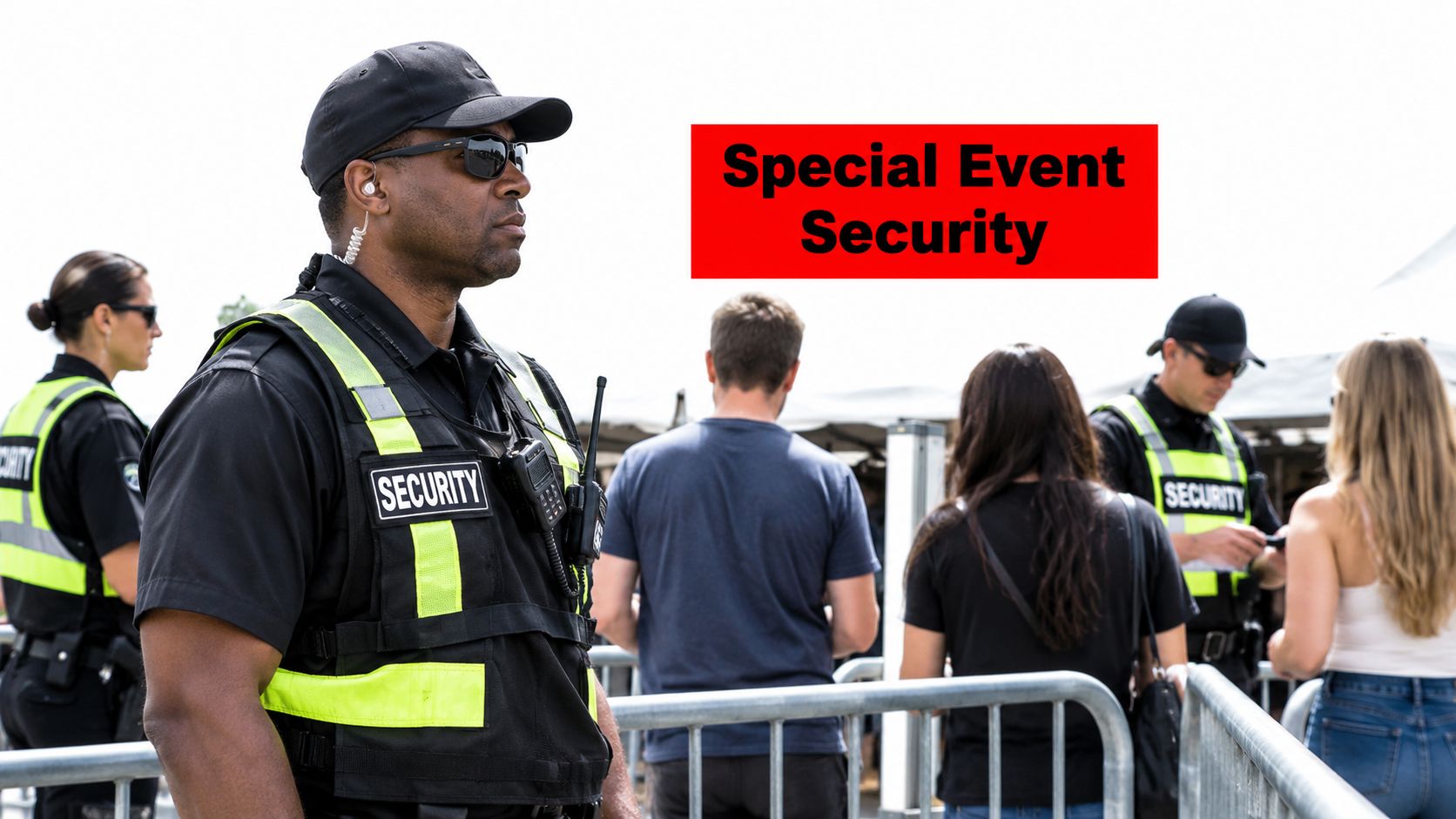

Physical security is the practice of protecting your most important assets—your people, property, and equipment—from real-world threats like theft, vandalism, and unauthorized access. It’s more than just a lock on a door; it's a comprehensive strategy designed to create a safe, controlled environment where your business or community can thrive.
What Physical Security Really Means for Your Property
For property managers, HOA board members, and facilities directors, physical security isn't an abstract concept. It's the foundational layer of safety that allows your community or business to function smoothly. Think of it as the framework that maintains order, protects property value, and gives tenants, employees, and visitors genuine peace of mind.
A successful plan is not a one-size-fits-all product. It's an integrated strategy that layers different elements together to deter threats before they happen, detect incidents the moment they start, and enable a quick, effective response. This approach is crucial for handling the unique challenges of different environments, whether that means stopping equipment theft at a construction site in Los Angeles or managing after-hours access at a corporate campus in San Jose.
The best way to visualize a strong security program is to break it down into its core components. These elements are the building blocks of any effective strategy.
Here is a quick overview of the key pillars we'll be discussing in this guide.
The Core Components of a Physical Security Strategy
| Component | Primary Goal | Examples |
|---|---|---|
| Access Control | Regulate who can enter specific areas. | Key card systems, biometric scanners, front desk check-ins, gate guards. |
| Surveillance | Monitor the property to detect and document activity. | HD security cameras, remote video monitoring, thermal imaging. |
| Perimeter Security | Secure the outer boundary of a property. | Fencing, gates, bollards, landscape design. |
| On-Site Security Presence | Provide a visible human deterrent and response. | Uniformed security guards, vehicle patrols, lobby receptionists. |
| Security Lighting | Illuminate vulnerable areas to deter criminals. | Motion-activated lights, well-lit parking lots, pathway lighting. |
| Alarms & Response | Alert stakeholders to a potential breach. | Intrusion detection sensors, fire alarms, panic buttons, SOC monitoring. |
Each of these components plays a distinct role, but their true power is unleashed when they work together as part of a cohesive plan.
The Pillars of Protection
At its heart, a robust security program is built on a few essential components working in harmony. Each one addresses a different aspect of securing a property, ensuring there are no weak links in your defensive chain.
- Access Control: This is about managing who gets in and who stays out. It can be as straightforward as a security officer checking IDs at a front desk or as advanced as a sophisticated key card system that logs every entry and exit.
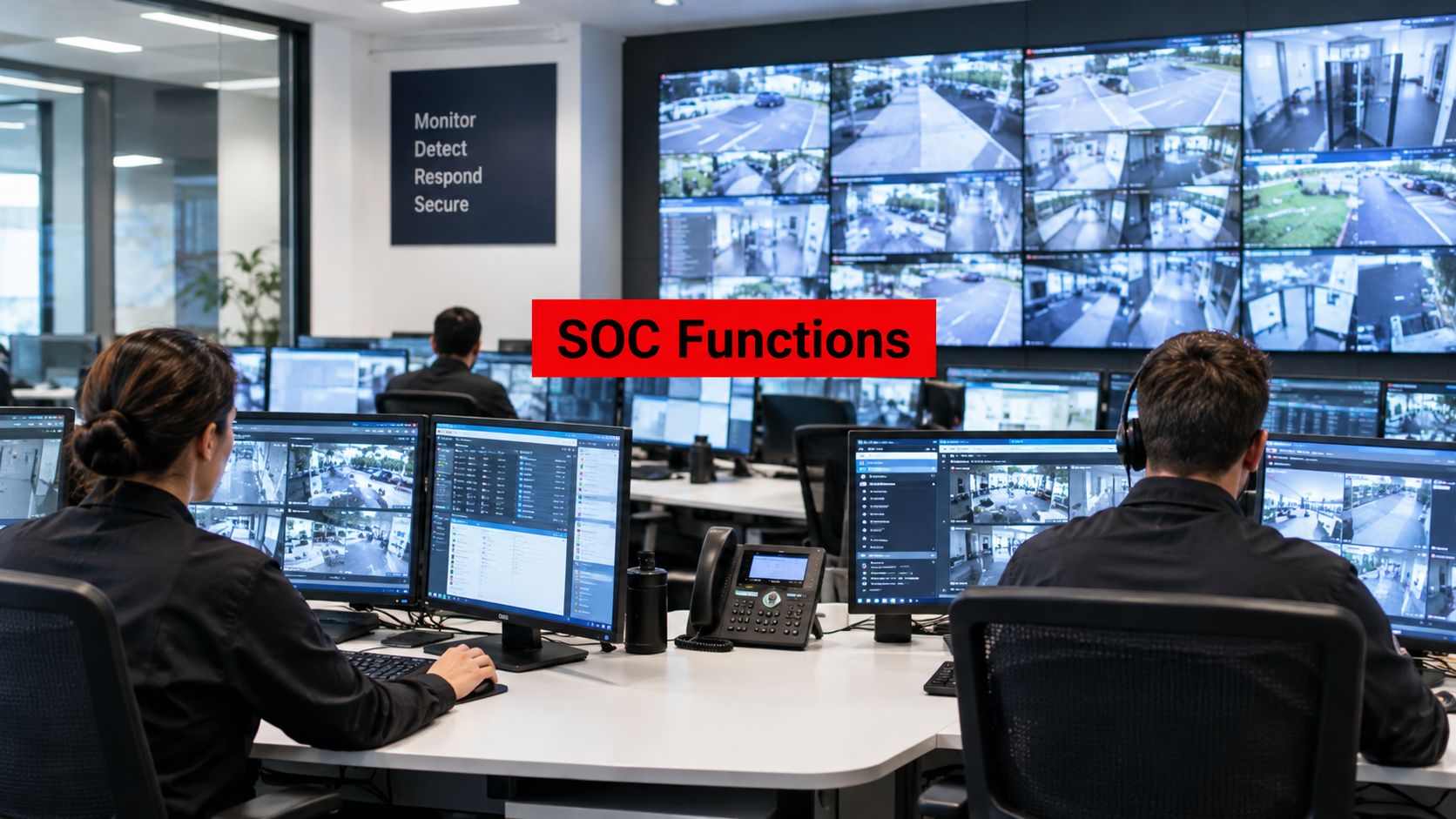
- Surveillance: This involves keeping a close watch on your property to spot and record activity. Modern surveillance isn't just about recording events; it often combines high-definition cameras with 24/7 oversight from a Security Operations Center (SOC), turning passive footage into an active threat detection tool.
- On-Site Presence: This is the human element—the visible and responsive presence of professional security officers. Whether they're conducting vehicle patrols or stationed at a key post, trained personnel are essential for deterring unwanted activity and managing incidents on the ground.
A common mistake is viewing these pillars as separate items on a checklist. An effective strategy weaves them together. For example, a camera system doesn't just record a break-in; it alerts a monitoring center that immediately dispatches a patrol officer to the exact location.
This interconnected approach transforms security from a reactive cost into a proactive asset. With 26 years of experience, we at Overton Security have seen firsthand how a well-designed plan not only reduces risks but also boosts a property’s reputation and value. By blending human expertise with smart technology, we deliver the consistency and reliability that property managers across California depend on.
Understanding the Four Layers of Physical Security
Effective physical security isn't just a single wall or a locked door; it's a series of smart, interconnected layers designed to work together. This "defense in depth" approach ensures that if one layer is bypassed, another is ready to stop or slow down a threat. For any property manager or business owner, grasping these layers is key to turning security from a necessary expense into a strategic asset.
This layered model is built to achieve four distinct goals, with each one building on the last to create a formidable security presence.
Deterrence: The First Line of Defense
The best security incident is one that never happens. Deterrence is about making your property an unappealing target from the start. The goal is to create such a strong impression of control that a potential wrongdoer decides it's not worth the risk and moves on.
This is achieved with measures that are obvious to anyone approaching your property, discouraging unwanted activity before it can begin.
- Visible Security Presence: Nothing communicates "we're watching" like a professional security officer. Whether stationed at an entrance or conducting patrols in a marked vehicle, their presence is one of the most powerful deterrents available.
- Clear Signage: Simple signs indicating video surveillance, regular patrols, or restricted access reinforce the message that this is not an easy target.
- Strategic Lighting: A well-lit property is a safer property. Illuminating parking lots, walkways, and building perimeters eliminates the dark corners that criminals often exploit.
Detection: Identifying Threats in Real Time
If a threat isn't deterred, the next layer is Detection. The objective here is to identify a potential breach the moment it occurs, providing the critical early warning needed to launch a swift response. Technology is a major player, turning passive environments into actively monitored ones.
Modern detection isn't just a blaring alarm in an empty building. It's about getting the right information to the right people, right now.
An effective detection system doesn’t just record an event for later review; it triggers an immediate, intelligent response. That's the difference between having evidence of a crime and preventing one from escalating.
This is where a combination of smart tech and human oversight truly shines. Systems like motion sensors, door/window contacts, and intelligent video surveillance (find out where to place surveillance cameras for maximum effect) can feed information directly to a 24/7 Security Operations Center (SOC). There, trained professionals can verify alerts, filter out false alarms, and initiate the proper response protocol.
Delay: Buying Crucial Time
Once a threat has been detected, the Delay layer kicks in. Its purpose is to slow an intruder down, creating physical obstacles that buy precious time for your security team or law enforcement to arrive. Every second an intruder is delayed dramatically increases the chances of a successful intervention and minimizes potential loss.
Barriers in this layer can range from simple to complex, but they all serve the same function: to impede movement.
- Physical Barriers: Fences, gates, and bollards create a secure perimeter that’s difficult to breach quickly.
- Reinforced Access Points: Strong doors, high-security locks, and shatter-resistant window films make forced entry a much more challenging and noisy task.
- Access Control Systems: Requiring key cards, fobs, or codes at various points inside a facility creates internal checkpoints that an intruder must defeat one by one.
This hierarchy shows how physical security strategies are built upon a foundation of access control, surveillance, and personnel.
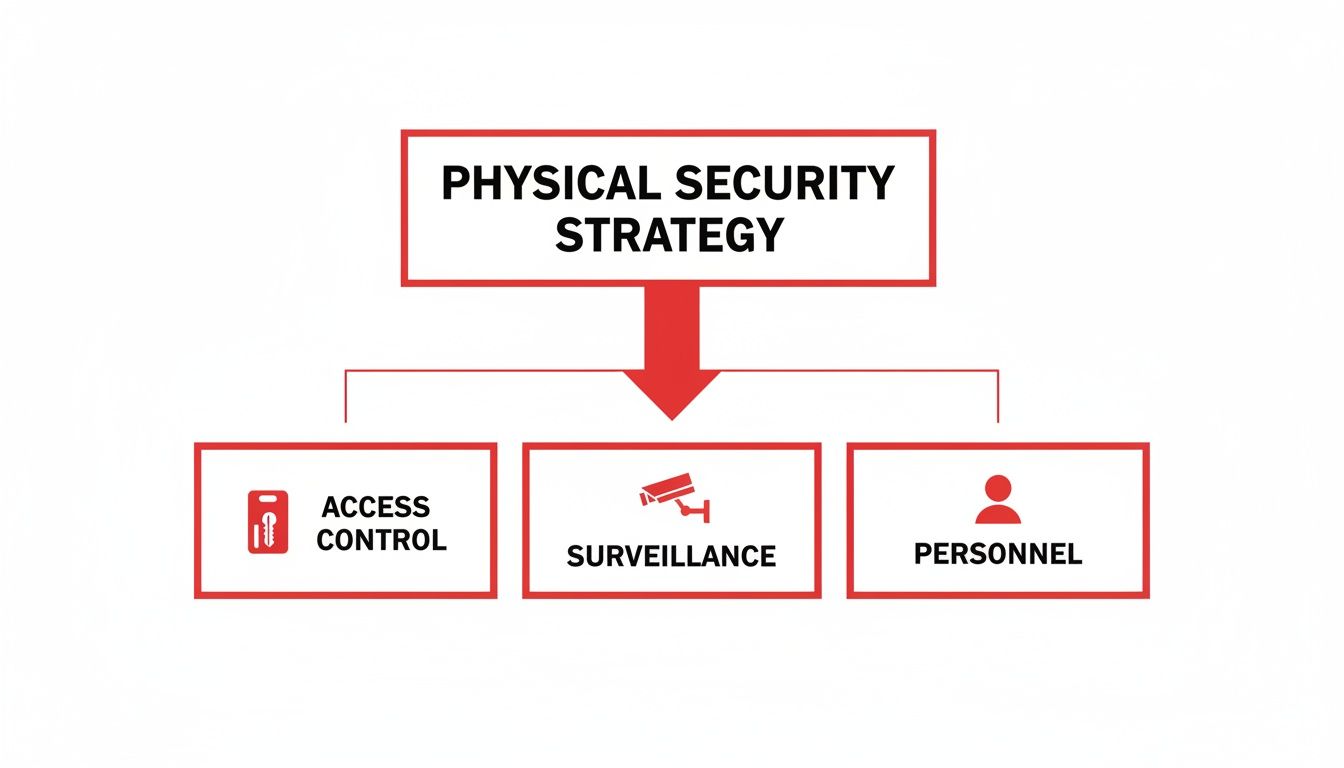
These core components work in concert to form a comprehensive defense, ensuring all aspects of security are addressed.
Response: Taking Decisive Action
The final and most critical layer is Response. After a threat has been deterred, detected, and delayed, an effective response is what ultimately neutralizes the situation. This is where the human element of security is irreplaceable. A trained officer can assess a situation on the ground, de-escalate it when possible, and act as a vital link to emergency services.
The response phase determines the outcome. A well-executed response can prevent theft, protect people, and minimize property damage—it’s the culmination of all the previous layers working as intended.
The growing importance of these integrated solutions is clear. The global physical security market was valued between USD 122.5 billion and USD 147.36 billion in recent years, with projections showing it could grow to over USD 255 billion by 2032. A professional security response is the final, essential piece of this rapidly expanding puzzle.
The Technology Powering Modern Security Plans
While a strategy provides the blueprint, technology provides the tools to build it. For property managers, construction superintendents, and HOA board members, understanding these tools is key to making informed decisions. Modern security isn’t about choosing technology or people; it’s about blending them into a seamless, responsive system.
Technology’s role is to enhance visibility, provide reliable documentation, and empower a faster, more intelligent response. Let's walk through the key systems that form the backbone of a robust physical security plan.
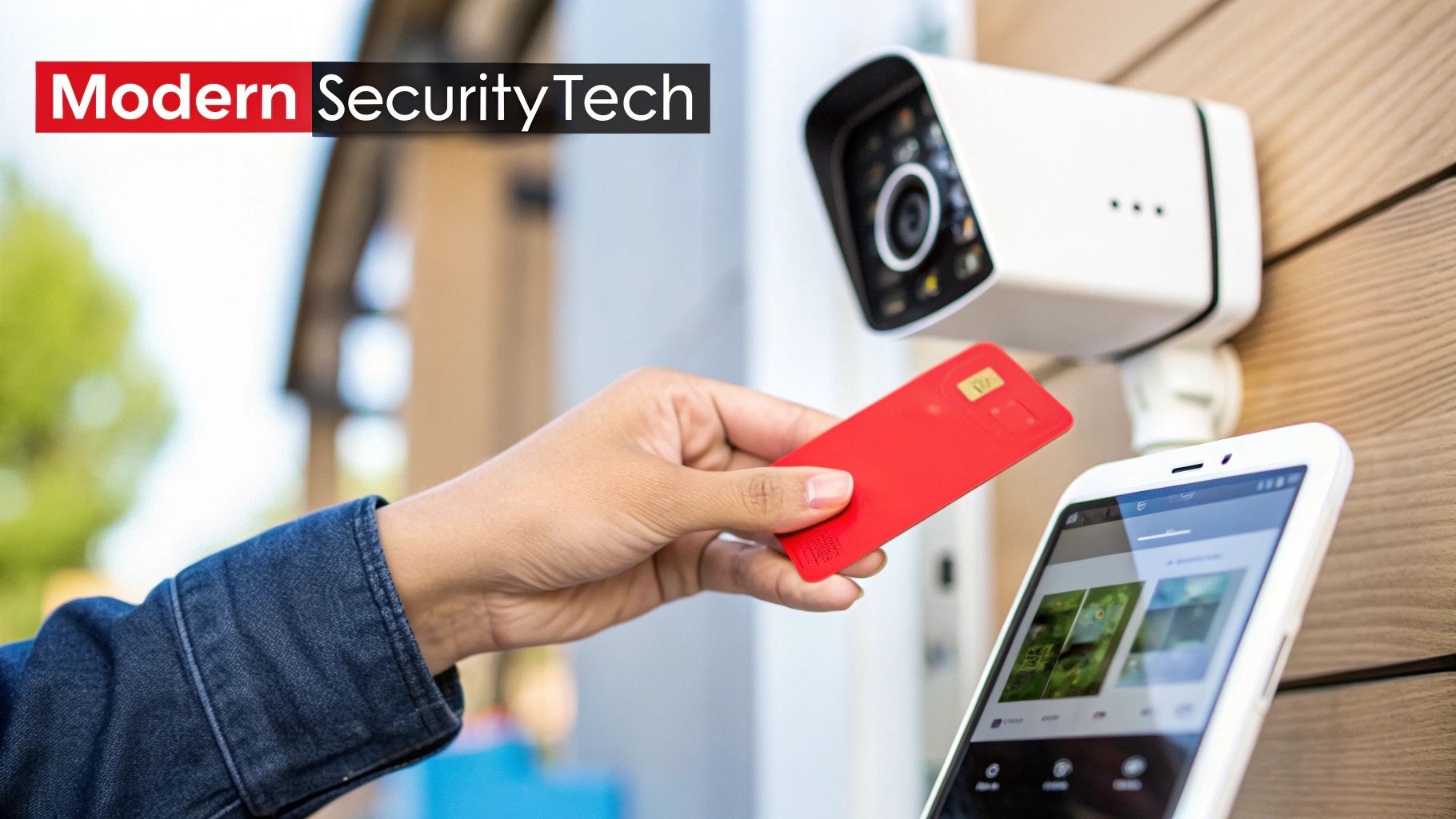
Access Control Systems
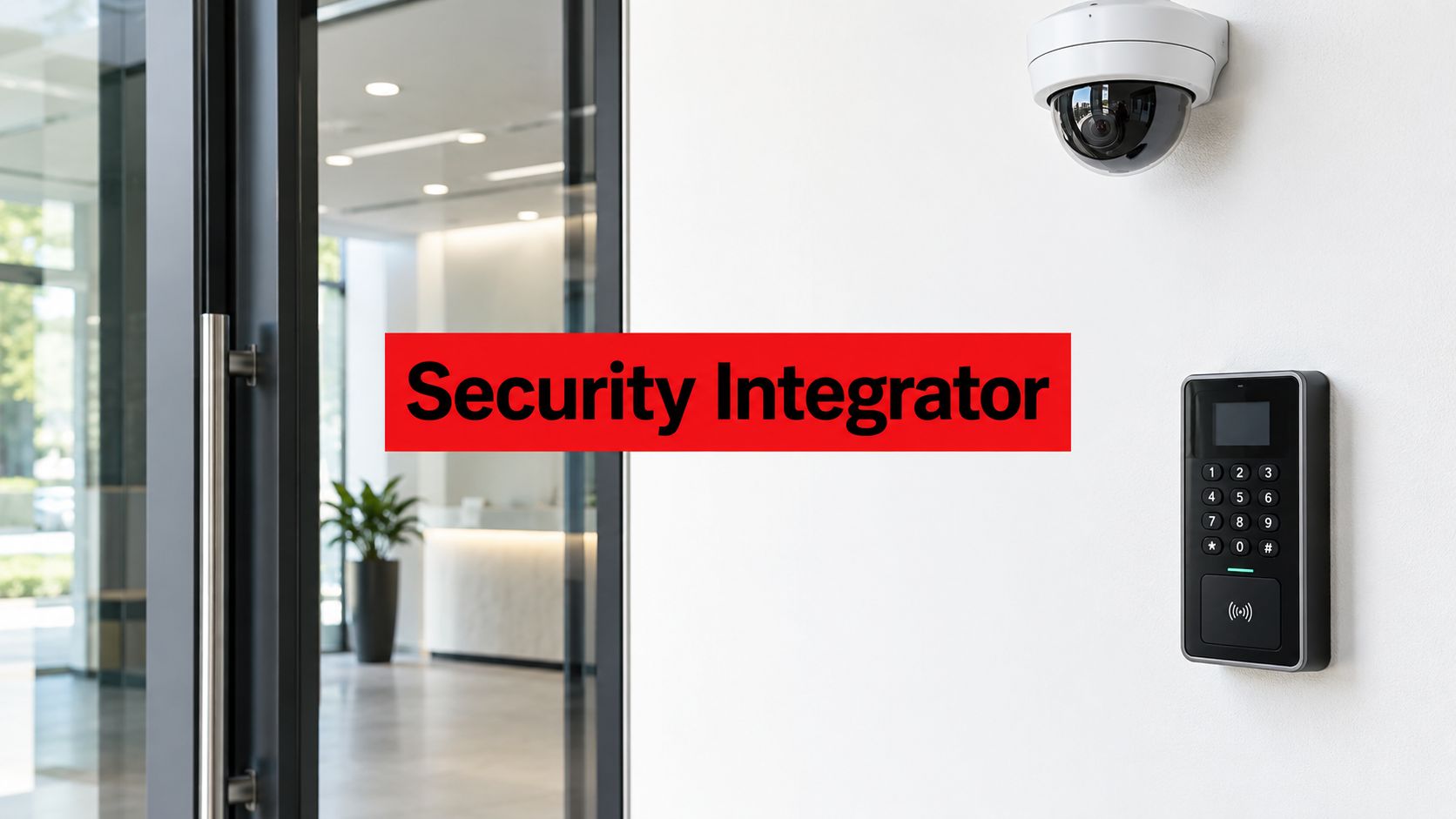
At its core, access control is about managing who can go where—and when. These systems go far beyond traditional keys, which are easily lost or copied, creating a controlled environment where every entry is accounted for. Think of them as the digital gatekeepers for your property.
- Key Cards and Fobs: A simple tap grants entry, but their real strength is in the data. You can instantly grant or revoke access, set time-based permissions (e.g., for cleaning crews from 6 PM to 10 PM), and pull a log of every entry attempt.
- Biometric Systems: Using fingerprints or facial recognition, biometrics offer a high level of security for sensitive areas like server rooms or executive offices.
- Mobile Credentials: Modern systems allow authorized users to use their smartphones as a key, offering convenience without compromising on security.
By creating this digital footprint, you always know who has been in sensitive areas, which dramatically reduces risks like internal theft or unauthorized entry. To get a better sense of what's out there, you can explore the different types of access control and find the right fit for your property.
Video Surveillance Systems
Security cameras are one of the most visible parts of any security plan, but their true value comes down to how they are used. There's a world of difference between merely recording footage and actively monitoring it—and that difference separates a reactive tool from a proactive one.
Modern video surveillance is a huge part of the global physical security market. Valued between USD 57.96 billion and USD 92 billion in 2025, it's the largest component by far. Access control systems, in comparison, are projected to hit nearly USD 19 billion by 2030.
Here's a critical question every property manager should ask: Is someone watching your cameras right now? A recording can help you investigate an incident after the fact, but remote monitoring by a 24/7 Security Operations Center (SOC) can help you stop it in its tracks.
Professionals at a SOC can use video analytics to spot unusual activity, use live audio to warn off trespassers, and dispatch patrol officers or police with real-time intelligence.
Guard Tour Management Systems
How do you ensure that security patrols are happening on schedule and covering all critical checkpoints? A Guard Tour Management System (GTMS) provides the answer with transparent, real-time accountability. This technology is a cornerstone of our commitment to quality and service at Overton Security.
Here’s how it works:
- NFC Checkpoints: We place small, durable tags at key locations around your property—the back gate, the equipment storage area, the community pool.
- Real-Time Scans: As an officer makes their rounds, they scan each tag with a GPS-enabled device.
- Instantaneous Reporting: That scan, along with the precise time and location, is uploaded to the system immediately. You receive detailed digital reports, complete with photos and incident notes, giving you undeniable proof of service.
This system removes all guesswork. You get a clear, documented record of every patrol, ensuring every corner of your property receives the attention it needs. To take things a step further, many properties are integrating technologies that make their physical objects smarter, much like the systems found in modern Internet of Things (IoT) applications.
The Irreplaceable Human Element of Security
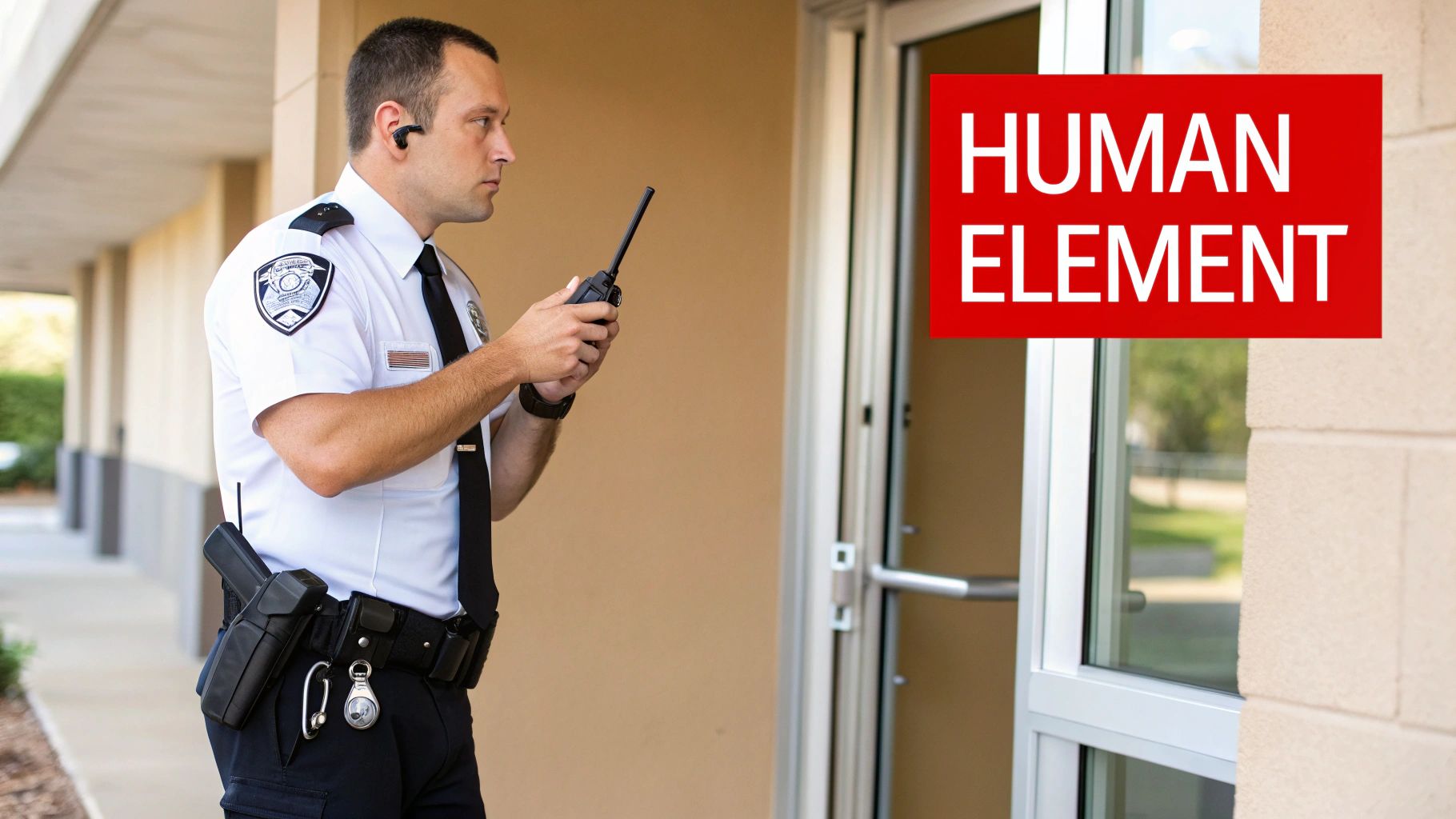
Technology provides incredible tools for detecting and documenting threats, but when an incident unfolds, it's the human element that truly makes the difference. A sound physical security plan recognizes that cameras, sensors, and key card systems are there to make trained professionals more effective, not to replace them.
Ultimately, a professional security officer can read a complex situation, exercise good judgment, and provide a calm, authoritative presence. For property managers, this is the cornerstone of reliable security. It’s what turns a passive monitoring system into an active, responsive operation.
Beyond Presence to Proactive Service
The role of a modern security officer has evolved far beyond simply "standing guard." Today’s professionals are trained in customer service, de-escalation, and emergency response, often acting as ambassadors for your property.
Their ability to assist tenants, greet visitors, and report maintenance issues turns security from a simple cost into a tangible benefit. A service-first approach means officers aren't just waiting for problems to happen; they are actively working to prevent them and improve the environment for everyone. This proactive mindset is key to creating a space that feels both safe and welcoming.
A common pitfall in the security industry is the "burn and churn" approach to staffing, which leads to high turnover and inconsistent service. At Overton Security, we focus on supporting and retaining our officers. We know that a stable, professional team is the only way to deliver the consistency our clients deserve.
This investment in our people directly results in lower turnover, reduced liability, and a higher standard of care for your property. It’s a philosophy we’ve built our 26-year reputation on.
The Power of Professional Training
An officer’s effectiveness is a direct result of their training and support. A properly trained professional knows how to respond to a wide range of situations—from a minor complaint to a major emergency—ensuring every action is calm, professional, and follows established protocols.
This training isn’t just about security tactics; it covers a host of essential skills:
- De-escalation Techniques: The ability to defuse a tense situation with communication is one of the most valuable skills an officer possesses, often preventing incidents from becoming physical confrontations.
- Emergency Response Coordination: Officers are trained to be a direct link to police, fire, and medical services, providing them with accurate, real-time information when it matters most.
- Detailed Reporting: Thorough and accurate logs of all activities create a clear record for liability protection and provide valuable insights into your property's operations.
Just as a vigilant person is vital for physical security, educating your team is crucial for digital threats. To build a similar human firewall against cyber risks, consider incorporating effective IT security awareness training.
Visible Deterrence and Rapid Response
Finally, you cannot overstate the deterrent power of a uniformed officer. The simple presence of an onsite security guard or a marked patrol vehicle sends a clear signal that your property is protected.
This visible layer of defense discourages opportunistic threats like vandalism, loitering, and theft. And if an incident does occur, having a trained individual on-site means an immediate response, minimizing damage and ensuring the situation is managed correctly from the very beginning.
How to Build Your Physical Security Plan
Knowing the concepts is one thing, but putting them into practice is what actually protects your property. Building a solid security plan is a straightforward process that puts you in control. Think of this as your framework for moving from theory to a confident, real-world security posture.
An effective plan doesn't start with buying cameras or hiring guards. It starts with asking the right questions. What are my biggest concerns? What does "safe" look like for my tenants, employees, or residents? When you map out a clear strategy first, every decision you make from that point on is deliberate and aligned with your goals.
Conduct a Realistic Risk Assessment
Before you can build a defense, you need to know what you’re defending against. A risk assessment is a practical, honest look at your property’s unique vulnerabilities. Every site is different; a construction site in Los Angeles faces a different set of threats than a quiet residential community in San Jose.
The best way to start is to walk your property with a critical eye—both during the day and at night.
- Identify Weak Points: Look for poorly lit corners, unmonitored gates, camera blind spots, or overgrown landscaping that could conceal someone.
- Analyze Past Incidents: Review security logs from the last year. Were there break-ins? Vandalism? Loitering complaints? These patterns will point you straight to your most persistent risks.
- Consider Your Assets: What are you trying to protect? For a retail center, it's merchandise. For a construction site, it’s expensive tools and materials. For an HOA, it's the safety and property of the residents.
Define Clear Security Goals
Once you understand your risks, you can set meaningful goals. "Improve security" is too vague to be useful. Instead, aim for specific, measurable outcomes that directly address the weak points you've identified.
For example, a clear goal sounds like this: "Reduce after-hours loitering near the community pool by 90% within three months." Or perhaps: "Eliminate theft of copper wiring from the construction site by implementing nightly patrols and surveillance."
Defining success upfront is crucial. It gives you a benchmark to measure your return on investment and ensures that you and your security partner are working toward the same objectives. It transforms your security program from a reactive expense into a proactive strategy.
Layer Your Defenses for Maximum Impact
There's no single magic bullet for security. The most resilient plans layer different tools and tactics to create a "defense-in-depth" strategy. This way, if one layer is bypassed, another is there to detect, delay, or respond to the threat.
Think about how different elements can work in concert:
- Perimeter Control: Start with the basics. Fences, gates, and good lighting establish a clear boundary and make your property a harder target.
- Technological Oversight: Add surveillance cameras in key areas, but connect them to a 24/7 Security Operations Center (SOC) to turn passive recording into active detection.
- Human Response: This is where professional security officers make the difference. A mobile vehicle patrol can cover large areas efficiently, while an onsite guard provides focused access control and immediate response.
This kind of integrated approach is becoming the global standard. While the security market in North America is still the largest—projected at USD 47.70 billion in 2025—faster growth in other regions points to a worldwide trend of investing in more complex, layered security. You can learn more about these geographic differences in the full physical security market report.
Develop Clear and Concise Post Orders
Your security team is only as effective as their instructions. Post Orders are the detailed, site-specific guidelines that tell officers exactly what to do in any given situation. They should be clear, simple, and cover everything from routine patrol duties to step-by-step emergency response protocols.
Well-written Post Orders remove guesswork, ensure consistent service, and can reduce liability. They need to clearly outline patrol routes, checkpoint locations, rules of engagement, and who to contact in an emergency.
Choose the Right Security Partner
Ultimately, your plan's success depends on the partner you choose to implement it. While cost is a factor, it's essential to evaluate a company on its experience, transparency, and service philosophy. A great partner acts as a trusted advisor, helping you fine-tune your plan and adapt to new challenges.
Look for a company that invests in its people, uses technology like a Guard Tour Management System (GTMS) for accountability, and maintains a low manager-to-client ratio. With 26 years of experience, Overton Security was built on these principles, ensuring our clients receive the hands-on leadership and consistent service they need.
Frequently Asked Questions About Physical Security
When it comes to physical security, property managers, HOA board members, and business owners often have practical questions. Here are answers to some of the most common ones to help you make informed decisions.
How Do I Determine the Right Level of Security?
The best security plan starts with a realistic assessment of your needs. A quiet suburban office park doesn't require the same level of protection as a high-value construction site in Los Angeles. It all begins with a risk assessment. Look at your property’s specific vulnerabilities, any history of incidents, and the value of what you're protecting.
A professional security partner can walk you through this process, helping you find a balanced solution that provides effective coverage without unnecessary expense. The goal is to match security measures directly to the risks you face.
What Is the Difference Between Armed and Unarmed Officers?
The main distinction relates to the officer's equipment and the types of situations they are trained to handle.
- Unarmed Officers: These professionals are your front line for deterrence, observation, access control, and customer service. They are an ideal fit for most commercial, retail, and residential properties where the primary goal is maintaining a visible, preventative presence.
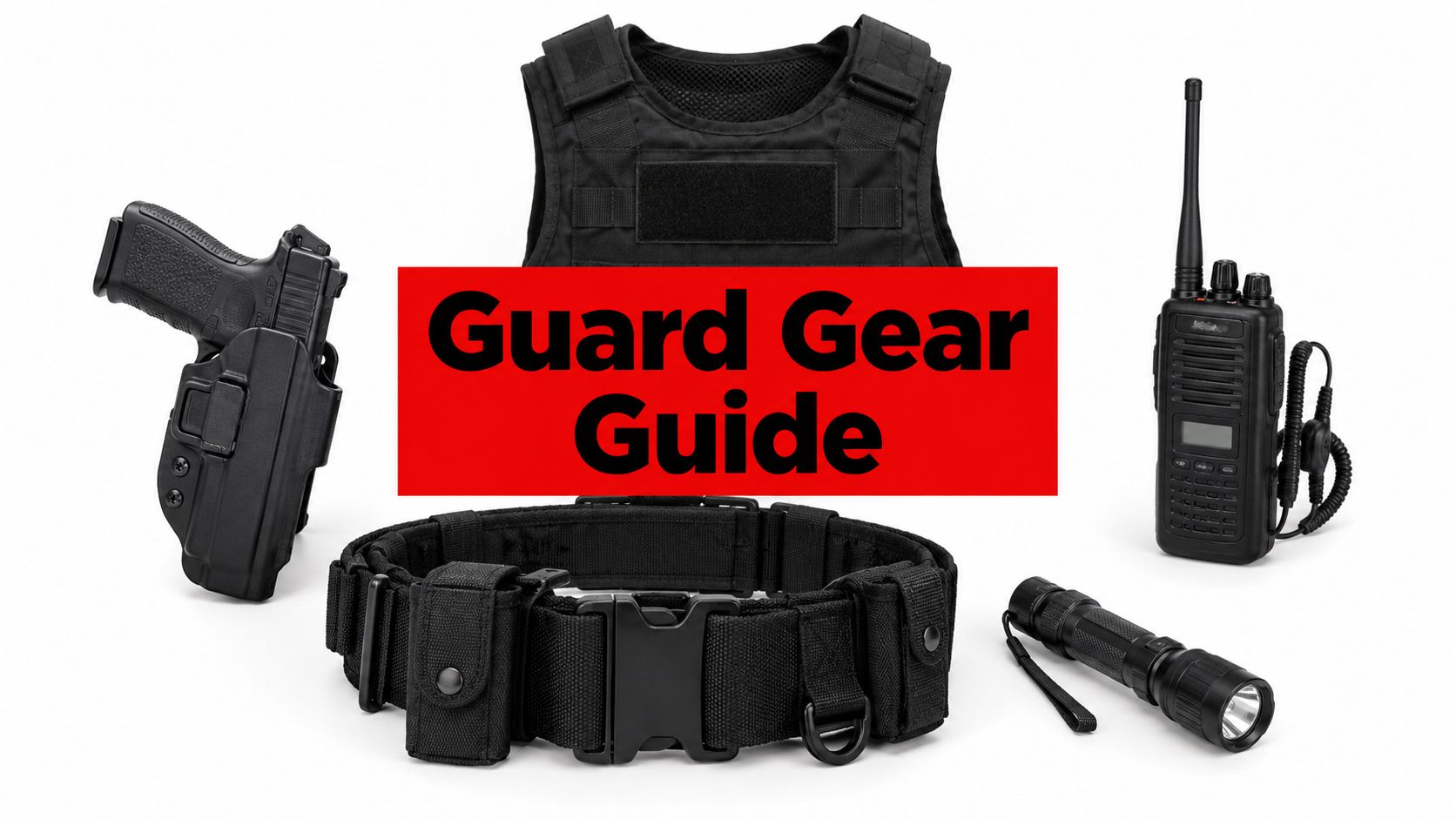
- Armed Officers: Armed officers are deployed in higher-risk environments where there is a need to respond to immediate, life-threatening situations. They are typically found at sites with extremely valuable assets or a known history of serious crime.
How Can I Measure the ROI of My Security Investment?
The return on your security investment goes beyond the monthly invoice. A well-designed security program delivers value in several trackable ways:
- Loss Reduction: The most direct metric. Monitor how much theft, vandalism, or other costly incidents have decreased since implementing a professional security program.
- Liability Shield: A professional security presence is also about documentation. Detailed incident reports can help lower insurance premiums and reduce legal risks.
- Property Value Boost: A safe, secure environment is a significant selling point. It helps attract and retain good tenants, leading to higher occupancy rates and a stronger community reputation.
Ready to build a security plan that delivers real value and peace of mind? The team at Overton Security is here to help you assess your needs and design a customized solution. Learn more about our services.